Best Rated SEO Tool for Ecommerce: Build Systems, Not Tasks
Most ecommerce SEO tools track rankings. The best ones build infrastructure. Compare platforms, frameworks, and the systems approach that compounds organic revenue.
ECOMMERCE SEO INFRASTRUCTURE • 8 MIN READ
Best Rated SEO Tool for Ecommerce: Build Systems, Not Tasks
Most “best SEO tool” roundups are just affiliate link farms. They compare features you’ll never use and pricing tiers that don’t matter. Here’s what they miss: the best rated SEO tool for ecommerce isn’t the one with the most dashboards — it’s the one that builds infrastructure that compounds.
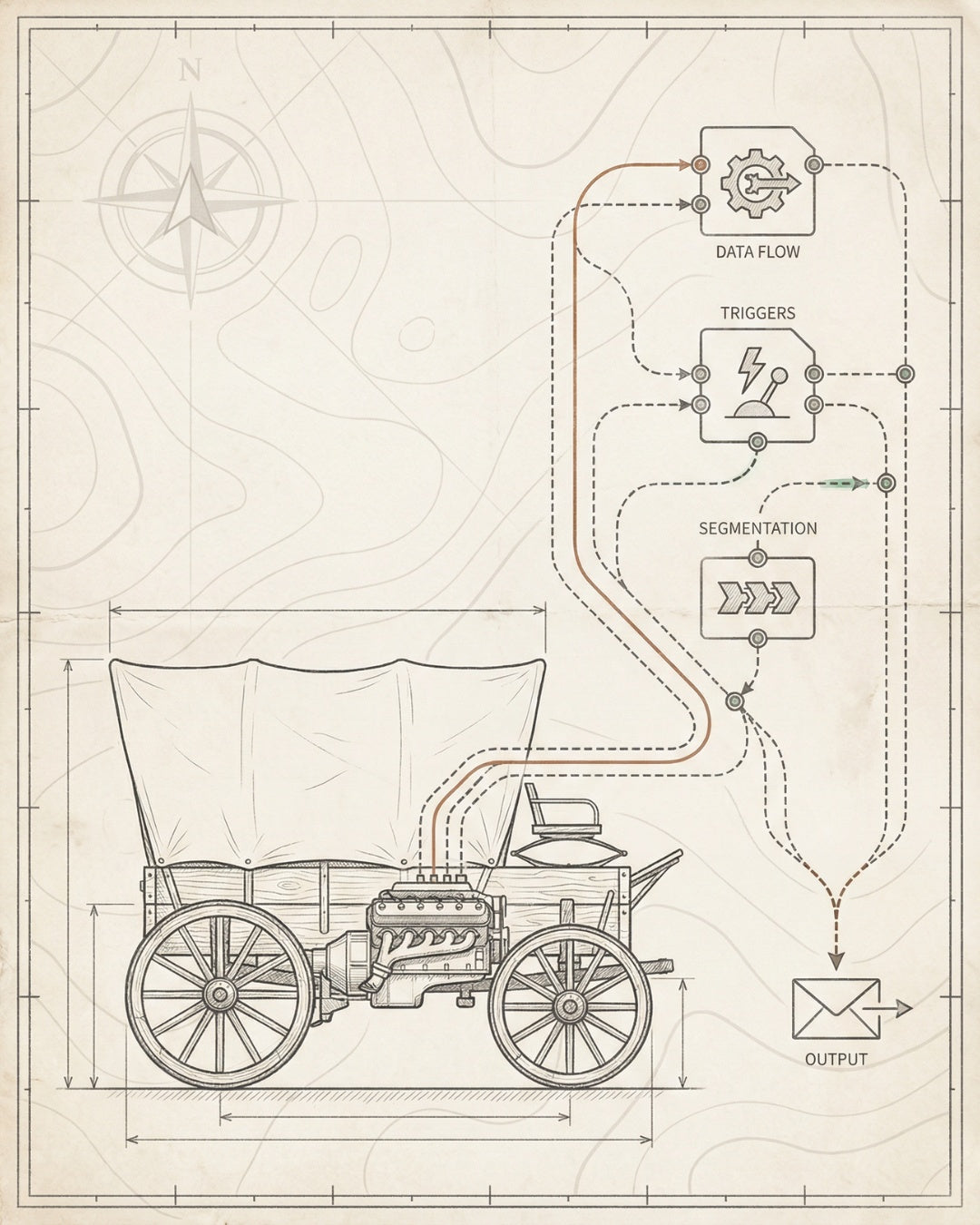
You don’t need another tool that tracks rankings. You need a system that generates them. That’s the difference between a subscription and an asset.
01 / THE PROBLEM Most ecommerce SEO tools are task managers dressed as strategy platforms. They tell you what’s broken, not what to build.
02 / THE SHIFT The best tool is the one that builds infrastructure, not just tracks it. Systems compound. Subscriptions expire.
03 / THE FRAMEWORK Compare tools by what they install, not what they report. Crawlability, indexability, rankability, convertibility.
04 / THE STACK Founding Engine’s approach: technical architecture + AI search signals + content systems. Built in 30-day cycles, not retainers.
05 / THE RESULT $30M+ organic revenue generated. 250% average traffic increase. Infrastructure that holds under scale.
What We’re Building
- Why Most “Best SEO Tool” Lists Miss the Point
- The 4-Layer Foundation: What Tools Should Actually Build
- Ecommerce SEO Tool Categories Decoded
- The Compound Visibility Stack: Where Tools Fit
- How to Build Your Ecommerce SEO System
- Tool Selection Framework for Founders
- Frequently Asked Questions
Why Most “Best SEO Tool” Lists Miss the Point
Every “best SEO tool for ecommerce” list follows the same script: feature comparison tables, pricing tiers, screenshots of dashboards you’ll check once a month. They optimize for affiliate commissions, not outcomes.
Here’s what they don’t tell you: tools don’t build SEO infrastructure. Systems do.
A tool is a subscription. A system is an asset. The difference compounds over time.
The Tool Trap: Most ecommerce brands collect SEO tools like trading cards — Ahrefs for backlinks, SEMrush for keywords, Screaming Frog for audits, Surfer for content. They have a $2,000/month SaaS stack and still can’t rank for their own product categories.
The problem isn’t the tools. It’s the absence of architecture. You’re using precision instruments to build on a cracked foundation.
At Founding Engine, we’ve generated $30M+ in organic revenue for ecommerce brands. Not by finding better tools, but by installing better systems. The tools are just implementation layers.
When evaluating the best rated SEO tool for ecommerce, ask this: Does this tool build infrastructure, or does it just report on what’s missing?
The 4-Layer Foundation: What Tools Should Actually Build
Before you compare tools, understand what you’re building. Every ecommerce SEO system rests on four layers. Tools should map to these layers, not the other way around.

Layer 1: Crawlability
Can Google’s bots access and navigate your site architecture without hitting dead ends, redirect chains, or orphaned pages?
Tools for this layer:
- Screaming Frog SEO Spider — Desktop crawler that maps your entire site structure, identifies broken links, redirect chains, and orphaned pages
- Sitebulb — Visual site auditing with prioritized issue reporting and crawl path analysis
- Google Search Console — Official crawl stats, coverage reports, and indexation data directly from Google
This layer is about plumbing. If Google can’t crawl it, nothing else matters. Most technical SEO for ecommerce starts here.
Layer 2: Indexability
Are your product pages, category pages, and content actually making it into Google’s index? Or are they blocked by meta robots tags, canonical issues, or thin content filters?
Tools for this layer:
- Google Search Console — Index coverage reports, submitted vs. indexed pages, exclusion reasons
- Schema Markup Validator — Ensures your structured data is valid and eligible for rich results
- Ahrefs Site Audit — Identifies indexation blockers like duplicate content, thin pages, and canonical conflicts
Indexability is where most ecommerce sites leak revenue. You have 10,000 product pages. Google indexed 3,000. The other 7,000 are invisible.
Layer 3: Rankability
Can your indexed pages actually compete for commercial keywords? Do they have the content depth, internal linking structure, and entity signals to rank above competitors?
Tools for this layer:
- Ahrefs — Keyword research, competitor analysis, backlink gap identification, SERP feature tracking
- SEMrush — Keyword clustering, position tracking, content optimization recommendations
- Surfer SEO — On-page optimization based on top-ranking content analysis
- Clearscope — Content briefs with entity coverage and semantic keyword mapping
This is where on-page SEO for ecommerce lives. It’s not about keyword density — it’s about topical authority and entity relationships.
Layer 4: Convertibility
Are your ranked pages actually converting traffic into revenue? Or are you winning impressions but losing customers to poor UX, slow load times, or weak CTAs?
Tools for this layer:
- Google Analytics 4 — Revenue attribution, conversion path analysis, ecommerce tracking
- Hotjar / Microsoft Clarity — Heatmaps, session recordings, user behavior analysis
- PageSpeed Insights — Core Web Vitals monitoring, performance optimization recommendations
- Optimizely / VWO — A/B testing for product pages, category layouts, and checkout flows
SEO without conversion optimization is traffic theater. You need both.
This is the 4-Layer SEO Foundation we install at Founding Engine. Every tool in your stack should map to one of these layers. If it doesn’t, it’s noise.
Ecommerce SEO Tool Categories Decoded
Now that you understand the foundation, let’s decode the tool landscape. Here’s how to evaluate the best rated SEO tool for ecommerce based on what you’re actually trying to build.
Tool Category What It Does Best For Limitation
Technical Audit Tools Crawl your site, identify technical issues, map site architecture Layer 1 (Crawlability) and Layer 2 (Indexability) Tells you what’s broken, not how to fix it at scale
Keyword Research Platforms Find keywords, analyze search volume, track rankings Layer 3 (Rankability) — competitive intelligence Doesn’t build content systems or internal linking
Content Optimization Tools Analyze top-ranking content, suggest semantic keywords Layer 3 (Rankability) — on-page optimization Optimizes individual pages, not site-wide architecture
Analytics & Conversion Tools Track traffic, revenue, user behavior, conversion paths Layer 4 (Convertibility) — performance measurement Reports outcomes, doesn’t improve technical foundation
All-in-One SEO Suites Combine multiple functions in one platform Convenience for small teams Jack of all trades, master of none — usually weak on technical depth
Notice the pattern: every tool category solves one layer, not the whole system.
This is why the “best SEO tool” question is a trap. You don’t need the best tool. You need the right stack, mapped to the right foundation, executed in the right sequence.
The Platform-Specific Consideration
If you’re on Shopify, your tool selection changes. Shopify has built-in limitations (URL structure, app bloat, theme performance) that require platform-specific solutions.
Best Shopify-specific tools:
- Plug in SEO — Automated technical audits for Shopify stores
- JSON-LD for SEO — Schema markup automation for products and collections
- Booster SEO — Image optimization and alt text automation
But here’s the truth: Shopify apps can’t fix architectural problems. If your site structure is broken, no app will save you. You need custom development or a platform migration.
That’s why we built our website design and build service on performance-first platforms like Astro and headless Shopify. SEO-ready from day one, not bolted on with plugins.
The Compound Visibility Stack: Where Tools Fit
At Founding Engine, we don’t think in tools. We think in systems. The Compound Visibility Stack (CVS) is our framework for building SEO infrastructure that scales:

FRAMEWORK
Website × Content × Technical × Distribution
Every ecommerce SEO system has four components. Tools plug into these components, but the system is what compounds.
1. Website Layer
What it is: Your platform, site architecture, page templates, and performance infrastructure.
Tools that support it: Shopify, WordPress + WooCommerce, headless platforms (Next.js, Astro), performance monitoring (PageSpeed Insights, GTmetrix)
Why it matters: This is your foundation. If your site is slow, bloated, or architecturally broken, no tool will fix it. You need a rebuild.
2. Content Layer
What it is: Your product pages, category pages, blog content, and internal linking structure.
Tools that support it: Clearscope, Surfer SEO, Ahrefs (for keyword mapping), Screaming Frog (for internal link analysis)
Why it matters: Content is how you capture long-tail keywords and build topical authority. But it only works if it’s architected correctly — not just published randomly.
3. Technical Layer
What it is: Crawlability, indexability, schema markup, Core Web Vitals, canonical tags, XML sitemaps.
Tools that support it: Google Search Console, Screaming Frog, Sitebulb, Schema Markup Validator, Ahrefs Site Audit
Why it matters: This is the plumbing. It’s invisible to users but critical to Google. Most ecommerce sites have 50+ technical issues they don’t know about.
4. Distribution Layer
What it is: How your content gets discovered — search engines, AI platforms (ChatGPT, Perplexity), social, email.
Tools that support it: Google Search Console (for search visibility), BrightEdge or MarketMuse (for AI search tracking), email platforms (Klaviyo, Mailchimp)
Why it matters: SEO isn’t just Google anymore. AI search optimization is the new frontier — getting cited in ChatGPT, Perplexity, and Gemini responses.
The best rated SEO tool for ecommerce is the one that strengthens your weakest layer. If your technical foundation is broken, you don’t need better content tools. You need a technical audit and remediation.
This is the SEO infrastructure thinking that separates systems from subscriptions.
How to Build Your Ecommerce SEO System
Theory is cheap. Here’s the build sequence — the actual steps to install an ecommerce SEO system using the right tools in the right order.
IMPLEMENTATION
Step 1: Audit Current Technical State
Before you buy another tool, run a baseline audit. You need to know what’s broken before you can fix it.
Tools to use:
- Screaming Frog — Full site crawl (up to 500 URLs free, unlimited with paid version)
- Google Search Console — Index coverage report, Core Web Vitals, mobile usability
- PageSpeed Insights — Performance baseline for key landing pages
What to check:
- Crawl errors (404s, 500s, redirect chains)
- Indexation status (submitted vs. indexed pages)
- Core Web Vitals (LCP, FID, CLS)
- Duplicate content and canonical issues
- Orphaned pages (pages with no internal links)
This is your ecommerce SEO audit baseline. Everything you build next depends on this data.
Step 2: Fix the Foundation (Layer 1 & 2)
Don’t touch content until you fix the technical foundation. This is where most agencies get it backwards.
Priority fixes:
- Robots.txt and sitemap configuration — Ensure Google can crawl all important pages
- Canonical tags — Eliminate duplicate content issues
- Site architecture — Flatten deep page hierarchies, reduce orphaned pages
- Core Web Vitals — Optimize images, reduce JavaScript bloat, improve server response time
- Schema markup — Install Product, BreadcrumbList, and Organization schema
This is infrastructure work. It’s not sexy, but it’s what makes everything else compound. We’ve seen brands go from 30% indexed pages to 95% just by fixing technical blockers.
Step 3: Build Content Infrastructure (Layer 3)
Now you can build content — but not randomly. You need a keyword map, content architecture, and internal linking system.
Tools to use:
- Ahrefs or SEMrush — Keyword research and competitor gap analysis
- Clearscope or Surfer SEO — Content optimization and entity coverage
- Screaming Frog — Internal link analysis and anchor text mapping
Build sequence:
- Map keywords to pages — Every product category and subcategory gets a target keyword cluster
- Create content silos — Group related content with internal links to build topical authority
- Optimize product pages — Add semantic keywords, entity signals, and schema markup
- Build supporting content — Blog posts, buying guides, and comparison pages that link back to product pages
This is what we call ecommerce SEO optimization — not just optimizing pages, but building a content system that compounds over time.
Step 4: Install AI Search Signals (New Layer)
Google isn’t the only search engine anymore. ChatGPT, Perplexity, and Gemini are answering product queries — and they’re pulling from different signals.
What to install:
- Entity-rich schema markup — Structured data that LLMs can parse (Product, FAQPage, HowTo)
- Knowledge graph signals — Brand mentions, citations, and entity relationships
- AI-readable content structure — Clear headings, concise answers, and fact-based claims with sources
This is the AI search optimization layer that most ecommerce brands are ignoring. By the time they catch up, early movers will own the citations.
Step 5: Connect Distribution and Monitor Velocity
SEO is a velocity game. You need to track ranking movement, traffic trends, and revenue attribution week over week.
Tools to use:
- Google Search Console — Impressions, clicks, and average position by query
- Google Analytics 4 — Traffic sources, conversion paths, and revenue attribution
- Ahrefs or SEMrush — Rank tracking for priority keywords
What to monitor:
- Ranking velocity (keywords moving from page 2 to page 1)
- Organic traffic growth (month-over-month and year-over-year)
- Revenue per session (conversion rate × average order value)
- Index coverage (percentage of pages indexed vs. submitted)
This is the feedback loop. You build, measure, iterate. Systems compound when you track the right metrics.
Tool Selection Framework for Founders
You’re a founder. You don’t have time to trial 15 SEO tools. Here’s the decision framework we use with clients to select the best rated SEO tool for ecommerce based on stage, budget, and team capacity.
Stage Budget Recommended Stack Why
Pre-$500K Revenue $0–$500/mo Google Search Console + Screaming Frog (free) + Ubersuggest Focus on technical foundation and indexation. Avoid expensive keyword tools until you have traffic.
$500K–$2M Revenue $500–$1,500/mo GSC + Ahrefs Lite + Screaming Frog + Hotjar Add competitive intelligence and conversion tracking. You have enough traffic to justify paid tools.
$2M–$10M Revenue $1,500–$3,000/mo GSC + Ahrefs + Clearscope + GA4 + Sitebulb Full stack for content production, technical audits, and performance tracking. Scale requires systems.
$10M+ Revenue $3,000+/mo Enterprise stack + custom infrastructure (API integrations, data warehouses) You need custom solutions and dedicated SEO team. Off-the-shelf tools won’t scale.
The founder’s rule: Don’t buy a tool until you’ve maxed out the free version. Most ecommerce brands never use 50% of Ahrefs’ features. Start lean, scale when you hit constraints.
What We Do Differently: At Founding Engine, we don’t sell you a tool stack. We install the infrastructure using the tools you already have (or should have). Our SEO infrastructure service is built around 30-day focused cycles — audit, build, deploy. No retainers. No tool upsells. Just systems that compound.
The Build vs. Buy Decision
At some point, every scaling ecommerce brand hits this question: Do we build an in-house SEO team, or do we hire an agency?
Here’s the math:
In-house SEO team cost:
- SEO Manager: $80K–$120K/year
- Content Writer: $50K–$70K/year
- Developer (part-time): $40K–$60K/year
- Tool stack: $30K–$50K/year
- Total: $200K–$300K/year
Agency cost (traditional retainer):
- Monthly retainer: $5K–$15K/month
- Tool access: Usually included
- Total: $60K–$180K/year
Founding Engine model (sprint-based):
- 30-day infrastructure sprint: $15K–$30K (one-time)
- Ongoing optimization cycles: $5K–$10K/month (as needed)
- Total: $15K–$150K/year (depending on scope)
The difference: we build the system, then hand you the keys. No retainer lock-in. No dependency. You own the infrastructure.
This is the model that founders prefer when they understand the economics. Check our ecommerce SEO pricing breakdown for the full comparison.
Build SEO Infrastructure That Compounds
Stop collecting tools. Start installing systems. Founding Engine builds the technical SEO foundation, AI search signals, and content architecture that generate rankings and revenue — in 30-day focused cycles.
SEO Infrastructure AI Search Optimization Get an Audit
Frequently Asked Questions
What is the best rated SEO tool for ecommerce stores? +
There’s no single “best” tool — the right stack depends on your revenue stage and what layer you’re building. For technical foundation (crawlability and indexability), use Google Search Console and Screaming Frog. For rankability (keywords and content), use Ahrefs or SEMrush. For convertibility (performance and revenue), use Google Analytics 4 and PageSpeed Insights. The best approach is a mapped stack, not a single platform.
Do I need Ahrefs and SEMrush, or just one? +
Pick one. They overlap 80% in functionality. Ahrefs has better backlink data and a cleaner UI. SEMrush has better keyword clustering and PPC integration. For most ecommerce brands under $5M revenue, Ahrefs Lite ($99/month) is enough. Above $5M, upgrade to Ahrefs Standard or SEMrush Pro for deeper competitive intelligence.
Are Shopify SEO apps worth it, or should I hire a developer? +
Shopify apps can automate basic tasks (schema markup, image optimization, broken link monitoring), but they can’t fix architectural problems. If your site structure is broken, your internal linking is weak, or your Core Web Vitals are failing, you need custom development or a platform migration. Apps are band-aids, not infrastructure. Start with a technical audit to identify whether you have app-fixable issues or architecture-level problems.
How much should I budget for ecommerce SEO tools? +
Budget based on revenue stage, not arbitrary percentages. Pre-$500K revenue: $0–$500/month (use free tools). $500K–$2M revenue: $500–$1,500/month (add Ahrefs Lite and conversion tracking). $2M–$10M revenue: $1,500–$3,000/month (full stack with content optimization and advanced auditing). Above $10M: $3,000+/month (enterprise tools and custom integrations). The rule: don’t buy a tool until you’ve maxed out the free version.
What’s the difference between an SEO tool and an SEO system? +
A tool is a subscription that reports data. A system is an asset that generates outcomes. Tools tell you what’s broken (crawl errors, missing keywords, slow pages). Systems fix the foundation and build infrastructure that compounds over time (site architecture, internal linking, schema markup, content silos). Most ecommerce brands collect tools but never build systems. That’s why they plateau.
Can I do ecommerce SEO without expensive tools? +
Yes — if you focus on technical foundation first. Google Search Console (free) gives you indexation data, crawl errors, and Core Web Vitals. Screaming Frog (free up to 500 URLs) crawls your site and identifies technical issues. Ubersuggest (free tier) provides basic keyword research. The constraint isn’t tools — it’s knowing what to build and in what order. That’s where frameworks like the 4-Layer SEO Foundation and Compound Visibility Stack matter more than software.
How do I know if my ecommerce SEO tools are actually working? +
Track velocity, not vanity metrics. Ignore “SEO score” from audit tools — they’re arbitrary. Instead, monitor: (1) Ranking velocity — keywords moving from page 2 to page 1 week over week, (2) Indexation rate — percentage of submitted pages actually indexed by Google, (3) Organic revenue — dollars generated from organic traffic, not just traffic volume, (4) Core Web Vitals — LCP, FID, and CLS trends over time. If these metrics aren’t improving month-over-month, your tools aren’t the problem — your system is.
Should I hire an agency or build an in-house SEO team? +
Depends on your stage and constraints. Pre-$2M revenue: hire an agency that builds systems (like Founding Engine’s sprint model), not retainers. You need infrastructure installed fast, not ongoing management. $2M–$10M revenue: hybrid model — agency builds the foundation, in-house team executes content and optimization. Above $10M: in-house team with agency support for specialized projects (technical migrations, AI search, advanced schema). The key: never hire an agency that makes you dependent on them. Own your infrastructure.
The System Is the Competitive Advantage
Here’s what we’ve learned after generating $30M+ in organic revenue for ecommerce brands: the best rated SEO tool for ecommerce isn’t a tool at all. It’s a system.
Tools are commodities. Everyone has access to Ahrefs, SEMrush, and Screaming Frog. The advantage isn’t in the software — it’s in how you sequence the build.
- Fix crawlability before you touch content
- Fix indexability before you chase rankings
- Build rankability with architecture, not just keywords
- Optimize convertibility after you have traffic, not before
This is the ecommerce SEO strategy that compounds. It’s not sexy. It’s not fast. But it’s what holds under scale.
Most agencies sell you a tool stack and a retainer. We install the infrastructure, hand you the keys, and move on. That’s the difference between a subscription and an asset.
If you want to see what that looks like in practice, check our ecommerce SEO case study or review our ecommerce SEO checklist to audit your current state.

The brands that win organic aren’t the ones with the biggest tool budgets. They’re the ones that build systems first, then scale with tools second.
Not pages. Systems.
Not subscriptions. Assets.
Build once, scale forever.
Ready to Build SEO Infrastructure That Holds?
Founding Engine installs the technical foundation, AI search signals, and content systems that generate rankings and revenue. 30-day focused cycles. No retainers. Just infrastructure that compounds.
Explore SEO Infrastructure Website Design & Build Schedule a Call
Matt Hyder
SEO infrastructure and AI search optimization at Founding Engine.
Want SEO that actually holds?
Get a free infrastructure audit from the Founding Engine team.
Get Your Free Audit