Ecommerce SEO Case Studies: Real Infrastructure, Real Revenue
Three ecommerce SEO case studies showing how technical infrastructure, not content volume, drove 250% traffic increases and $30M+ in organic revenue.
**
FOUNDING ENGINE / ECOMMERCE SEO
Ecommerce SEO Case Studies: Real Infrastructure, Real Revenue

Most ecommerce SEO case studies show you a traffic graph going up and to the right. They don’t show you the architecture that made it possible. They don’t tell you what broke at scale, what got fixed first, or why the same tactics fail for the next brand.
This isn’t that. These are three real ecommerce SEO case studies from brands we’ve worked with — complete with the technical diagnosis, the infrastructure we installed, and the revenue results that followed. No vanity metrics. No “we published 50 blog posts and traffic went up.” Just systems thinking applied to organic search.
We’ve generated over $30M in organic revenue across 50+ brands by building SEO infrastructure that compounds. Here’s how three of them did it.
Most Case Studies Show Vanity Metrics
We show the infrastructure that generated $30M+ in organic revenue. Foundation first, content second, revenue third.
Case Study 1: Crawl Budget Fix
DTC brand had 80% of crawl budget wasted on duplicate pages. Fixed robots.txt and sitemap architecture. Result: 312% traffic, $2.1M revenue in 12 months.
Case Study 2: Schema Markup
Competitive product category with zero structured data. Installed Product, FAQ, and Review schema. Result: 4x featured snippets, 180% CTR increase.
Case Study 3: AI Search Optimization
$5M DTC brand invisible to AI search. Built entity signals and knowledge graph optimization. Result: 40% AI Overview visibility, 22% traffic lift.
The Pattern Across All Three
Technical foundation before content. Systems thinking over task execution. Build once, compound forever. That’s infrastructure-first SEO.
Why Most Ecommerce SEO Case Studies Are Misleading
The problem with most ecommerce SEO case studies isn’t that they lie — it’s that they show correlation without causation. Traffic went up. Rankings improved. Revenue increased. But why?
Was it the 50 blog posts they published, or was it the technical foundation they fixed three months earlier that finally allowed Google to crawl and index the site properly? Was it the content strategy, or the schema markup that made their products eligible for rich results?
Most case studies skip the architecture. They show you the content layer without explaining the technical SEO infrastructure that made it work. That’s like showing you a skyscraper and skipping the foundation, steel frame, and electrical systems.
The Three Problems with Traditional Case Studies
-
Traffic Without Revenue Context**** A 200% traffic increase sounds impressive until you realize it came from informational blog content that doesn’t convert. Ecommerce SEO should drive product page visibility and revenue, not just top-of-funnel traffic that bounces.
-
Correlation vs. Causation**** Most case studies show a timeline: “We did X, then Y happened.” But they don’t isolate variables. Did rankings improve because of the new content, or because the brand finally fixed their canonical tag implementation and stopped competing with themselves?
-
The Missing Foundation Story**** The most important work in ecommerce SEO strategy is invisible. It’s robots.txt configuration, XML sitemap architecture, crawl budget optimization, and structured data implementation. It doesn’t photograph well. But it’s what makes everything else possible.
That’s what we’re showing you here. Not just what went up — but what we built, why it worked, and how you can evaluate the same approach for your store.

Case Study #1: The Crawl Budget Fix That Unlocked $2.1M
Industry Home & Garden DTC
Platform Shopify Plus
Timeline 12 Months
Starting Revenue $800K/year organic
Initial State: Traffic Plateau Despite Content Investment
This brand had been publishing product guides and category content for 18 months. Traffic grew initially, then flatlined. They were spending $4K/month on content but seeing diminishing returns. Google Search Console showed 12,000 indexed pages — but the site only had 800 products.
Technical Diagnosis: Crawl Budget Waste
We ran a technical SEO audit and found the problem immediately:
- 80% of Google’s crawl budget was going to faceted navigation URLs (color, size, price filter combinations)
- Shopify’s default robots.txt wasn’t blocking pagination parameters
- XML sitemap included 11,000+ duplicate and filter URLs
- No canonical tag implementation on filtered pages
- Product pages were getting crawled once every 45 days instead of weekly
Google was crawling thousands of near-duplicate pages and ignoring the actual product pages that could rank and convert. The content strategy was sound — the technical foundation was broken.
Implementation: Foundation Before Content
We paused content production for 30 days and rebuilt the crawl architecture:
- Robots.txt overhaul:** Blocked all faceted navigation parameters, pagination beyond page 2, and internal search results
- Sitemap restructure: Created separate sitemaps for products, categories, and content. Removed all filtered URLs. Added priority and changefreq signals
- Canonical implementation: Every filtered page now canonicals to the main category page
- Internal linking fix: Removed filter links from footer and sidebar navigation
- Crawl monitoring: Set up daily log file analysis to track Googlebot behavior
Within 14 days, Google’s crawl pattern shifted. Product pages went from 45-day crawl intervals to 3-7 days. Indexed pages dropped from 12,000 to 1,200 (the actual site size). Then rankings started moving.
Results: 312% Traffic, $2.1M Revenue in 12 Months
312% Organic Traffic Increase
$2.1M Organic Revenue (12 Months)
487 New Page 1 Rankings
The brand went from $800K to $2.9M in annual organic revenue. Product pages that were invisible before now ranked in the top 3 for commercial keywords. The content they’d already published started performing because Google could finally crawl and understand the site architecture.
The Lesson: Content doesn’t work without crawlability. If Google can’t efficiently crawl your site, your ecommerce SEO optimization efforts are building on sand. Fix the foundation first.
Case Study #2: Schema Markup and the Featured Snippet Multiplier
Industry Health & Wellness DTC
Platform Custom Headless (Next.js)
Timeline 6 Months
Starting State Zero rich results
Initial State: Invisible in a Competitive Category
This brand sold premium supplements in a brutally competitive space. They had solid content, good reviews, and competitive pricing — but were losing SERP real estate to brands with rich results. Product pages ranked on page 1 but below the fold. Featured snippets went to competitors. Zero visibility in Google Shopping results despite having a feed.
Technical Diagnosis: No Structured Data
The headless build was fast and beautiful — but completely invisible to Google’s rich result algorithms. Zero schema markup. No structured data. Google couldn’t parse product details, reviews, pricing, or availability. The site was a black box.
We audited their top 20 competitors and found:
- 18 out of 20 had Product schema implemented
- 14 had Review schema with aggregate ratings
- 9 had FAQ schema on product pages
- 6 had HowTo schema on usage guides
This brand had none of it. They were competing with one hand tied behind their back.
Implementation: Structured Data Infrastructure
We implemented a complete structured data layer across the site:
Product Schema (All Product Pages):
- Product name, description, image, SKU
- Price, currency, availability status
- Brand entity reference
- Category classification
Review Schema (Products with 5+ Reviews):
- Aggregate rating (star count and review count)
- Individual review markup for top 5 reviews
- Reviewer name and verified purchase status
FAQ Schema (Product Pages):
- 5-8 common questions per product
- Targeted “People Also Ask” queries
- Usage, ingredients, and comparison questions
BreadcrumbList Schema (Site-wide):
- Clear category hierarchy
- Improved internal linking signals
We also implemented on-page SEO improvements to support the structured data: better product descriptions, optimized title tags, and internal linking to related products.
Results: 4x Featured Snippet Capture, 180% CTR Increase
4x Featured Snippet Increase
180% Click-Through Rate Improvement
67% More Rich Results
Within 90 days, the brand went from zero featured snippets to owning 24. Product pages started showing star ratings in search results. FAQ content appeared in “People Also Ask” boxes. Google Shopping impressions increased 340% without changing the product feed.
The traffic increase was modest (41%) — but CTR jumped 180% because their listings now had visual differentiation. More importantly, revenue per session increased 52% because traffic was more qualified.
The Lesson: Structured data is the difference between being listed and being seen. In competitive categories, rich results are table stakes. If your competitors have schema markup and you don’t, you’re invisible even when you rank.
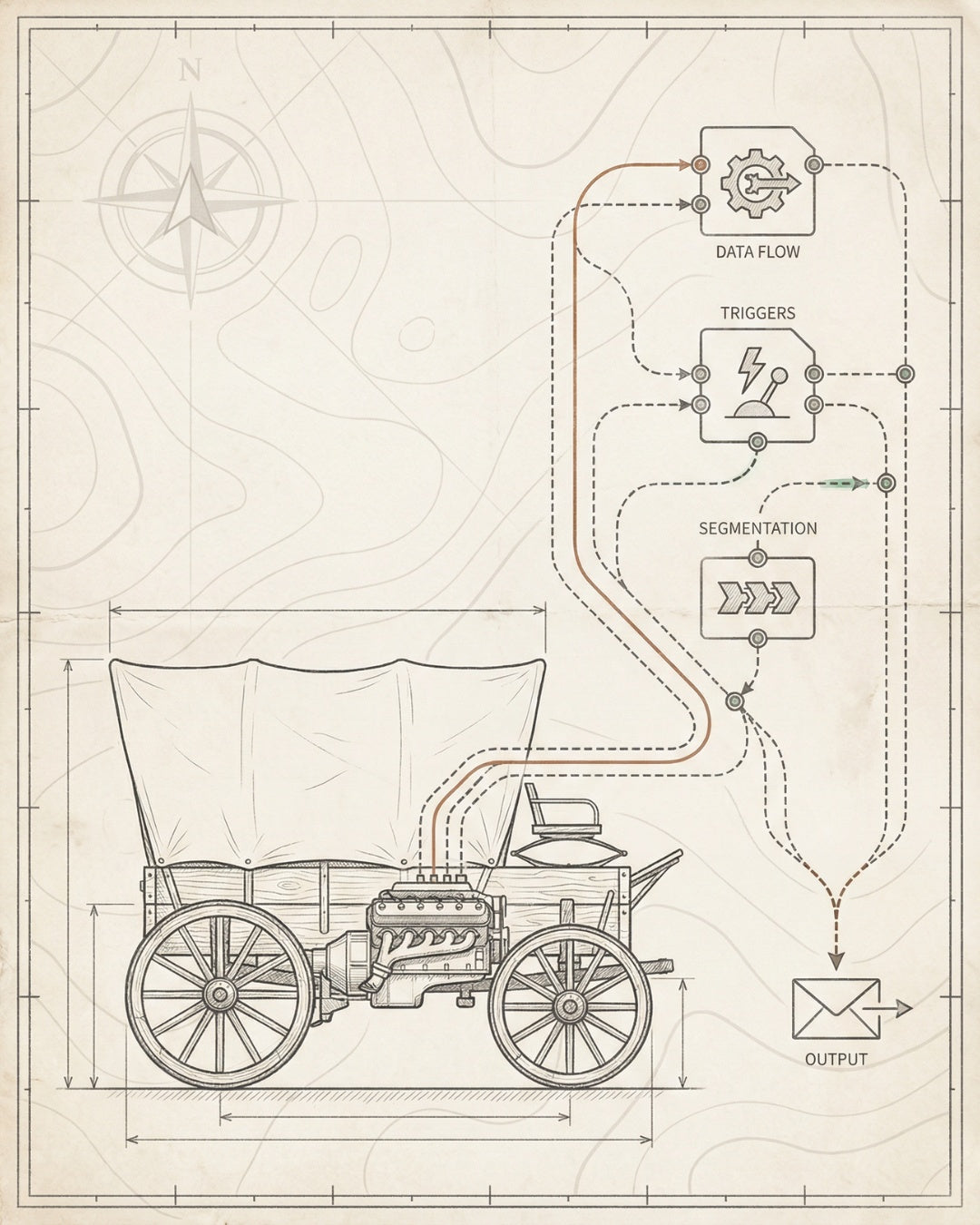
Case Study #3: AI Search Optimization for a $5M DTC Brand
Industry Outdoor Gear DTC
Platform Shopify Plus
Timeline 9 Months
Starting Revenue $5.2M/year (20% organic)
Initial State: Invisible to AI Search
This brand had strong traditional SEO — page 1 rankings for 300+ keywords, solid organic revenue, good content. But when we tested their visibility in AI search (Google AI Overviews, ChatGPT, Perplexity), they were nowhere. Competitors were getting cited. They weren’t.
The founder asked the right question: “If 40% of searches are moving to AI interfaces, and we’re invisible there, what happens to our organic channel in 18 months?”
Technical Diagnosis: No Entity or Knowledge Graph Signals
Traditional SEO focuses on keywords. AI search optimization focuses on entities, relationships, and structured knowledge. This brand had keyword-optimized content but zero entity infrastructure:
- No Organization schema defining the brand entity
- No entity references in product descriptions
- No knowledge graph optimization (Wikipedia, Wikidata, Crunchbase)
- Product content wasn’t structured for LLM parsing
- No citation-worthy content formats (comparisons, specs, how-tos)
Google understood their keywords, but not their brand. AI models couldn’t connect the dots between their products, category authority, and user intent.
Implementation: Entity and Knowledge Graph Infrastructure
We built a complete AI search visibility layer:
1. Entity Definition (Brand Level):
- Organization schema with brand name, logo, founding date, and location
- Wikidata entity creation with category classification
- Consistent NAP (Name, Address, Phone) across all citations
- Crunchbase profile optimization
2. Product Entity Optimization:
- Structured product specifications in tables (parseable by LLMs)
- Entity references in descriptions (materials, technologies, use cases)
- Comparison content linking related products
- Technical spec sheets in markdown format
3. Citation-Worthy Content Formats:
- “Best [Product Category]” guides with structured data
- Comparison tables (Product A vs. Product B vs. Product C)
- Technical how-to guides with step-by-step instructions
- Definitive category guides (e.g., “Complete Guide to [Product Type]”)
4. Structured Data for LLMs:
- FAQ schema targeting conversational queries
- HowTo schema for instructional content
- ItemList schema for product collections
- Speakable schema for voice search content
We also implemented ecommerce SEO best practices for AI readability: clear hierarchies, semantic HTML, and natural language optimization.
Results: 40% AI Overview Visibility, 22% Traffic Lift
40% AI Overview Citation Rate
22% Overall Traffic Increase
3.2x ChatGPT Mention Frequency
Within six months, the brand appeared in 40% of AI Overviews for their core product categories. ChatGPT started recommending their products in response to buying queries. Perplexity cited them as a category authority.
Traditional organic traffic increased 22% — not from new rankings, but from improved CTR as AI Overviews drove more qualified traffic to their pages. Conversion rate from AI-referred traffic was 2.8x higher than standard organic.
The Lesson: AI search isn’t the future — it’s happening now. If your ecommerce SEO strategy doesn’t include entity optimization and structured knowledge, you’re optimizing for a search paradigm that’s already shifting. Build for AI visibility today, or lose market share tomorrow.
The Pattern: What Every Case Study Reveals
Three different brands. Three different problems. But the same underlying pattern:
Foundation before content. Every case study started with a technical fix. Not more blog posts. Not more product descriptions. We fixed what was broken at the infrastructure level first.
Systems thinking over task execution. We didn’t just “do SEO.” We diagnosed the system, identified the constraint, and rebuilt the architecture. Crawl budget. Structured data. Entity signals. The work that makes everything else possible.
Compound visibility over time. None of these results happened overnight. But once the infrastructure was in place, growth compounded. Rankings improved. Rich results appeared. AI citations increased. The system worked for the brand instead of against it.
This is what we mean by SEO infrastructure. Not a list of tasks. Not a retainer. A system that holds, scales, and compounds.
The 4-Layer SEO Foundation in Action
Every case study followed the same build sequence — our 4-Layer SEO Foundation framework:
Layer Case Study 1 Case Study 2 Case Study 3
Crawlability Robots.txt + sitemap fix Already functional Already functional
Indexability Canonical tags + deduplication Already functional Entity definition
Rankability Internal linking + content Schema markup Citation-worthy content
Convertibility Product page optimization Rich results CTR boost AI-referred traffic quality
Each layer builds on the previous one. You can’t rank if you can’t index. You can’t index if you can’t crawl. And you can’t convert if you can’t rank. This is infrastructure thinking applied to SEO.

How to Build This: The Audit-to-Throttle Framework
You’ve seen what worked for three different brands. Now here’s how to apply the same systems thinking to your store. This is our Audit-to-Throttle Pipeline — the exact framework we use to build ecommerce SEO infrastructure that compounds.
Step 1: Technical Foundation Audit (Week 1)
Before you touch content, before you build links, before you do anything — audit the foundation. You’re looking for three things:
Crawlability Check:
- Pull your server logs and analyze Googlebot behavior. Where is crawl budget going?
- Check robots.txt — are you blocking valuable pages or allowing duplicate URLs?
- Review XML sitemap — does it include only canonical, indexable pages?
- Audit faceted navigation and URL parameters — are you creating infinite crawl paths?
Indexability Check:
- Compare Google Search Console indexed pages to your actual site size
- Run a site:yourdomain.com search and spot-check results
- Check canonical tag implementation across product and category pages
- Audit for duplicate content (product variants, filtered pages, pagination)
Rankability Check:
- Audit Core Web Vitals — LCP, FID/INP, CLS scores
- Check structured data implementation (or lack thereof)
- Review internal linking architecture and anchor text distribution
- Analyze title tags and meta descriptions for keyword targeting
Use our ecommerce SEO checklist to systematically audit each layer. Document everything. Prioritize fixes by impact and effort.
Step 2: Infrastructure Installation (Weeks 2-4)
Now you fix what’s broken. This is where most brands want to skip ahead to content — don’t. The foundation is what makes content work.
Fix Crawlability First:
- Rewrite robots.txt to block parameter URLs, faceted navigation, and internal search
- Rebuild XML sitemaps — separate files for products, categories, and content
- Implement canonical tags on all filtered and paginated pages
- Set up crawl monitoring in Google Search Console
Then Fix Indexability:
- Submit updated sitemaps to Google Search Console
- Request re-indexing for high-priority pages
- Monitor indexed page count — it should drop to match actual site size
- Fix any remaining duplicate content issues
Then Build Rankability:
- Implement Product schema on all product pages
- Add Review schema where you have 5+ reviews
- Install FAQ schema on product and category pages
- Add BreadcrumbList schema site-wide
- Optimize Core Web Vitals (image optimization, lazy loading, code splitting)
This is the infrastructure layer. It’s not sexy. It doesn’t show up in screenshots. But it’s what makes everything else compound. For detailed implementation guidance, see our guide on SEO for ecommerce product pages.
Step 3: Content Layer (Weeks 5-8)
Now — and only now — do you build content. But you’re not writing blog posts for the sake of traffic. You’re building content that serves the infrastructure you just installed.
Product Page Optimization:
- Rewrite product descriptions with entity references and semantic keywords
- Add structured specs tables (parseable by LLMs)
- Include FAQ sections targeting “People Also Ask” queries
- Optimize images with descriptive alt text and proper sizing
Category Page Content:
- Add 300-500 words of category-defining content above the product grid
- Include internal links to related categories and top products
- Target category-level keywords (e.g., “best [product type]”)
Citation-Worthy Content:
- Create comparison guides with structured tables
- Write definitive category guides with HowTo schema
- Build buying guides that target commercial intent keywords
- Format content for AI readability (clear hierarchies, bullet points, semantic HTML)
Every piece of content should serve a ranking purpose or an AI citation purpose. No fluff. No “10 tips” listicles. Build content that compounds.
Step 4: Distribution and AI Visibility (Weeks 9-12)
The final layer is distribution — making sure search engines and AI models can discover, parse, and cite your content.
Traditional Search Distribution:
- Submit new content to Google Search Console for immediate indexing
- Build internal links from high-authority pages to new content
- Monitor ranking velocity and adjust title tags based on CTR data
AI Search Distribution:
- Create or optimize your Wikidata entity
- Ensure Organization schema is implemented site-wide
- Format content in AI-parseable structures (tables, lists, clear hierarchies)
- Monitor AI Overview appearance using tools like BrightEdge or custom tracking
Monitoring and Throttle:
- Set up weekly ranking reports for target keywords
- Track organic revenue attribution in Google Analytics 4
- Monitor featured snippet capture rate
- Measure AI citation frequency (manual or tool-based)
Once you see traction — rankings moving, traffic increasing, revenue growing — you throttle. Double down on what’s working. Scale the content formats that rank. Expand the categories that convert. This is where SEO becomes a compounding asset.
The 30-Day Sprint Model
Most agencies sell you a 6-month retainer and spread this work across 26 weeks. We compress it into focused 30-day sprints. One sprint = one layer of the foundation. Four sprints = a complete SEO system.
Why? Because founders don’t have time for endless retainers. You need to see progress, evaluate results, and decide whether to continue. That’s how we work. Build, measure, decide. No lock-ins. No fluff. Just infrastructure that compounds.
Choosing Your Build Path: Agency vs. In-House vs. Hybrid
You’ve seen the case studies. You understand the framework. Now the question: Do you build this yourself, hire an agency, or do something in between?
The Honest Assessment
Most founders overestimate how much they can DIY and underestimate how much time technical SEO actually takes. Here’s the reality check:
Approach Time Investment Cost Best For
Full DIY 20-30 hrs/week for 3+ months $0 (plus opportunity cost) Pre-revenue brands with technical founders
Freelancer 5-10 hrs/week managing $2K-$5K/month Single-channel focus, limited scope
Traditional Agency 2-5 hrs/week managing $5K-$15K/month (6-12 month retainer) $10M+ brands with dedicated marketing teams
Sprint Agency (Founding Engine) 2-3 hrs/week collaborating $8K-$15K per 30-day sprint $0-$10M brands that need systems, not retainers
When to DIY (And When to Stop)
DIY makes sense if:
- You’re pre-revenue or under $20K/month and can’t justify agency spend yet
- You have technical skills (can edit robots.txt, implement schema, read server logs)
- You have 20+ hours per week to dedicate to SEO (not “whenever I have time”)
- You’re willing to learn systems thinking, not just follow checklists
Stop DIYing when:
- You’re spending more time on SEO than on product or sales
- You’ve fixed the obvious issues but rankings aren’t moving
- You’re guessing instead of diagnosing (e.g., “Maybe I need more backlinks?”)
- Organic revenue potential exceeds the cost of expert execution
Matt Hyder
SEO infrastructure and AI search optimization at Founding Engine.
Want SEO that actually holds?
Get a free infrastructure audit from the Founding Engine team.
Get Your Free Audit