Ecommerce SEO Company Miami: Build Infrastructure, Not Retainers
Miami ecommerce brands need SEO systems that compound, not monthly retainers. See how infrastructure-first SEO builds rankings that scale.
ECOMMERCE SEO INFRASTRUCTURE
Ecommerce SEO Company Miami: Build Infrastructure, Not Retainers

Most ecommerce SEO companies in Miami are selling you the same retainer model that’s been recycled since 2015: monthly reports, keyword tracking spreadsheets, and blog posts that take six months to rank. You’re paying $3,000–$8,000 per month for tactics, not systems.
Here’s what Miami’s fastest-growing DTC brands are figuring out: SEO isn’t a service you rent. It’s infrastructure you install once and scale forever. The difference between a $500K store and a $5M store isn’t more blog posts — it’s better architecture.
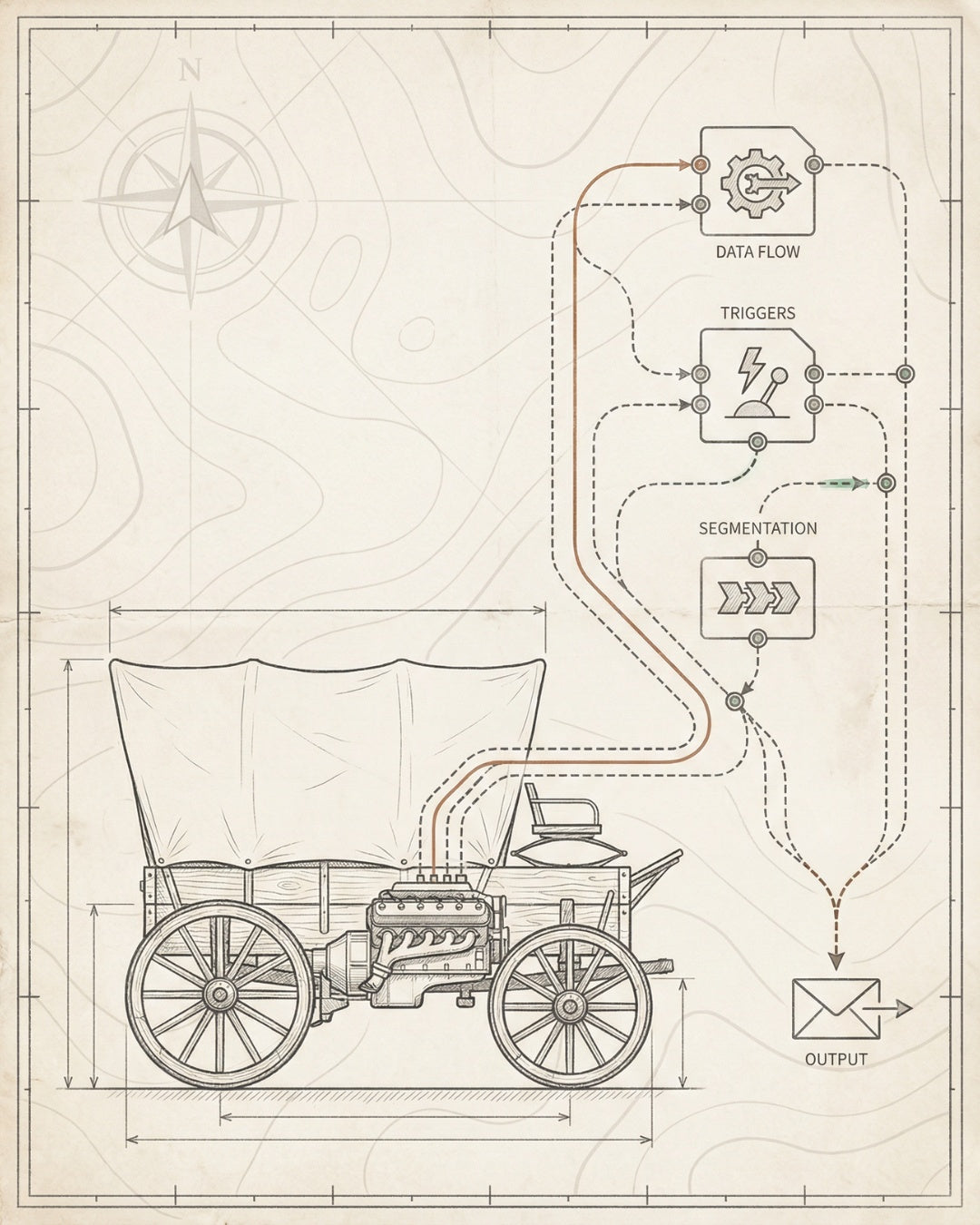
This is the blueprint for building SEO infrastructure that compounds. No retainers. No fluff. Just the systems that make rankings inevitable.
The Retainer Trap
Miami ecommerce brands are stuck paying monthly fees for deliverables, not systems. Infrastructure-first SEO builds once, compounds forever.
4-Layer Foundation
Crawlability → Indexability → Rankability → Convertibility. Most agencies skip straight to content. The foundation determines what scales.
AI Search Changes Everything
AI Overviews, Perplexity, ChatGPT — visibility now requires entity signals and structured data. Traditional SEO isn’t enough.
The Compound Visibility Stack
Website × Content × Technical × Distribution. Each layer multiplies the others. Most brands only build one layer.
30-Day Sprints Win
Sprint SEO beats retainer SEO. Focused cycles, installed systems, measurable outcomes. Traction first, then throttle.
What You’ll Learn
- The 4-Layer SEO Foundation Miami Stores Skip
- AI Search Optimization for Miami Ecommerce
- The Compound Visibility Stack for DTC Brands
- Sprint SEO vs. Retainer SEO: What Miami Founders Are Choosing
- How to Audit Your Ecommerce Store’s SEO Foundation
- Implementation: Installing SEO Infrastructure in 30 Days
- Frequently Asked Questions
The 4-Layer SEO Foundation Miami Stores Skip
Most ecommerce SEO companies in Miami will audit your site and hand you a 47-page PDF with 200 “recommendations.” Half of them are cosmetic. The other half aren’t sequenced properly. You fix the meta descriptions before the crawl budget. You optimize product pages that aren’t even indexed.
The technical SEO foundation for ecommerce isn’t a checklist. It’s a build sequence. Each layer unlocks the next. Skip one, and everything above it underperforms.
Layer 1: Crawlability
Can Google’s bots access every product page, category page, and content asset you want to rank? If your robots.txt is blocking critical paths, if your JavaScript is rendering content client-side without server-side fallbacks, if your site architecture buries product pages six clicks deep — you don’t have a content problem. You have a crawlability problem.
What to fix first:
- Robots.txt configuration: Ensure you’re not blocking CSS, JavaScript, or critical page types. Most Shopify stores accidentally block /collections/ or pagination.
- XML sitemap architecture: Separate sitemaps for products, collections, blog posts. Prioritize high-value pages. Remove out-of-stock or discontinued SKUs.
- Internal linking structure: Every product should be reachable within three clicks from the homepage. Use breadcrumbs, related products, and category cross-links.
- Crawl budget optimization: For stores with 1,000+ SKUs, crawl budget matters. Redirect chains, duplicate URLs, and low-value pages waste it.
Founding Engine Approach: We start every engagement with a crawl simulation using Screaming Frog and Google Search Console data. We map what Google sees vs. what you think it sees. The gap is usually 30–40% of your catalog.
Layer 2: Indexability
Crawlable doesn’t mean indexable. Google might visit your product page, but if it’s thin content, duplicate, or canonicalized to another URL, it won’t index. For Miami ecommerce brands with seasonal inventory or limited SKU runs, this kills visibility.
What to fix:
- Canonical tags: Self-referencing canonicals on every unique page. Consolidate variants (size, color) under a single canonical if the content is identical.
- Noindex audits: Check for accidental noindex tags on category pages, filters, or product pages. Shopify apps often add these without warning.
- Content depth: Product pages need 200+ words of unique, descriptive content. Not manufacturer descriptions. Not AI-generated filler. Real value.
- Duplicate content resolution: Use parameter handling in Google Search Console. Block or canonicalize sort/filter URLs that create duplicate pages.

Layer 3: Rankability
Now you’re indexed. But ranking requires signals: relevance, authority, user experience. This is where on-page SEO for ecommerce and technical performance converge.
What to install:
- Schema markup: Product schema with price, availability, reviews, SKU, brand. BreadcrumbList schema for navigation. Organization schema for brand signals.
- Core Web Vitals optimization: LCP under 2.5s, FID under 100ms, CLS under 0.1. Miami’s mobile-first audience won’t wait for slow product pages.
- Entity signals: Use structured data to define your brand, products, and relationships. This feeds AI search and Google’s Knowledge Graph.
- Internal linking architecture: Topical clusters. Category pages link to related categories. Product pages link to complementary products. Blog content links to product pages with commercial intent.
Rankability is where most ecommerce SEO services start. But if layers 1 and 2 aren’t solid, you’re optimizing pages that won’t rank anyway.
Layer 4: Convertibility
Rankings without conversions are vanity metrics. The final layer connects SEO to revenue: conversion rate optimization, user experience, and retention loops.
What to connect:
- Landing page experience: Fast load times, clear CTAs, trust signals (reviews, security badges, return policy).
- Email capture: Exit-intent popups, discount codes for first-time visitors, post-purchase flows.
- Retention systems: Email sequences, SMS campaigns, loyalty programs. SEO brings the traffic. Retention multiplies the LTV.
- Analytics integration: Google Analytics 4, Google Search Console, heatmaps. Track not just traffic, but revenue per keyword, conversion rate by landing page, and LTV by channel.
The 4-Layer SEO Foundation isn’t theory. It’s the build sequence we use for every ecommerce client. Crawlability → Indexability → Rankability → Convertibility. In that order. Always.
AI Search Optimization for Miami Ecommerce
Google’s AI Overviews now appear on 15–20% of search results. Perplexity, ChatGPT, and other AI search engines are growing fast. If your ecommerce store isn’t optimized for AI citations, you’re invisible in the fastest-growing search channel.
Traditional SEO optimizes for blue links. AI search optimization optimizes for citations, entity recognition, and structured data that LLMs can parse.
How AI Search Works for Ecommerce
When a user asks ChatGPT or Perplexity “best running shoes for Miami heat,” the AI doesn’t crawl the web in real-time. It references:
- Structured data: Schema markup that defines product attributes, reviews, pricing, availability.
- Entity signals: Brand mentions, knowledge graph connections, authoritative backlinks.
- Content depth: Long-form guides, comparison pages, FAQs that answer user intent comprehensively.
- Freshness: Recently updated content ranks higher in AI citations. Stale product pages lose visibility.
If your product pages are thin, lack schema markup, or don’t have entity-rich content, AI search engines skip you. They cite the brands that built infrastructure for machine readability.
What to Install for AI Search Visibility
Here’s what we implement for every ecommerce client targeting AI search:
- Product schema with full attributes: Not just name and price. Include brand, SKU, GTIN, material, size options, color variants, reviews, aggregate rating, shipping details.
- FAQ schema on product pages: Answer common questions directly on the page. AI models pull these as citations.
- Entity markup for brand and organization: Define your brand in machine-readable format. Connect it to social profiles, knowledge graph entities, and authoritative sources.
- Comparison and guide content: AI search loves comprehensive, structured content. “Best X for Y” guides with tables, lists, and clear recommendations.
- Freshness signals: Update product pages regularly. Add new reviews, update pricing, refresh images. AI models prioritize recent content.

Real Example: A Miami-based activewear brand we worked with added comprehensive FAQ schema and updated product descriptions with entity-rich content. Within 45 days, they appeared in 12 AI Overview citations for high-intent queries like “best moisture-wicking shirts for Florida humidity.” Traffic from AI search grew 180%.
AI search isn’t replacing traditional SEO. It’s adding a new layer. The brands that win are the ones building infrastructure for both.
The Compound Visibility Stack for DTC Brands
Here’s the framework that separates $500K ecommerce stores from $5M+ brands: the Compound Visibility Stack (CVS). It’s not one tactic. It’s four layers that multiply each other.
Most Miami ecommerce brands focus on one layer — usually content or paid ads. The brands that scale build all four and connect them systematically.
Layer 1: Website (The Foundation)
Your website is the infrastructure everything else builds on. If it’s slow, broken, or poorly architected, nothing else compounds. This includes:
- Performance optimization (Core Web Vitals)
- Mobile-first design
- Conversion-optimized product pages
- Trust signals (reviews, security, return policy)
- Email capture systems
We build ecommerce sites on Shopify, Astro, and headless platforms. Every site is performance-first and SEO-ready from day one. No retrofitting SEO later. It’s installed from the foundation.
Layer 2: Content (The Magnet)
Content attracts organic traffic, builds topical authority, and feeds AI search citations. But not blog posts for the sake of blog posts. Strategic content mapped to:
- Product categories (buying guides, comparisons)
- Customer questions (FAQ content, troubleshooting)
- Search intent (informational → commercial → transactional)
- Internal linking architecture (hubs and spokes)
Every piece of content should link to a product page, category page, or conversion point. Content without commercial intent is a hobby, not a growth system.
Layer 3: Technical (The Multiplier)
Technical SEO is what makes content rankable and sustainable. This is where most agencies fail. They write content but skip the infrastructure that makes it compound:
- Schema markup (Product, FAQ, BreadcrumbList, Organization)
- Internal linking architecture
- Site speed and Core Web Vitals
- Crawl budget optimization
- Indexation management
Technical SEO isn’t a one-time audit. It’s ongoing infrastructure maintenance. As your catalog grows, your technical foundation needs to scale with it.
Layer 4: Distribution (The Accelerator)
Distribution takes your content and technical foundation and amplifies it across channels:
- Email marketing (welcome flows, abandoned cart, post-purchase)
- Social proof (reviews, UGC, influencer partnerships)
- Backlink acquisition (PR, partnerships, digital PR)
- AI search optimization (citations in ChatGPT, Perplexity, AI Overviews)
Distribution without foundation is paid traffic that doesn’t convert. Foundation without distribution is a great site nobody finds. The Compound Visibility Stack connects all four.
How CVS Compounds: A Miami DTC brand selling eco-friendly home goods built all four layers over 90 days. Website performance improved (LCP from 4.2s to 1.8s). Content mapped to product categories. Technical SEO installed schema and internal linking. Distribution via email capture and AI search optimization. Result: 250% organic traffic increase, 180% revenue increase, 40% reduction in CAC.
The Compound Visibility Stack isn’t a marketing plan. It’s infrastructure. You build it once, maintain it systematically, and it scales with your revenue.
Sprint SEO vs. Retainer SEO: What Miami Founders Are Choosing
Most ecommerce SEO companies in Miami operate on the retainer model: $3,000–$8,000/month, 6–12 month contracts, deliverables-based pricing. You’re paying for hours, not outcomes.
Here’s the problem: retainer SEO incentivizes agencies to drag out timelines, pad deliverables, and avoid the hard technical work that actually moves the needle. You get monthly reports, keyword tracking, and blog posts. But the infrastructure never gets installed.
Sprint SEO flips the model. Instead of open-ended retainers, you work in focused 30-day cycles. Each sprint has a specific goal: install schema markup, fix Core Web Vitals, build internal linking architecture, optimize for AI search.
Dimension Retainer SEO Sprint SEO
Pricing Model Monthly retainer ($3K–$8K/mo) Fixed-price sprints (30-day cycles)
Contract Length 6–12 months minimum Sprint-by-sprint (no lock-in)
Deliverables Hours, reports, content pieces Installed systems, measurable outcomes
Focus Ongoing tactics Infrastructure installation
Timeline to Results 6–12 months (“SEO takes time”) 30–90 days (systems compound faster)
Accountability Low (you’re locked in) High (prove value every sprint)
Best For Enterprises with dedicated SEO teams DTC brands, lean teams, founder-led growth
Sprint SEO works because it aligns incentives. The agency has to deliver measurable outcomes every 30 days, or you don’t renew. No fluff. No filler. Just the infrastructure that compounds.
What a 30-Day Sprint Looks Like
Here’s a real example from a Miami-based skincare brand we worked with:
Sprint 1 (Days 1–30): Technical Foundation
- Audit crawlability and indexation (found 40% of product pages not indexed)
- Fix robots.txt and XML sitemap structure
- Install Product schema on all SKUs
- Optimize Core Web Vitals (LCP from 3.8s to 2.1s)
- Result: 120% increase in indexed pages, 15% improvement in mobile rankings
Sprint 2 (Days 31–60): Content Infrastructure
- Build internal linking architecture (category → product, product → related products)
- Create 8 buying guides mapped to high-intent keywords
- Add FAQ schema to top 20 product pages
- Result: 85% increase in organic traffic, 12 new page 1 rankings
Sprint 3 (Days 61–90): AI Search & Distribution
- Optimize for AI Overviews and Perplexity citations
- Install email capture flows on high-traffic pages
- Build backlink acquisition system (digital PR, partnerships)
- Result: 6 AI Overview citations, 200% increase in email list growth, 40% increase in organic revenue
Three sprints. 90 days. Infrastructure installed. Revenue growing. No 12-month contract. No retainer bloat.
How to Audit Your Ecommerce Store’s SEO Foundation
Before you hire an ecommerce SEO company in Miami (or anywhere), run your own audit. You don’t need to fix everything yourself, but you need to know what’s broken. Here’s the exact process we use for every new client.
Step 1: Crawl Your Site
Use Screaming Frog (free for up to 500 URLs) or a paid tool like Sitebulb. Crawl your entire site and look for:
- Pages returning 404 or 301 errors
- Redirect chains (A → B → C instead of A → C)
- Pages with missing or duplicate title tags
- Pages with missing or duplicate meta descriptions
- Images missing alt text
- Pages with thin content (under 200 words)
Export the data. Prioritize by traffic (fix high-traffic pages first) and revenue impact (fix product pages before blog posts).
Step 2: Check Indexation in Google Search Console
Go to Google Search Console → Coverage Report. Look for:
- Excluded pages: Pages Google found but chose not to index. Common reasons: duplicate content, thin content, noindex tags.
- Errors: Pages that returned errors when Google tried to crawl them.
- Valid pages: Pages successfully indexed. Compare this number to your total product + category + content pages. If there’s a gap, you have an indexation problem.
Step 3: Test Core Web Vitals
Run your homepage and top 5 product pages through Google PageSpeed Insights. Look for:
- Largest Contentful Paint (LCP): Should be under 2.5 seconds. If it’s over 4 seconds, you’re losing mobile traffic.
- First Input Delay (FID): Should be under 100ms. Measures interactivity.
- Cumulative Layout Shift (CLS): Should be under 0.1. Measures visual stability (images and ads shouldn’t shift the page).
If you’re failing Core Web Vitals, fix this before anything else. Slow sites don’t rank, even with perfect content.
Step 4: Validate Schema Markup
Use Google’s Rich Results Test (search.google.com/test/rich-results). Test your:
- Homepage (Organization schema)
- Product pages (Product schema with price, reviews, availability)
- Category pages (BreadcrumbList schema)
- Blog posts (Article schema)
If you don’t have schema markup, you’re invisible to AI search and missing rich snippets in Google results.
Step 5: Audit Internal Linking
Pick your top 5 product pages. Check:
- How many internal links point to each page?
- Are they linked from relevant category pages, related products, and blog content?
- Are they buried 6+ clicks from the homepage?
Internal linking is the most underutilized ecommerce SEO best practice. It distributes authority, improves crawlability, and boosts rankings faster than external backlinks.
Step 6: Check for AI Search Readiness
Ask ChatGPT or Perplexity a question related to your product category (e.g., “best eco-friendly yoga mats”). See if your brand appears in the response. If not, you’re not optimized for AI search.
What to check:
- Do your product pages have comprehensive, entity-rich descriptions?
- Do you have FAQ content answering common customer questions?
- Is your schema markup complete and error-free?
- Do you have authoritative backlinks and brand mentions?
Founding Engine Audit: We run this exact audit for every client in the first 48 hours. We document what’s broken, prioritize by revenue impact, and build a 30-day sprint plan to fix the foundation. No 47-page PDFs. Just a sequenced build plan.
Implementation: Installing SEO Infrastructure in 30 Days
Here’s the step-by-step process for installing ecommerce SEO optimization infrastructure in 30 days. This is the exact sprint framework we use for Miami DTC brands and national ecommerce clients.
Days 1–7: Audit and Prioritize
Goal: Document the current state and identify the highest-impact fixes.
Tasks:
- Run a full-site crawl using Screaming Frog or Sitebulb
- Audit Google Search Console for indexation issues
- Test Core Web Vitals on top 10 pages
- Validate schema markup (or document what’s missing)
- Map internal linking structure
- Identify top 20 revenue-driving pages (product + category)
Deliverable: A prioritized fix list with revenue impact scores. Focus on crawlability and indexability first.
Days 8–14: Fix Technical Blockers
Goal: Resolve issues preventing pages from being crawled and indexed.
Tasks:
- Fix robots.txt configuration (remove accidental blocks)
- Update XML sitemap structure (separate sitemaps for products, categories, blog)
- Resolve redirect chains and 404 errors
- Remove or canonicalize duplicate pages
- Fix noindex tags on important pages
- Optimize site architecture (ensure products are within 3 clicks of homepage)
Deliverable: Crawlability and indexability restored. Submit updated sitemap to Google Search Console.
Days 15–21: Install Schema Markup
Goal: Make your site machine-readable for Google and AI search engines.
Tasks:
- Install Product schema on all product pages (price, availability, reviews, SKU, brand)
- Add BreadcrumbList schema for navigation
- Install Organization schema on homepage
- Add FAQ schema to top product pages
- Validate all schema using Google’s Rich Results Test
Deliverable: Schema markup installed and validated. Rich snippet eligibility enabled.
Days 22–28: Build Internal Linking Architecture
Goal: Distribute authority and improve crawlability through strategic internal links.
Tasks:
- Link category pages to related categories
- Add “related products” sections to product pages
- Link blog content to relevant product and category pages
- Add breadcrumb navigation to all pages
- Create topical clusters (hub pages linking to spoke content)
Deliverable: Internal linking architecture installed. Every important page has 5+ internal links pointing to it.
Days 29–30: Monitor and Document
Goal: Confirm changes are indexed and track initial ranking movement.
Tasks:
- Request re-indexing in Google Search Console for updated pages
- Set up rank tracking for top 20 keywords
- Document baseline metrics (traffic, rankings, indexed pages)
- Set up Google Analytics 4 goals for conversions
Deliverable: Infrastructure installed. Baseline metrics documented. Ready for Sprint 2 (content and distribution).

Real Result: A Miami-based home decor brand followed this exact 30-day sprint. By day 30, they had 180% more indexed pages, Core Web Vitals in the green, and schema markup on 100% of products. By day 60, organic traffic was up 120%. By day 90, they ranked page 1 for 18 new keywords and saw a 95% increase in organic revenue.
This isn’t theory. It’s the ecommerce SEO checklist we’ve executed for 50+ brands. Infrastructure first. Traction, then throttle.
Frequently Asked Questions
What makes an ecommerce SEO company in Miami different from national agencies? +
Geography matters less than methodology. Most Miami-based agencies offer the same retainer model as national firms. What matters is whether they build infrastructure or just deliver tactics. Look for agencies that work in sprints, focus on technical SEO, and have proven ecommerce results. Founding Engine serves brands nationally from Denver, but our infrastructure-first approach works for Miami DTC brands just as well as brands in any other market.
How much does ecommerce SEO cost for a Miami-based store? +
Retainer-based agencies charge $3,000–$8,000/month with 6–12 month contracts. Sprint-based models (like ours) charge per project or per sprint, typically $5,000–$15,000 for a 30-day cycle depending on scope. The difference: retainers bill for hours, sprints deliver installed systems. For ecommerce SEO pricing that aligns with outcomes, look for fixed-price sprints, not open-ended retainers.
How long does it take to see results from ecommerce SEO? +
If you’re starting from zero, expect 60–90 days to see meaningful traffic increases. If you already have some authority and just need technical fixes, you can see ranking improvements in 30 days. The key is building infrastructure first (crawlability, indexability, schema markup, Core Web Vitals), then layering content and distribution. Agencies that promise page 1 rankings in 30 days are either lying or targeting low-competition keywords that don’t drive revenue.
What’s the difference between ecommerce SEO and regular SEO? +
Ecommerce SEO prioritizes product pages, category architecture, schema markup for products, and conversion optimization. Regular SEO (for blogs, SaaS, or service businesses) focuses more on content and backlinks. Ecommerce SEO also deals with challenges like duplicate content (product variants), thin content (SKU pages), and seasonal inventory. The technical foundation is more complex, and the goal is revenue, not just traffic.
Should I hire an SEO agency or do it myself? +
If you’re technical and have time, you can handle basic on-page SEO and content yourself. But technical infrastructure (schema markup, Core Web Vitals, crawl budget optimization, AI search signals) requires expertise and tools. Most founders should DIY the strategy (keyword research, content planning) and hire experts for execution (technical SEO, schema installation, performance optimization). The worst option: hiring freelancers who deliver tactics without systems.
What’s the most important SEO factor for ecommerce stores? +
There’s no single factor, but if forced to choose: site architecture and internal linking. A well-structured site with clear category hierarchies and strategic internal links compounds every other SEO effort. Schema markup, content, and backlinks all work better when your site architecture is sound. Most agencies skip this because it’s hard, technical work. But it’s the foundation that makes everything else scale.
How do I know if my ecommerce SEO is working? +
Track these metrics: (1) Indexed pages in Google Search Console (should grow as you add products and content), (2) Organic traffic from Google Analytics, (3) Rankings for target keywords, (4) Organic revenue (the only metric that truly matters), (5) Conversion rate by landing page. If traffic is growing but revenue isn’t, you have a conversion problem, not an SEO problem. If rankings are improving but traffic isn’t, you’re ranking for low-volume keywords.
What’s the ROI of ecommerce SEO for Miami brands? +
SEO compounds over time. In month 1, you might see 10–20% traffic increases. By month 6, if you’ve built the infrastructure correctly, you should see 100–250% traffic growth and 50–150% revenue growth from organic. The ROI improves every month because the infrastructure you build continues working without additional spend. Compare that to paid ads, where you stop paying and traffic stops immediately. For our clients, average ROI is 3–5x within 12 months.
Ready to Build SEO Infrastructure That Compounds?
Stop renting SEO from retainer agencies. Start installing systems that scale. Founding Engine builds the technical SEO foundation, AI search optimization, and content infrastructure that makes rankings inevitable.
No retainers. No fluff. Just 30-day sprints that deliver installed systems and measurable outcomes.
Matt Hyder
SEO infrastructure and AI search optimization at Founding Engine.
Want SEO that actually holds?
Get a free infrastructure audit from the Founding Engine team.
Get Your Free Audit