Ecommerce SEO Course: Build Systems, Not Task Lists
Most ecommerce SEO courses teach tactics. This one teaches infrastructure—the technical foundation that compounds rankings, revenue, and AI search visibility over time.
**
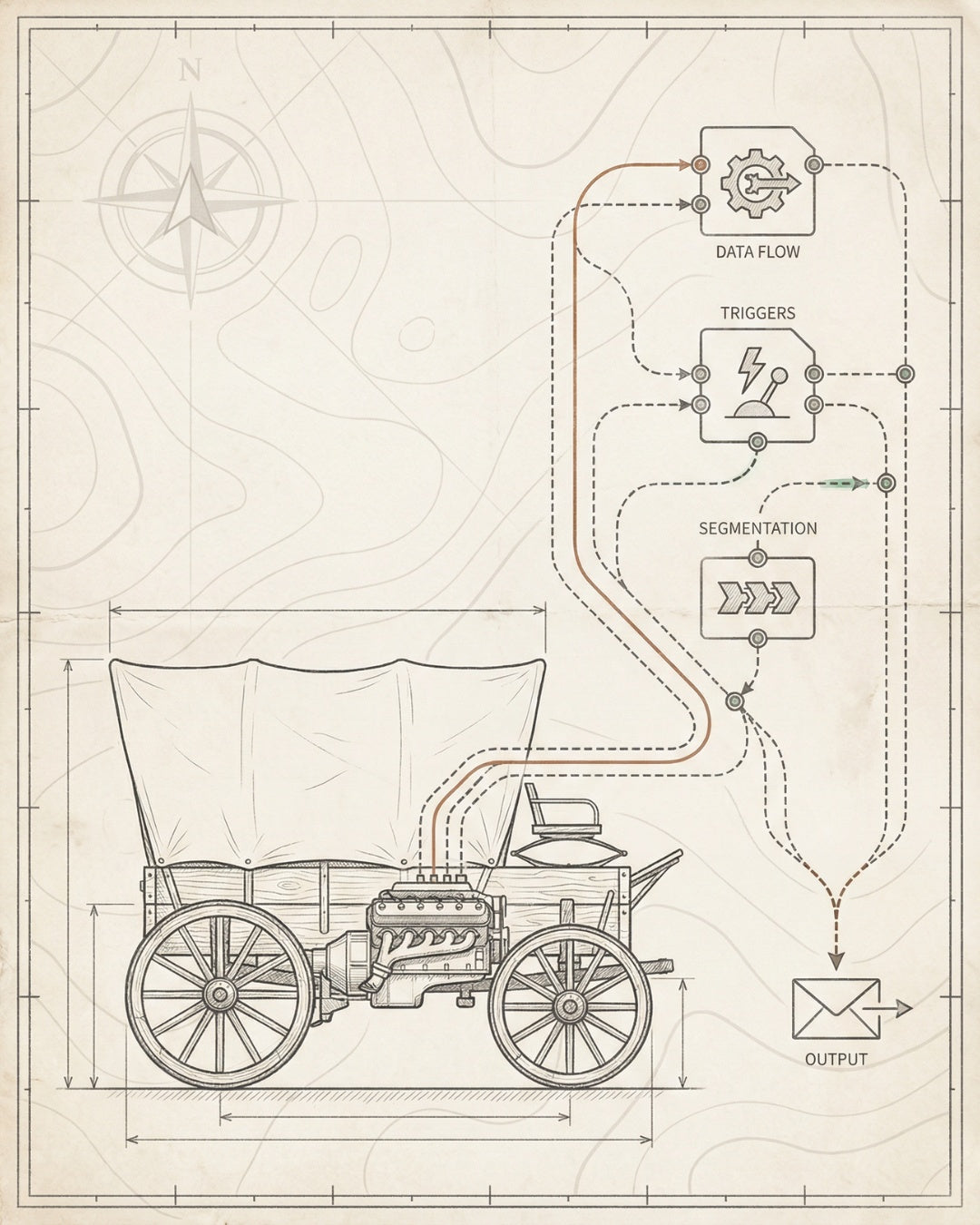
Slide 1/5 Most ecommerce SEO courses teach tactics. This one teaches infrastructure—the 4-layer foundation that makes rankings inevitable and compounds over time.
Slide 2/5 The 4-Layer SEO Foundation: Crawlability → Indexability → Rankability → Convertibility. Each layer builds on the last. Skip one, and the system collapses.
Slide 3/5 Technical infrastructure comes first: site architecture, Core Web Vitals, schema markup. Content can’t rank if the foundation is broken.
Slide 4/5 AI search optimization isn’t optional anymore. Entity signals, structured data for LLMs, and knowledge graph connections determine citation visibility.
Slide 5/5 The Compound Visibility Stack: Website × Content × Technical × Distribution. Build it once in 30-day cycles, then scale forever. No retainers.
Table of Contents
- Why Most Ecommerce SEO Courses Fail Founders
- The 4-Layer SEO Foundation Framework
- Technical SEO Infrastructure for Ecommerce
- Content Systems That Scale
- AI Search Optimization Layer
- The Compound Visibility Stack in Action
- Implementation: Your 30-Day Build Sequence
- Frequently Asked Questions
Why Most Ecommerce SEO Courses Fail Founders
Here’s what happens: You take an ecommerce SEO course. You learn keyword research, how to write meta descriptions, maybe some link-building tactics. You implement everything. Three months later, your rankings haven’t moved. Your organic traffic is flat. You’re back to paying for ads.
The problem isn’t your execution. The problem is the course taught you tactics without infrastructure**.
Most ecommerce SEO courses are built for freelancers who need to show clients they’re “doing SEO work.” They teach deliverables—blog posts, backlinks, optimized product pages. But they don’t teach the systems that make those deliverables compound.
The Infrastructure Gap
You can’t build a skyscraper on a cracked foundation. You can’t scale organic traffic without technical infrastructure. Yet most ecommerce SEO education skips straight to content and keywords—the top floor—while ignoring the structural engineering underneath.
This is the difference between an ecommerce SEO course that teaches what to do and one that teaches how to build systems that work without you. The former gives you a task list. The latter gives you an architecture.
At Founding Engine, we’ve generated over $30M in organic revenue for ecommerce brands by installing infrastructure first. Not content calendars. Not backlink campaigns. Infrastructure. The kind that holds under scale.
This isn’t theory. It’s the exact framework we use when we engineer SEO infrastructure for brands that want to own their organic channel.
The 4-Layer SEO Foundation Framework
Every ecommerce SEO course should start here: the 4-Layer SEO Foundation. It’s not flashy. It’s not optional. It’s the sequence that determines whether your SEO compounds or collapses.

The 4-Layer SEO Foundation
- Crawlability — Can search engines discover your pages?
- Indexability — Are the right pages getting indexed (and the wrong ones blocked)?
- Rankability — Do your pages have the authority and relevance signals to rank?
- Convertibility — Do rankings turn into revenue?
Layer 1: Crawlability
If Google can’t crawl your site efficiently, nothing else matters. Crawlability issues kill ecommerce stores because they often have thousands of product pages competing for limited crawl budget.
What to check:
- Robots.txt configuration — Are you accidentally blocking important pages?
- XML sitemap structure — Is your sitemap clean, current, and submitted to Google Search Console?
- Site architecture — Can Google reach every important page within 3 clicks from the homepage?
- Page speed and server response time — Slow sites get crawled less frequently
- Internal linking — Are orphan pages (pages with no internal links) hiding from crawlers?
Most ecommerce SEO courses skip this layer entirely. They assume your site is already crawlable. It probably isn’t. Run a technical SEO audit before you touch a single keyword.
Layer 2: Indexability
Crawlability gets Google to your pages. Indexability determines whether Google stores them in its index and considers them for rankings.
Common indexability problems in ecommerce:
- Duplicate content from product variants — Color and size variations creating dozens of near-identical pages
- Faceted navigation — Filter URLs generating thousands of low-value indexed pages
- Canonical tag misconfigurations — Pointing canonicals to the wrong page or creating circular references
- Noindex tags on important pages — Often left over from development or staging
- Thin content pages — Out-of-stock products, empty categories, or auto-generated pages with no unique value
The goal: Index what should rank. Block what shouldn’t. This is where technical SEO for ecommerce separates infrastructure from guesswork.
Layer 3: Rankability
Now that Google can crawl and index your pages, can they rank? Rankability is where most ecommerce SEO courses spend 90% of their time—keywords, content, backlinks.
But rankability doesn’t work without layers 1 and 2. You can’t rank pages Google hasn’t indexed. You can’t build authority on a site Google can’t crawl efficiently.
Rankability factors for ecommerce:
- Keyword-mapped content architecture — Every category, subcategory, and product page targeting specific search intent
- On-page optimization — Title tags, headers, meta descriptions, and image alt text aligned with target keywords
- Internal linking strategy — Distributing authority from high-performing pages to newer or deeper pages
- Schema markup — Product schema, review schema, breadcrumb schema, and FAQ schema to enhance SERP visibility
- Backlink profile — Domain authority, referring domains, and topical relevance from external sites
- Content depth and uniqueness — Product descriptions, buying guides, and category content that differentiates you from competitors
This is where SEO for ecommerce product pages becomes critical. Every product page is a ranking opportunity—if it’s built right.
Layer 4: Convertibility
Rankings without revenue are vanity metrics. Convertibility is the layer most ecommerce SEO courses ignore completely.
You need to track:
- Organic revenue attribution — Which keywords and pages are driving actual sales, not just traffic
- Conversion rate by landing page — Are your top-ranking pages converting at the same rate as paid landing pages?
- User experience metrics — Bounce rate, time on page, and engagement signals that impact rankings
- Core Web Vitals — LCP, FID, and CLS scores that affect both rankings and conversion rates
If your organic traffic is growing but revenue isn’t, you have a convertibility problem. This is where ecommerce SEO optimization shifts from traffic generation to revenue engineering.
The 4-Layer SEO Foundation isn’t just a framework. It’s a build sequence. You fix crawlability first. Then indexability. Then rankability. Then convertibility. Skip a layer, and the system breaks.
Technical SEO Infrastructure for Ecommerce
Technical SEO is where ecommerce stores win or lose. You can have perfect content and a killer backlink profile, but if your site architecture is broken, Google won’t rank you.
Most ecommerce SEO courses treat technical SEO as a checklist. “Make sure your site is mobile-friendly. Optimize your images. Use HTTPS.” That’s not infrastructure. That’s hygiene.
Infrastructure is the underlying system that makes your site crawlable, indexable, and scalable as you add products, categories, and content.

Site Architecture and URL Structure
Your site architecture determines how Google crawls your store and how users navigate it. A flat architecture (where every page is 1-2 clicks from the homepage) is ideal for small stores. A hierarchical architecture (categories → subcategories → products) is necessary for larger catalogs.
Best practices:
- Logical category hierarchy — Group products by intent, not just by type
- Clean URL structure — Use descriptive, keyword-rich URLs without unnecessary parameters
- Breadcrumb navigation — Helps users and search engines understand page relationships
- Faceted navigation control — Use canonical tags or noindex to prevent filter URLs from creating duplicate content
Example of good URL structure:
- yourstore.com/mens-running-shoes/ (category)
- yourstore.com/mens-running-shoes/trail-running/ (subcategory)
- yourstore.com/mens-running-shoes/trail-running/product-name/ (product)
Bad URL structure:
- yourstore.com/product?id=12345&color=blue&size=10
This is foundational work. If you’re building on Shopify, Astro, or a headless platform, this needs to be configured correctly from day one. We handle this in our website design and build service—performance-first, SEO-ready from launch.
Core Web Vitals Optimization
Core Web Vitals are Google’s speed and user experience metrics: Largest Contentful Paint (LCP), First Input Delay (FID), and Cumulative Layout Shift (CLS). They’re ranking factors, and they directly impact conversion rates.
For ecommerce stores:
- LCP (Largest Contentful Paint) — Should be under 2.5 seconds. Optimize hero images, lazy-load below-the-fold content, and use a CDN.
- FID (First Input Delay) — Should be under 100ms. Minimize JavaScript execution and defer non-critical scripts.
- CLS (Cumulative Layout Shift) — Should be under 0.1. Set explicit width and height attributes on images and ads to prevent layout shifts.
Most ecommerce platforms (especially Shopify) load heavy JavaScript libraries that kill Core Web Vitals scores. You need to audit and optimize:
- Third-party scripts (analytics, chat widgets, review apps)
- Image sizes and formats (use WebP or AVIF)
- Font loading strategies (use font-display: swap)
- Server response time (upgrade hosting if necessary)
This is technical work that compounds. A 1-second improvement in LCP can increase conversion rates by 10-20%. That’s not just SEO—that’s revenue infrastructure.
Schema Markup and Structured Data
Schema markup is how you communicate with search engines in their language. For ecommerce, schema is what makes your products eligible for rich results—star ratings, price, availability, and product images directly in search results.
Required schema for ecommerce:
- Product schema — Name, image, description, SKU, brand, price, availability
- Review schema — Aggregate ratings and individual reviews (must follow Google’s guidelines—no fake reviews)
- Breadcrumb schema — Shows your site hierarchy in search results
- Organization schema — Your brand name, logo, and contact info for knowledge graph eligibility
- FAQ schema — For product pages with common questions (though Google has limited FAQ rich results recently)
Schema isn’t optional. It’s the difference between a plain blue link in search results and a rich result with images, ratings, and pricing. Rich results get higher click-through rates, which signals to Google that your page is relevant, which improves rankings. It compounds.
Validate your schema using Google’s Rich Results Test before deploying. One syntax error can break the entire schema block.
This is part of the ecommerce SEO checklist we run on every store we build. Schema is infrastructure, not decoration.
Content Systems That Scale
Content without a system is just blog posts. Content with a system is a compounding asset that drives rankings, builds authority, and captures search intent at every stage of the buyer journey.
Most ecommerce SEO courses teach you to write blog posts and optimize product descriptions. That’s not a content system. That’s content production.
A content system is:
- Keyword-mapped — Every piece of content targets a specific keyword cluster with defined search intent
- Architecturally integrated — Content pages link to product pages, category pages link to content, and internal linking distributes authority
- Scalable — You can add new products, categories, or content without breaking the structure
- AI-readable — Structured with schema, entity signals, and topical authority that LLMs can parse

Keyword Mapping for Product Categories
Keyword mapping is the process of assigning target keywords to specific pages based on search intent and funnel stage. For ecommerce, this means:
- Transactional keywords → Product pages (“buy running shoes,” “Nike Air Max sale”)
- Commercial investigation keywords → Category pages and comparison content (“best running shoes for flat feet,” “trail running shoes vs road running shoes”)
- Informational keywords → Blog posts and guides (“how to choose running shoes,” “running shoe sizing guide”)
The mistake most stores make: targeting the same keyword on multiple pages. This creates internal competition and dilutes your ranking potential. One keyword, one primary target page.
Use a keyword map spreadsheet:
- Column 1: Target keyword
- Column 2: Search volume
- Column 3: Search intent (transactional, commercial, informational)
- Column 4: Target URL
- Column 5: Current ranking (if any)
This map becomes your content roadmap. Every new product, category, or blog post gets a keyword assignment before it’s created. No guessing. No overlap.
Internal Linking Architecture
Internal linking is how you distribute authority across your site. Google follows links to discover pages and uses link structure to understand which pages are most important.
For ecommerce, your internal linking architecture should:
- Link from high-authority pages to new pages — Your homepage and top category pages should link to newer products and content
- Use descriptive anchor text — “Men’s trail running shoes” is better than “click here”
- Create topical clusters — Group related content and link them together (e.g., all running shoe guides link to each other and to the running shoes category)
- Avoid orphan pages — Every page should have at least one internal link pointing to it
Internal linking is one of the most underutilized levers in ecommerce SEO. It costs nothing, requires no external dependencies, and compounds over time as you add more content.
This is part of what we install in our ecommerce SEO strategy builds—internal linking systems that scale with your catalog.
Content Types That Drive Rankings
Not all content is created equal. Some content types consistently outperform others in ecommerce SEO:
- Buying guides — “How to choose [product category]” — High intent, high conversion
- Comparison posts — “[Product A] vs [Product B]” — Captures commercial investigation keywords
- Use case content — “Best [products] for [specific use case]” — Targets long-tail, high-conversion keywords
- FAQ pages — Answers common questions, targets featured snippets, reduces support load
- Category descriptions — 300-500 words of unique content on every category page explaining what’s in the category and why it matters
The goal isn’t to publish as much content as possible. The goal is to publish strategically mapped content that fills keyword gaps and supports your product pages.
This is the difference between content marketing and content infrastructure. One is a cost center. The other is a revenue engine.
AI Search Optimization Layer
AI search is rewriting the rules. Google’s AI Overviews, ChatGPT’s web search, Perplexity citations—these aren’t future trends. They’re live, and they’re changing how people discover products.
Traditional ecommerce SEO optimizes for 10 blue links. AI search optimization optimizes for citations, entity recognition, and structured knowledge.
If your store isn’t optimized for AI search, you’re invisible to the fastest-growing search channel. Most ecommerce SEO courses don’t even mention this. We’ve been building AI search optimization systems for over a year.
Entity Signals and Knowledge Graphs
Search engines don’t just index keywords anymore. They index entities—people, places, brands, products, concepts. Entities are how Google (and LLMs) understand relationships between things.
For ecommerce, entity optimization means:
- Consistent brand mentions — Your brand name, logo, and description should be identical across your site, Google Business Profile, and external citations
- Product entity markup — Use schema to define product attributes (brand, model, SKU, category) so LLMs can parse them
- Topical authority — Publish content that establishes your brand as an authority in your category (e.g., a running shoe store publishing running guides)
- Knowledge graph connections — Link to authoritative sources (Wikipedia, industry organizations) to establish topical relevance
Entity signals are what get your brand into Google’s Knowledge Graph. Once you’re in the Knowledge Graph, you’re eligible for rich results, brand panels, and AI Overview citations.
Structured Data for LLMs
Large language models (LLMs) like ChatGPT and Claude don’t read your site the way humans do. They parse structured data—schema markup, headings, lists, tables.
To optimize for LLM citations:
- Use semantic HTML — Proper heading hierarchy (H1 → H2 → H3), lists, and tables
- Install schema markup — Product, review, FAQ, and organization schema
- Write concise, factual content — LLMs prefer clear, authoritative answers over marketing fluff
- Include data and statistics — Numbers, dates, and specific facts are more likely to be cited
AI Overviews and Perplexity citations don’t just link to your site—they quote your content. That means your product descriptions, buying guides, and FAQ pages need to be written for machine readability, not just human readers.
Optimizing for AI Overviews
Google’s AI Overviews (formerly SGE) now appear on 15-20% of search queries. When they appear, they push traditional results down the page—sometimes below the fold.
To get cited in AI Overviews:
- Target question-based keywords — “How to,” “What is,” “Best way to”
- Structure content as Q&A — Use clear questions as H2 or H3 headings, followed by concise answers
- Include supporting evidence — Data, examples, and citations increase credibility
- Optimize for featured snippets — AI Overviews often pull from the same content that ranks for featured snippets
AI search optimization isn’t a separate strategy. It’s an extension of technical SEO infrastructure. The same schema, content structure, and entity signals that help you rank in traditional search also make you eligible for AI citations.
This is part of the advanced ecommerce SEO work we do—building systems that rank in both traditional and AI search channels.
The Compound Visibility Stack in Action
Here’s the difference between tactics and systems: tactics deliver short-term results. Systems compound over time.
The Compound Visibility Stack (CVS) is how we structure every ecommerce SEO build at Founding Engine. It’s not a checklist. It’s a framework for building SEO infrastructure that generates rankings, drives revenue, and scales without constant intervention.
The Compound Visibility Stack (CVS)
Website × Content × Technical × Distribution
- Website — Fast, crawlable, conversion-optimized. Built on Shopify, Astro, or headless platforms.
- Content — Keyword-mapped, architecturally integrated, AI-readable. Every page has a purpose.
- Technical — Schema markup, Core Web Vitals, internal linking, indexation control. The foundation layer.
- Distribution — Google Search Console, AI search signals, email capture, social proof. How rankings turn into traffic and traffic turns into revenue.
Each layer multiplies the others. A fast website with great content but broken technical SEO won’t rank. Great technical SEO with thin content won’t convert. Content and technical SEO without distribution won’t scale.
The CVS is why our clients see 250% average organic traffic increases and $30M+ in organic revenue. It’s not because we work harder. It’s because we build systems that compound.

Real Metrics from Infrastructure-First SEO
Here’s what happens when you install the CVS instead of running tactics:
- Month 1-3 — Foundation build. Crawlability and indexability fixes. Core Web Vitals optimization. Schema installation. Rankings may not move yet—this is infrastructure work.
- Month 4-6 — Rankability layer. Content architecture goes live. Internal linking systems installed. First batch of keywords hit page 1.
- Month 7-12 — Compounding phase. Rankings stabilize and climb. Organic traffic grows 50-100%. Revenue attribution becomes clear.
- Month 13+ — Scale phase. New content ranks faster because the foundation is solid. Organic revenue compounds. SEO becomes a profit center, not a cost.
This isn’t a promise. It’s a pattern. We’ve seen it across 50+ brands in categories from fitness equipment to DTC skincare to outdoor gear.
The difference: we don’t optimize pages. We install systems. You can see the full breakdown in our ecommerce SEO case studies.
Why Infrastructure Compounds
Here’s the math: If you optimize one product page, you get one ranking. If you build a content system with internal linking architecture, every new page you add benefits from the existing authority structure. That’s compound growth.
Infrastructure work front-loads the effort. You invest heavily in months 1-3 building the foundation. But once it’s built, every subsequent piece of content, every new product, every category expansion benefits from that foundation.
This is why we don’t do retainers. We do 30-day focused cycles. Build the infrastructure. Install the systems. Then scale. No monthly fees for “ongoing optimization.” Just infrastructure that holds.
If you want to see how this works in practice, check out our results page. Real brands. Real metrics. Real infrastructure.
Implementation: Your 30-Day Build Sequence
Most ecommerce SEO courses give you theory. This section gives you the build sequence—the exact order of operations we use when installing SEO infrastructure for ecommerce brands.
This is the Audit-to-Throttle Pipeline: systematic, sequential, no guesswork. You can run this yourself, or you can work with us to install it in 30 days.
Week 1: Audit and Foundation Fixes
Goal: Identify and fix critical technical blockers that prevent crawling and indexing.
Tasks:
- Run a technical SEO audit — Use Screaming Frog, Sitebulb, or Google Search Console to identify crawl errors, indexation issues, and broken links
- Check robots.txt — Make sure you’re not blocking important pages
- Review XML sitemap — Ensure it’s current, clean, and submitted to Google Search Console
- Audit indexation — Run a site:yourdomain.com search in Google. Compare indexed pages to your actual page count. Identify over-indexation (too many pages) or under-indexation (missing pages)
- Fix canonical tags — Check for self-referencing canonicals, circular references, or canonicals pointing to 404s
- Baseline Core Web Vitals — Run PageSpeed Insights on your top 10 pages. Record LCP, FID, and CLS scores
Deliverable: A prioritized list of technical fixes. Address crawlability and indexability issues before moving to content.
Week 2: Architecture and Schema Installation
Goal: Build the structural foundation for scalability.
Tasks:
- Optimize site architecture — Ensure every important page is within 3 clicks of the homepage. Flatten deep hierarchies where possible
- Install schema markup — Product schema on all product pages. Review schema on category pages. Breadcrumb schema site-wide. Organization schema on the homepage
- Validate schema — Test every schema block using Google’s Rich Results Test
- Set up Google Search Console — If not already configured. Verify ownership and submit your sitemap
- Configure Google Analytics 4 — Set up ecommerce tracking to measure organic revenue, not just traffic
- Optimize Core Web Vitals — Compress images, defer non-critical JavaScript, set explicit image dimensions
Deliverable: A technically sound, schema-rich site architecture ready for content.
Week 3: Content Infrastructure Build
Goal: Create and deploy keyword-mapped content with internal linking systems.
Tasks:
- Build keyword map — Assign target keywords to every product page, category page, and content page. No keyword overlap
- Optimize existing pages — Rewrite title tags, meta descriptions, and H1s to match target keywords. Add unique content to thin pages
- Create content calendar — Plan 5-10 high-priority content pieces (buying guides, comparison posts, use case content)
- Write and publish first batch of content — Focus on commercial investigation keywords that support your product pages
- Install internal linking system — Link from high-authority pages (homepage, top categories) to new content. Link from content back to relevant product pages
- Optimize product pages — Add unique descriptions, schema markup, and internal links. Follow on-page SEO for ecommerce best practices
Deliverable: A content system that scales with your catalog and supports your product pages.
Week 4: Distribution and Monitoring Setup
Goal: Connect distribution channels and establish measurement systems.
Tasks:
- Set up rank tracking — Use Ahrefs, SEMrush, or Accuranker to monitor keyword rankings weekly
- Configure AI search monitoring — Track citations in AI Overviews, Perplexity, and ChatGPT (use tools like BloggedAI)
- Install email capture — Add lead magnets (buying guides, discount codes) to high-traffic content pages
- Create reporting dashboard — Track organic traffic, rankings, Core Web Vitals, and organic revenue in one view
- Document the system — Write a one-page SOPs for adding new products, publishing content, and running monthly audits
Deliverable: A fully operational SEO system with monitoring, attribution, and scale processes in place.
Post-Launch: Throttle and Scale
After the 30-day build, you’re in throttle mode. The infrastructure is installed. Now you scale:
- Publish content consistently — 2-4 pieces per month, all keyword-mapped and internally linked
- Monitor rankings and traffic — Weekly rank checks, monthly traffic reviews
- Add new products — Every new product gets schema, keyword-optimized descriptions, and internal links
- Run quarterly audits — Check for crawl errors, indexation issues, and Core Web Vitals regressions
This is the difference between an ecommerce SEO course that teaches tactics and one that teaches systems. You’re not optimizing pages. You’re operating infrastructure.
If you want us to build this for you, we do it in 30-day cycles. No retainers. No fluff. Just infrastructure. Get in touch.
Frequently Asked Questions
What’s the difference between an ecommerce SEO course and hiring an agency? +
An ecommerce SEO course teaches you how to do the work yourself. An agency does the work for you. The real question is: do you have the time and technical expertise to implement infrastructure-level SEO, or do you need expert execution?
Most founders don’t have 20+ hours per week to run technical audits, install schema, optimize Core Web Vitals, and manage
Matt Hyder
SEO infrastructure and AI search optimization at Founding Engine.
Want SEO that actually holds?
Get a free infrastructure audit from the Founding Engine team.
Get Your Free Audit