Ecommerce SEO Nottingham: Build Infrastructure That Scales
Nottingham ecommerce brands need SEO infrastructure, not retainers. Learn the 4-layer foundation that drives rankings, AI visibility, and compound organic revenue.
Ecommerce SEO Infrastructure • Nottingham & Beyond
Ecommerce SEO Nottingham: Build Infrastructure That Scales

Most Nottingham ecommerce brands are paying for SEO the wrong way. They’re locked into retainers with agencies that bill hours instead of building systems. They’re getting monthly reports instead of compounding infrastructure. And they’re wondering why organic traffic plateaus after six months.
Here’s what actually works: infrastructure-first SEO. Not pages. Systems. Not content calendars. Architecture. Not retainers. Sprints.
If you’re running an ecommerce store in Nottingham—or anywhere—and you’ve outgrown DIY SEO but aren’t ready for a bloated agency, this is the blueprint. We’ll cover the 4-layer foundation that makes rankings inevitable, how AI search changes product discovery, and why 30-day cycles replace open-ended retainers.
The Problem
Nottingham ecommerce brands pay retainers for SEO that doesn’t compound. They get reports, not infrastructure. Traffic plateaus because the foundation never gets built.
The 4-Layer Foundation
Crawlability → Indexability → Rankability → Convertibility. Fix the stack in order. Skip a layer and rankings collapse under scale. This is engineering, not marketing.
AI Search Changes Everything
Google AI Overviews, Perplexity, ChatGPT—they need structured data and entity signals. Product schema isn’t optional anymore. It’s the new indexation layer.
Content Infrastructure vs. Content Marketing
Stop publishing blog posts that don’t connect to product pages. Build keyword-mapped content architecture with internal linking that passes authority where it matters.
The Sprint Model
Replace open-ended retainers with 30-day focused cycles. Audit, build, measure, iterate. Lean teams need velocity, not endless optimization. Build once, scale forever.
**‹ ›
What We’ll Cover
- Why Nottingham Ecommerce Brands Need Different SEO Infrastructure
- The 4-Layer SEO Foundation for Ecommerce Stores
- Technical SEO Architecture That Holds Under Scale
- AI Search Optimization for Product Discovery
- Content Infrastructure vs. Content Marketing
- The Sprint Model: 30-Day SEO Cycles for Lean Teams
- How to Build Your Ecommerce SEO Stack
Why Nottingham Ecommerce Brands Need Different SEO Infrastructure
Nottingham’s ecommerce scene is competitive but underserved. You’ve got DTC brands, Shopify stores, and product-led businesses competing against national players with bigger budgets. The traditional agency model—pay £2,000/month for ongoing optimization—doesn’t work when you’re bootstrapped or scaling lean.
The gap isn’t budget. It’s infrastructure**. Most agencies treat SEO like a service: ongoing, never-ending, always billable. But SEO is a system. You build it once, maintain it quarterly, and let it compound.
Here’s what separates infrastructure-first SEO from retainer SEO:
Retainer SEO Infrastructure SEO
Monthly reports Systematic builds
Ongoing optimization 30-day sprints
Hours billed Systems installed
Content calendars Content architecture
Never “done” Built to compound
If you’re in Nottingham and you’re tired of paying for SEO that doesn’t scale, you need to think like an engineer. Build the foundation. Install the systems. Let organic traffic compound while you focus on product.
The 4-Layer SEO Foundation for Ecommerce Stores
This is the framework we use at Founding Engine for every ecommerce build. It’s sequential. You can’t skip layers. If you try to rank without fixing crawlability, Google never sees your pages. If you optimize content without fixing indexability, you’re invisible.
Here’s the stack:
Layer 1: Crawlability
Can Google’s bots access and navigate your site? This is the foundation. If crawlability is broken, nothing else matters.
- Robots.txt configuration: Make sure you’re not blocking critical pages. Check for accidental “Disallow: /” rules that kill indexation.
- XML sitemap structure: Your sitemap should include product pages, category pages, and high-value content. Exclude thin pages, filters, and duplicate URLs.
- Internal linking architecture: Every product page should be reachable within 3 clicks from the homepage. Orphan pages don’t rank.
- Site speed and server response: Slow sites get crawled less. Core Web Vitals aren’t just UX—they’re crawl budget.
Run a technical SEO audit to identify crawl errors, broken links, and redirect chains. Fix these before touching content.
Layer 2: Indexability
Can Google index your pages? Being crawlable doesn’t mean being indexable. Duplicate content, thin pages, and canonical tag errors kill indexation.
- Canonical tags: Every product page needs a self-referencing canonical. Variant pages (color, size) should canonicalize to the main product URL.
- Meta robots tags: Don’t accidentally noindex high-value pages. Check your CMS settings and theme defaults.
- Duplicate content resolution: Ecommerce sites generate duplicate content by default (filters, sorting, pagination). Use canonicals and parameter handling in Search Console.
- Mobile-first indexing: Google indexes the mobile version of your site. If mobile is broken, desktop rankings suffer.
Check Google Search Console for indexation issues. Look for “Discovered – currently not indexed” and “Crawled – currently not indexed” warnings. These are red flags.

Layer 3: Rankability
Can your pages compete for rankings? This is where on-page SEO and content architecture matter.
- Keyword mapping: Every product and category page should target a specific keyword. No overlap, no cannibalization.
- Title tags and meta descriptions: Optimized for CTR, not just keywords. Include product benefits and unique selling points.
- Schema markup: Product schema, review schema, breadcrumb schema. Structured data is the new on-page SEO.
- Content depth: Product pages need more than a 50-word description. Add use cases, specs, FAQs, and comparison content.
- Internal linking strategy: Pass authority from high-traffic pages to product pages. Category pages should link to top products. Blog posts should link to relevant products.
This is where most ecommerce SEO stops. But rankability without convertibility is just vanity traffic. You need layer 4.
Layer 4: Convertibility
Can your organic traffic convert? SEO doesn’t end at rankings. It ends at revenue.
- Landing page optimization: Product pages should load in under 2.5 seconds. Images should be optimized. CTAs should be above the fold.
- User experience (UX): Mobile navigation, checkout flow, trust signals (reviews, guarantees, security badges).
- Email capture: Organic traffic is rented. Convert it into owned audience with email capture flows.
- Conversion tracking: Set up GA4 ecommerce tracking and Search Console integration. Measure organic revenue, not just traffic.
The 4-layer foundation is sequential. Fix crawlability before indexability. Fix indexability before rankability. Fix rankability before convertibility. Skip a layer and the stack collapses.
Technical SEO Architecture That Holds Under Scale
Technical SEO isn’t a one-time audit. It’s the infrastructure that holds when you scale from 100 products to 10,000. Most ecommerce stores break at scale because they didn’t build the architecture correctly.
Here’s what breaks and how to fix it:
Site Architecture and URL Structure
Your URL structure should be flat, not deep. Every product should be reachable in 3 clicks or fewer. Deep hierarchies dilute authority and slow crawling.
Good URL structure: yourstore.com/category/product-name** Bad URL structure:** yourstore.com/shop/category/subcategory/sub-subcategory/product-name
Use breadcrumb schema to show hierarchy without burying pages. Google understands structure through markup, not URL depth.
Core Web Vitals and Performance
Core Web Vitals are a ranking factor. But more importantly, they’re a crawl budget factor. Slow sites get crawled less. Slow sites convert less.
- Largest Contentful Paint (LCP): Should be under 2.5 seconds. Optimize images, use a CDN, lazy-load below-the-fold content.
- First Input Delay (FID) / Interaction to Next Paint (INP): Should be under 200ms. Minimize JavaScript, defer non-critical scripts.
- Cumulative Layout Shift (CLS): Should be under 0.1. Set explicit width and height on images and embeds.
Run your site through Google PageSpeed Insights. Fix the red flags first. Core Web Vitals aren’t optional for ecommerce—they’re table stakes.
Pagination and Filtering
Ecommerce sites generate thousands of filtered URLs (by color, size, price). Most of them are duplicate content. Here’s how to handle it:
- Canonicalize filter pages: All filtered views should canonical back to the main category page.
- Use rel=“next” and rel=“prev” for pagination: Or consolidate pagination with a “View All” page if product count is manageable.
- Noindex faceted navigation: Don’t let Google index /category/?color=red&size=large URLs. Use parameter handling in Search Console.
For more on this, see our guide to technical SEO for ecommerce.

AI Search Optimization for Product Discovery
Google AI Overviews, Perplexity, ChatGPT—they’re changing how people discover products. Traditional SEO focused on ranking for keywords. AI search optimization focuses on being the cited source.
Here’s what’s different:
Structured Data for LLMs
Large language models don’t read HTML like humans. They parse structured data. If your product pages don’t have schema markup, you’re invisible to AI search.
Install these schema types on every ecommerce site:
- Product schema: Name, description, price, availability, brand, SKU, image.
- Review schema: Aggregate rating, review count, individual reviews.
- Offer schema: Price, currency, availability, seller info.
- Breadcrumb schema: Site hierarchy and navigation structure.
- Organization schema: Brand identity, logo, social profiles.
Use JSON-LD format. Test your markup in Google’s Rich Results Test. Validate it in Schema.org’s validator.
Entity and Knowledge Graph Signals
AI search engines understand entities, not just keywords. An entity is a distinct, well-defined thing: a brand, a product, a person, a place.
To optimize for entity recognition:
- Use consistent brand mentions: Always refer to your brand the same way across your site and external sources.
- Build a Wikipedia page (if eligible): Wikipedia is the foundation of Google’s Knowledge Graph.
- Get cited by authoritative sources: Press mentions, industry publications, and high-authority backlinks signal entity credibility.
- Optimize your Google Business Profile: Complete every field. Add products, services, and posts regularly.
Entity SEO is about being recognized as a legitimate, authoritative source in your category. It’s the difference between being mentioned in AI Overviews and being ignored.
Optimizing for AI Overview Citations
Google’s AI Overviews cite 3-5 sources per answer. To be cited, you need:
- Direct, concise answers: AI models prefer clear, structured answers. Use bullet points, numbered lists, and definition-style content.
- High topical authority: Sites that rank in the top 10 for related queries get cited more often.
- Schema markup: Structured data makes it easier for AI to extract and cite your content.
- Contextual depth: Thin content doesn’t get cited. Add use cases, comparisons, and examples.
AI search isn’t replacing traditional SEO. It’s layering on top of it. The sites that win are the ones that optimize for both.
Content Infrastructure vs. Content Marketing
Most ecommerce brands approach content wrong. They publish blog posts that don’t connect to product pages. They chase traffic without mapping keywords to revenue. They treat content as marketing, not infrastructure.
Here’s the difference:
Content Marketing Content Infrastructure
Blog posts for traffic Keyword-mapped content for conversions
Random publishing schedule Strategic content architecture
No internal linking plan Authority flows to product pages
Vanity metrics (pageviews) Revenue metrics (organic conversions)
Disconnected from SEO Integrated with technical SEO
Keyword Mapping for Ecommerce
Every piece of content should target a specific keyword and connect to a product. No overlap. No cannibalization.
Start with a content matrix:
- Product pages: Target transactional keywords (e.g., “buy running shoes Nottingham”).
- Category pages: Target category keywords (e.g., “men’s running shoes”).
- Comparison pages: Target comparison keywords (e.g., “Nike vs Adidas running shoes”).
- Guide pages: Target informational keywords (e.g., “how to choose running shoes”).
- Blog posts: Target long-tail keywords that support product pages (e.g., “best running shoes for flat feet”).
Map every keyword to a URL. Avoid targeting the same keyword on multiple pages. Use tools like Ahrefs or Semrush to find keyword gaps and prioritize by search volume and commercial intent.
Internal Linking Architecture
Internal linking isn’t about adding “related posts” widgets. It’s about passing authority from high-traffic pages to product pages.
Here’s the strategy:
- Hub-and-spoke model: Create pillar pages (guides, category overviews) that link to related product pages and blog posts.
- Contextual links: Link from blog posts to product pages using keyword-rich anchor text.
- Breadcrumb navigation: Every page should show its place in the site hierarchy.
- Footer and header links: Use these for top-level categories and high-priority pages.
Audit your internal linking with Screaming Frog or Sitebulb. Identify orphan pages (pages with no internal links) and fix them. Every page should have at least 3 internal links pointing to it.
For a deeper dive, check out our ecommerce SEO best practices guide.
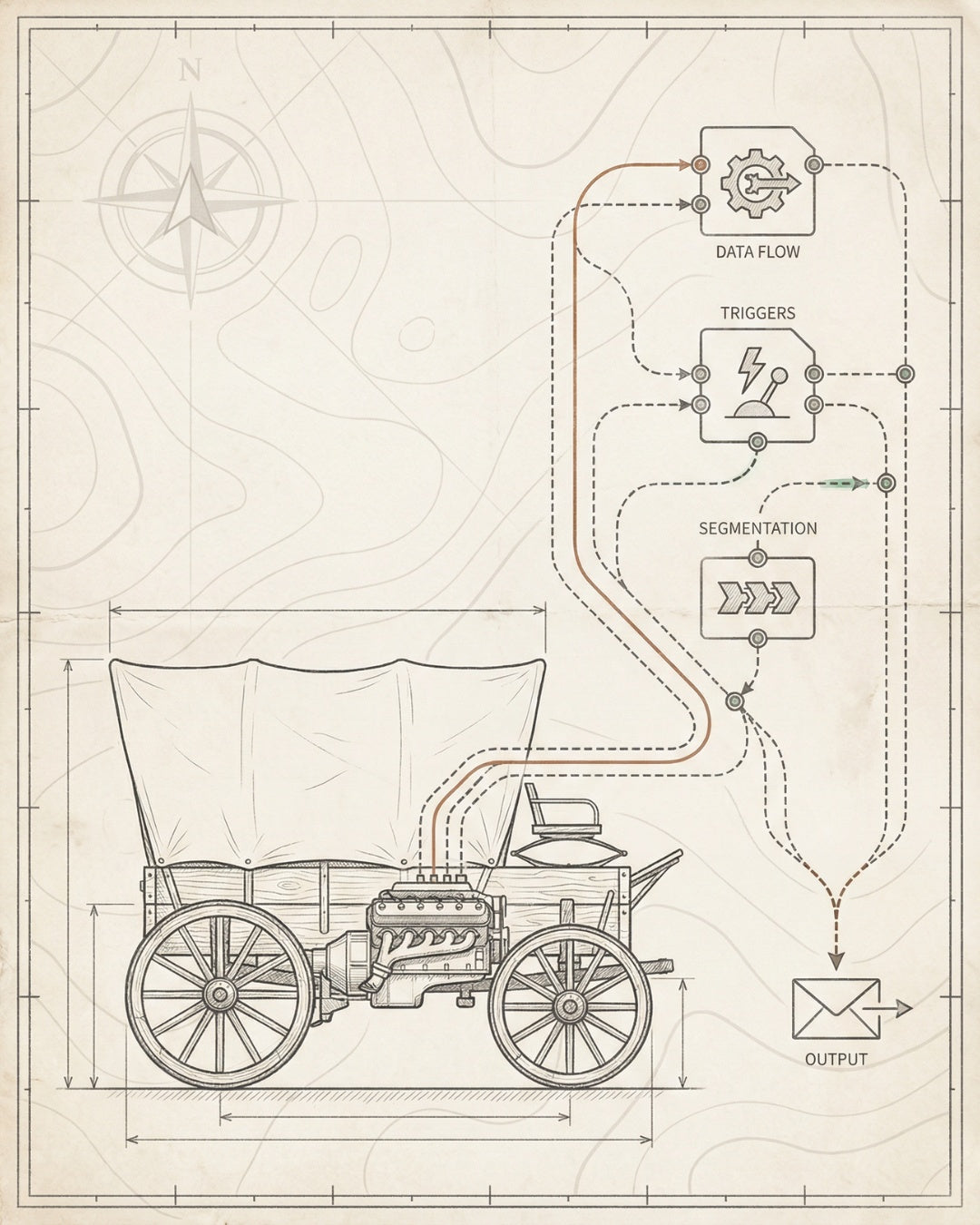
The Sprint Model: 30-Day SEO Cycles for Lean Teams
Open-ended retainers don’t work for lean teams. You need velocity, not endless optimization. That’s why we built the sprint model: 30-day focused cycles that replace retainers.
Here’s how it works:
Week 1: Audit and Prioritize
Run a full ecommerce SEO audit. Identify technical blockers, indexation issues, and content gaps. Prioritize by impact and effort.
Deliverables:
- Technical SEO audit report
- Keyword gap analysis
- Prioritized task list
Week 2: Build and Fix
Fix technical issues first. Then build content infrastructure. Focus on high-impact changes: schema markup, site speed, internal linking, and keyword-mapped content.
Deliverables:
- Technical fixes implemented
- Schema markup installed
- Content architecture built
Week 3: Optimize and Test
Optimize product pages, category pages, and high-traffic content. Test changes in Google Search Console and GA4. Monitor Core Web Vitals and indexation status.
Deliverables:
- On-page optimization complete
- Core Web Vitals improved
- Conversion tracking set up
Week 4: Measure and Iterate
Measure ranking velocity, organic traffic, and revenue. Identify what worked and what didn’t. Plan the next sprint.
Deliverables:
- Performance report
- Next sprint roadmap
The sprint model is designed for founders who want traction, then throttle. You’re not locked into a retainer. You’re building systems that compound.
Learn more about our approach to ecommerce SEO services and how we structure sprints.
How to Build Your Ecommerce SEO Stack
Here’s the step-by-step implementation guide. This is what we install for every ecommerce client in the first 30 days.
Step 1: Run a Technical SEO Audit
Use Screaming Frog, Sitebulb, or Ahrefs Site Audit to crawl your site. Look for:
- Crawl errors (404s, 500s, redirect chains)
- Indexation issues (noindex tags, canonical errors)
- Duplicate content (product variants, filtered URLs)
- Core Web Vitals issues (slow LCP, high CLS)
- Missing schema markup
Export the audit and prioritize by impact. Fix technical blockers before touching content.
Step 2: Fix Foundation-Layer Issues
Start with crawlability and indexability:
- Robots.txt: Make sure you’re not blocking important pages. Allow Googlebot to access CSS and JavaScript.
- XML sitemap: Include product pages, category pages, and high-value content. Submit to Google Search Console.
- Canonical tags: Every product page needs a self-referencing canonical. Variant pages should canonicalize to the main product URL.
- Mobile responsiveness: Test your site on mobile. Fix navigation, tap targets, and font sizes.
Check Google Search Console for indexation warnings. Address “Discovered – currently not indexed” and “Crawled – currently not indexed” issues.
Step 3: Build Content Architecture
Map keywords to URLs. Create a content matrix that connects informational content to product pages.
- Product pages: Optimize titles, descriptions, and images. Add use cases, specs, and FAQs.
- Category pages: Write unique descriptions for each category. Add internal links to top products.
- Blog posts: Target long-tail keywords that support product pages. Link to products with keyword-rich anchor text.
- Comparison pages: Create “X vs Y” pages for high-intent keywords.
Use SEO for ecommerce product pages techniques to optimize each page for conversions.
Step 4: Install Schema Markup
Add structured data to every product page, category page, and blog post. Use JSON-LD format. Test in Google’s Rich Results Test.
- Product schema: Name, description, price, availability, brand, SKU, image, reviews.
- Breadcrumb schema: Site hierarchy and navigation structure.
- Organization schema: Brand identity, logo, social profiles.
- Review schema: Aggregate rating and review count.
Schema markup is the foundation of AI search optimization. Don’t skip this step.
Step 5: Optimize for AI Search Visibility
Make your content AI-readable:
- Use clear, concise answers: AI models prefer bullet points and numbered lists.
- Add FAQs to product pages: Answer common questions directly on the page.
- Build topical authority: Create comprehensive content that covers your category in depth.
- Get cited by authoritative sources: Press mentions and backlinks signal credibility to AI models.
For more on this, see our guide to AI search optimization.
Step 6: Set Up Tracking and Reporting
Install GA4 ecommerce tracking. Connect Google Search Console. Set up automated reports for:
- Organic traffic and revenue
- Keyword rankings and ranking velocity
- Core Web Vitals and indexation status
- Conversion rate by landing page
Track organic revenue, not just traffic. SEO is a revenue channel, not a vanity metric.

Ecommerce SEO Nottingham: Build Once, Scale Forever
Most Nottingham ecommerce brands are paying for SEO that doesn’t compound. They’re locked into retainers, getting reports instead of infrastructure, watching traffic plateau after six months.
The alternative is infrastructure-first SEO. Build the 4-layer foundation. Install schema markup for AI search. Create content architecture that passes authority to product pages. Run 30-day sprints instead of open-ended retainers.
This is how you build organic visibility that scales. Not pages. Systems. Not retainers. Sprints. Not traffic. Revenue.
If you’re ready to move from DIY to systematic SEO—without the bloat of a big agency—this is the blueprint. The same approach we’ve used to generate $30M+ in organic revenue for 50+ brands.
Frequently Asked Questions
What makes ecommerce SEO in Nottingham different from general SEO? +
Ecommerce SEO focuses on product discovery, conversion optimization, and technical architecture that scales with inventory. Unlike content-focused SEO, ecommerce requires product schema markup, faceted navigation handling, and internal linking strategies that pass authority to product pages. Nottingham brands also face unique competitive dynamics—competing against national players with bigger budgets while serving a local and regional market.
How long does it take to see results from ecommerce SEO? +
Technical fixes and schema markup can show results in 2-4 weeks. Content-driven rankings typically take 3-6 months to compound. The key is building infrastructure first—crawlability, indexability, and technical foundation—before optimizing for rankings. Sites that skip the foundation layer see temporary gains that collapse under scale. Our 30-day sprint model focuses on high-impact changes first, so you see traction quickly, then throttle for sustained growth.
Do I need an SEO agency or can I do ecommerce SEO myself? +
You can DIY the basics—optimizing product titles, fixing broken links, adding schema markup. But most founders hit a wall when it comes to technical architecture, AI search optimization, and systematic content infrastructure. If you’re doing under $500K/year, DIY is viable. If you’re scaling past $1M, you need expert execution. The gap isn’t knowledge—it’s time and systematic implementation. Our sprint model is designed for founders who’ve outgrown DIY but don’t want a bloated agency retainer.
What’s the difference between SEO retainers and sprint-based SEO? +
Retainers bill hours for ongoing optimization. Sprints build systems in focused 30-day cycles. Retainers never end—you’re always paying. Sprints are designed to compound—you build the infrastructure once, maintain it quarterly, and let organic traffic scale. Retainers optimize incrementally. Sprints prioritize by impact and build systematically. For lean teams, sprints deliver more velocity and clearer ROI. Check out our ecommerce SEO pricing guide for more details.
How important is AI search optimization for ecommerce stores? +
Critical. Google AI Overviews, Perplexity, and ChatGPT are changing how people discover products. If your product pages don’t have structured data (schema markup), you’re invisible to AI search engines. Traditional SEO focused on ranking for keywords. AI search optimization focuses on being the cited source. That means product schema, entity signals, and content that AI models can parse and reference. Sites without structured data will lose visibility as AI search adoption grows.
What’s the most common ecommerce SEO mistake Nottingham brands make? +
Skipping the technical foundation. Most brands jump straight to content marketing—publishing blog posts, building backlinks—without fixing crawlability, indexability, and site architecture. The result: traffic that doesn’t convert, rankings that collapse under scale, and wasted budget on content that doesn’t support product pages. Fix the 4-layer foundation first. Then scale content. Our ecommerce SEO checklist walks through the exact order of operations.
Can ecommerce SEO work for small Nottingham businesses with limited budgets? +
Yes. In fact, infrastructure-first SEO is designed for lean teams. You don’t need a £5,000/month retainer. You need systematic builds in 30-day cycles. Start with a technical audit. Fix crawlability and indexability. Install schema markup. Optimize your top 10 product pages. That’s a single sprint—one month, focused execution. The infrastructure compounds over time. Small budgets need velocity and prioritization, not endless optimization. That’s exactly what the sprint model delivers.
How do I measure ecommerce SEO success? +
Track organic revenue, not just traffic. Set up GA4 ecommerce tracking and connect Google Search Console. Monitor: (1) Organic revenue and conversion rate by landing page, (2) Keyword rankings and ranking velocity for product pages, (3) Core Web Vitals and indexation status, (4) Click-through rate (CTR) from search results. Vanity metrics like pageviews don’t matter. What matters is whether organic traffic converts into customers. If traffic is up but revenue is flat, you have a convertibility problem, not an SEO problem.
Ready to Build SEO Infrastructure That Scales?
Stop paying for retainers. Start building systems. 30-day sprints. No fluff. Just infrastructure that compounds.
Matt Hyder
SEO infrastructure and AI search optimization at Founding Engine.
Want SEO that actually holds?
Get a free infrastructure audit from the Founding Engine team.
Get Your Free Audit