Ecommerce SEO Services in India: Build Systems, Not Retainers
Most ecommerce SEO services in India bill hours. We install infrastructure. Learn the 4-layer foundation that compounds rankings and drives organic revenue for DTC brands.
**
ECOMMERCE SEO / INFRASTRUCTURE-FIRST GROWTH / FOUNDING ENGINE
Ecommerce SEO Services in India: Build Systems, Not Retainers
Most ecommerce SEO services in India — and globally — bill you for hours. You get deliverables: keyword research spreadsheets, content calendars, monthly reports with traffic charts. What you don’t get is infrastructure.
Here’s the problem: SEO doesn’t compound when you’re renting someone’s time. It compounds when you install systems that hold — technical architecture, content frameworks, internal linking structures that work whether you’re paying a retainer or not.
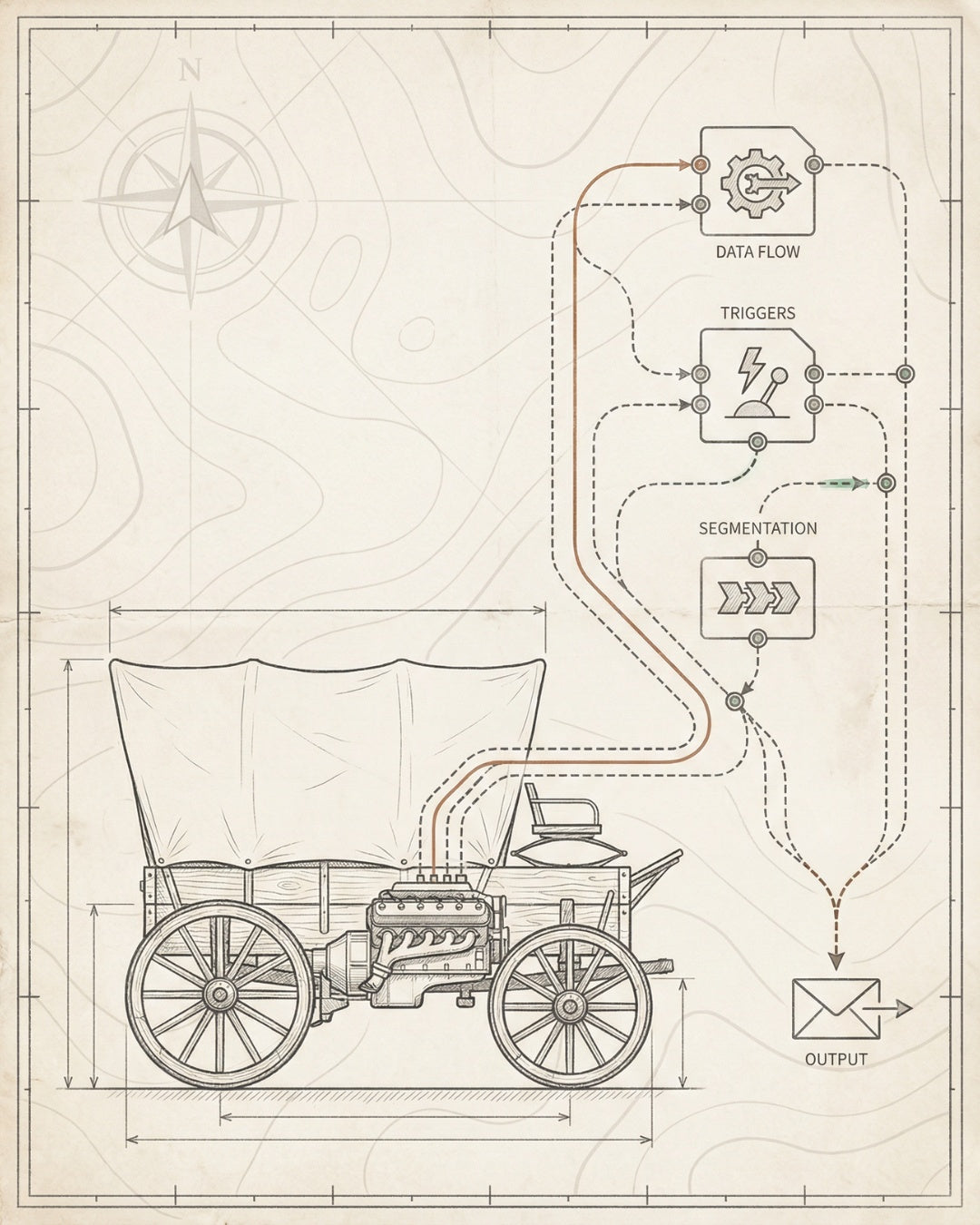
This is the shift happening in ecommerce SEO right now. Founders are moving from agencies that bill hours to teams that build infrastructure. From retainers to sprints. From deliverables to systems.
If you’re evaluating ecommerce SEO services in India** — or anywhere — this guide will show you what to look for, what to avoid, and how to build SEO that actually compounds over time.
SLIDE 01 The Retainer Trap Most ecommerce SEO services bill hours. You pay monthly. They deliver reports. Rankings stall when you stop paying. That’s not infrastructure — it’s dependency.
SLIDE 02 The 4-Layer Foundation Real SEO builds sequentially: Crawlability → Indexability → Rankability → Convertibility. Fix the foundation before touching content. Systems before tactics.
SLIDE 03 AI Search Is Here Google AI Overviews, ChatGPT, Perplexity — they need structured data. Entity signals. Schema markup. If your SEO partner isn’t building for LLMs, you’re invisible to 40% of search.
SLIDE 04 Sprint Model Wins 30-day focused cycles beat open-ended retainers. Audit → Fix → Build → Throttle. Install the system, then scale it. Traction first, then volume. Infrastructure that compounds.
What You’ll Learn
- Why the Retainer Model Breaks at Scale
- The 4-Layer SEO Foundation for Ecommerce
- What Ecommerce SEO Services Should Actually Build
- AI Search Optimization for Product Catalogs
- The Sprint Model vs. Retainer Model
- How to Implement Infrastructure-First SEO
- Evaluating Ecommerce SEO Services in India
Why the Retainer Model Breaks at Scale
Let’s be honest about how most ecommerce SEO services in India (and globally) work:
- You sign a 6-month retainer at $2,000–$5,000/month
- Month 1: They audit your site and send a 40-page PDF
- Month 2–4: They write blog posts and build backlinks
- Month 5: You see some keyword movement
- Month 6: They pitch you another 6 months
The problem isn’t the work. The problem is the model. You’re paying for time, not infrastructure. And when you stop paying, the system stops working.
Here’s what happens when you cancel:
- Content production stops
- Link building stops
- Technical fixes don’t get implemented
- Rankings plateau or decline
That’s not SEO. That’s a subscription service.
The Infrastructure Test: If you stopped paying your SEO agency tomorrow, would your rankings keep growing? If the answer is no, you don’t have infrastructure — you have a dependency.
Real SEO infrastructure works like this:
- Technical foundation: Site architecture, schema markup, Core Web Vitals — installed once, works forever
- Content systems: Keyword mapping, internal linking frameworks, AI-readable structured data — scales without you
- Distribution loops: Search Console integration, AI search signals, automated monitoring — compounds over time
This is what we call the Compound Visibility Stack. Website × Content × Technical × Distribution. Each layer builds on the last. Each layer works whether you’re paying a retainer or not.
For more on how infrastructure differs from traditional SEO, see our guide on what SEO infrastructure actually means.
The 4-Layer SEO Foundation for Ecommerce
Before you evaluate any ecommerce SEO services in India — or anywhere — you need to understand the build sequence. SEO isn’t a checklist. It’s a stack. Each layer depends on the one below it.

Here’s the sequence:
Layer 1: Crawlability
Can Google’s bots access and navigate your site?
- robots.txt configuration: Are you blocking critical pages?
- XML sitemap: Is it clean, current, and submitted to Search Console?
- Site architecture: Can bots reach every product page within 3 clicks from the homepage?
- Server response codes: Are you serving 200s where you should, 301s for redirects, 404s for dead pages?
- Crawl budget optimization: Are you wasting crawl budget on faceted navigation or duplicate URLs?
If Google can’t crawl your site efficiently, nothing else matters. This is the foundation.
Layer 2: Indexability
Can Google understand and index your pages?
- Canonical tags: Are you consolidating duplicate content correctly?
- Meta robots tags: Are you accidentally noindexing important pages?
- Structured data: Are you using Product schema, BreadcrumbList, Organization markup?
- Content uniqueness: Do your product pages have unique descriptions, or are you duplicating manufacturer content?
- Mobile-first indexing: Is your mobile experience equivalent to desktop?
Indexability is where most ecommerce sites fail. You can have 10,000 product pages, but if Google only indexes 3,000, you’re invisible for 70% of your catalog.
Layer 3: Rankability
Can your pages compete for target keywords?
- Keyword mapping: Is every product and category page mapped to a primary keyword and semantic cluster?
- On-page optimization: Title tags, H1s, meta descriptions, image alt text — all aligned to search intent?
- Internal linking: Are you passing authority from high-performing pages to new or underperforming pages?
- Content depth: Do your pages satisfy search intent, or are they thin product listings?
- Core Web Vitals: Is your site fast, stable, and responsive? LCP
What Ecommerce SEO Services in India Should Actually Build
When you hire an SEO partner, you’re not buying deliverables. You’re installing systems. Here’s what infrastructure-first ecommerce SEO services should build for you:
1. Technical Architecture for Product Catalogs
Your product catalog is your revenue engine. Most ecommerce sites treat it like a database dump. That’s a mistake.
What to build:
- Faceted navigation that doesn’t waste crawl budget: Use rel=“canonical” and parameter handling to prevent duplicate URLs
- Category hierarchy that matches search intent: Map categories to commercial keywords, not internal taxonomy
- Product page templates with schema markup: Product, AggregateRating, Offer, BreadcrumbList — machine-readable from day one
- Internal linking automation: Related products, recently viewed, complementary items — all passing authority
This is the kind of work covered in our SEO for ecommerce product pages breakdown.
2. Schema Markup for Rich Results
Rich snippets don’t just look better in search results — they increase CTR by 20–30%. But most ecommerce sites either skip schema entirely or implement it incorrectly.

What to implement:
- Product schema: Name, image, description, SKU, brand, price, availability
- AggregateRating schema: Star ratings and review counts (if you have reviews)
- Offer schema: Price, currency, availability, seller information
- BreadcrumbList schema: Navigation structure for Google and users
- Organization schema: Brand entity signals for knowledge graph
Schema isn’t optional anymore. It’s the language AI search uses to understand your products.
3. Internal Linking Systems
Most ecommerce sites have terrible internal linking. Products link to categories. Categories link to the homepage. That’s it.
Here’s what a real internal linking system looks like:
- Hub-and-spoke architecture: High-authority category pages link to related products and subcategories
- Contextual product recommendations: Related products, frequently bought together, recently viewed
- Content-to-product bridges: Blog posts and guides link to relevant product pages with keyword-rich anchor text
- Authority distribution: Pass link equity from high-performing pages to new or underperforming pages
Internal linking is how you tell Google what matters. It’s also how you distribute authority across your catalog without waiting for backlinks.
4. Core Web Vitals Optimization
Page speed isn’t just a ranking factor — it’s a conversion factor. Every 100ms of delay costs you revenue.
What to optimize:
- Largest Contentful Paint (LCP): Target
AI Search Optimization for Product Catalogs
Here’s what most ecommerce SEO services in India — and globally — are missing: AI search is already here.
Google AI Overviews, ChatGPT, Perplexity, SearchGPT — they’re not the future. They’re live. And they need different signals than traditional SEO.

What AI Search Needs
Traditional SEO optimizes for keyword matching. AI search optimizes for entity understanding.
Here’s the difference:
- Traditional SEO: “best running shoes for women” → keyword density, title tags, backlinks
- AI search: “best running shoes for women” → entity (running shoes) + attribute (women) + intent (purchase) + context (reviews, specs, availability)
AI models don’t rank pages. They synthesize answers. If your product data isn’t machine-readable, you’re invisible.
How to Optimize for AI Search
Here’s what we install for ecommerce clients:
1. Entity Signals
Use schema markup to define your brand, products, and attributes as entities:
- Organization schema: Brand name, logo, social profiles, contact info
- Product schema: Name, category, brand, SKU, GTIN, MPN
- Attribute schema: Color, size, material, weight, dimensions
This helps AI models understand what you sell, not just where you rank.
2. Structured Data for LLMs
LLMs (Large Language Models) don’t crawl like Google. They ingest structured data. If your product data isn’t in a machine-readable format, it won’t get cited.
What to implement:
- JSON-LD schema: Machine-readable product data on every page
- OpenGraph tags: Social graph signals for entity recognition
- Microdata: In-content markup for attributes and reviews
3. AI Overview Citation Optimization
Google AI Overviews cite sources. If you want to show up in AI-generated answers, you need to be citation-worthy.
How to get cited:
- Authoritative content: Detailed product descriptions, buying guides, comparison tables
- Structured answers: Use headings, lists, tables — formats AI can extract
- Entity authority: Build brand mentions, reviews, and backlinks from trusted sources
For a deeper dive into AI search optimization, see our AI search optimization service page.
The Sprint Model vs. Retainer Model
Most ecommerce SEO services in India operate on the retainer model. You pay monthly. They deliver ongoing work. The relationship is open-ended.
Here’s why that breaks:
- No clear finish line: When is the work done? When can you scale?
- Incentive misalignment: Agencies make more money the longer you stay, not the faster you grow
- Scope creep: Monthly retainers turn into endless to-do lists with no prioritization
We use a different model: 30-day sprint cycles.
How the Sprint Model Works
Instead of open-ended retainers, we build in focused 30-day cycles:
- Audit (Days 1–5): Technical crawl, keyword mapping, competitor analysis, AI search readiness
- Fix (Days 6–15): Resolve technical blockers, install schema markup, optimize Core Web Vitals
- Build (Days 16–25): Content infrastructure, internal linking, AI-readable structured data
- Throttle (Days 26–30): Monitor rankings, validate indexation, prepare for scale
At the end of 30 days, you have infrastructure, not deliverables. The system works whether we’re still engaged or not.
Audit-to-Throttle Pipeline: This is our core framework. Audit the current state. Fix the blockers. Build the systems. Throttle the scale. Sequential, systematic, compound.
Retainer vs. Sprint: Comparison
Factor Retainer Model Sprint Model
Duration 6–12 months, open-ended 30-day focused cycles
Deliverables Monthly reports, ongoing tasks Installed infrastructure
Outcome Dependency on agency Self-sustaining systems
Pricing $2,000–$10,000/month Fixed project fee
Incentive Keep you paying longer Get you results faster
Scalability Limited by agency capacity Built to scale without us
For more on how we structure engagements, see our breakdown of ecommerce SEO pricing models.
How to Implement Infrastructure-First SEO
Whether you’re hiring ecommerce SEO services in India or building in-house, here’s the step-by-step process for installing infrastructure that compounds:
Step 1: Audit Current State
Before you build, you need to know what’s broken.
Run a technical SEO audit:
- Crawl the site: Use Screaming Frog or Sitebulb to identify crawl errors, broken links, redirect chains
- Check indexation: Compare site:yourdomain.com results to your actual page count. Are pages being indexed?
- Analyze Core Web Vitals: Use PageSpeed Insights and Search Console to baseline LCP, FID, CLS
- Review schema markup: Run pages through Google’s Rich Results Test. Is your structured data valid?
- Map keyword coverage: Are your product and category pages targeting the right keywords?
This is the foundation of our ecommerce SEO audit process.
Step 2: Fix the Foundation
Address technical blockers before touching content.
Priority fixes:
- Crawlability: Fix robots.txt, submit clean XML sitemap, resolve crawl errors
- Indexability: Set canonical tags, remove duplicate content, validate meta robots tags
- Site architecture: Ensure every product page is within 3 clicks from the homepage
- Mobile-first: Validate mobile experience matches desktop
Don’t skip this step. You can’t rank pages Google can’t crawl.
Step 3: Build Content Infrastructure
Now you’re ready to build the systems that scale.
What to install:
- Keyword mapping: Map every product and category page to a primary keyword and semantic cluster
- On-page optimization: Title tags, H1s, meta descriptions, image alt text — all aligned to search intent
- Internal linking framework: Hub-and-spoke architecture, contextual product recommendations, content-to-product bridges
- Schema markup: Product, AggregateRating, Offer, BreadcrumbList, Organization — machine-readable from day one
This is where ecommerce SEO best practices become critical.
Step 4: Install Distribution
SEO doesn’t end when you publish. You need distribution systems.
What to set up:
- Google Search Console: Monitor indexation, track rankings, identify errors
- AI search signals: Structured data for AI Overviews, ChatGPT, Perplexity
- Performance monitoring: Track Core Web Vitals, page speed, mobile usability
- Ranking velocity: Monitor keyword movement, identify quick wins, scale what works
For a full implementation guide, see our ecommerce SEO strategy breakdown.
Evaluating Ecommerce SEO Services in India
If you’re evaluating ecommerce SEO services in India — or anywhere — here’s the decision framework we use with clients:
Red Flags
Walk away if you hear these:
- “We guarantee first-page rankings in 30 days” — No one can guarantee rankings. That’s not how Google works.
- “We’ll build 100 backlinks per month” — Quantity over quality is a red flag. One good link beats 100 spammy ones.
- “SEO takes 6–12 months to see results” — This is often true, but it’s also a cop-out. You should see movement in 30–60 days if the work is right.
- “We use proprietary tools you can’t access” — Transparency matters. You should own your data.
- “We’ll write 50 blog posts” — Content without strategy is noise. Ask how it maps to keywords and business goals.
Green Flags
Look for these signals:
- “We’ll audit your technical foundation first” — This shows they understand the 4-layer stack.
- “We install infrastructure, not deliverables” — They’re building systems, not renting time.
- “Here’s the keyword map and content plan” — Strategy before execution.
- “We optimize for AI search and traditional SEO” — They’re forward-thinking.
- “We work in 30-day sprints, not open-ended retainers” — Focused, accountable, results-driven.
Questions to Ask
Before you hire any ecommerce SEO service, ask these questions:
- What’s your process for technical audits? (Look for crawlability → indexability → rankability sequence)
- How do you handle schema markup and structured data? (They should mention Product schema, JSON-LD, AI search optimization)
- What’s your approach to internal linking? (Hub-and-spoke, contextual recommendations, authority distribution)
- How do you measure success? (Rankings, traffic, revenue — not just vanity metrics)
- What happens if I stop working with you? (The infrastructure should keep working)
- Can you show me a case study with actual results? (Look for specific metrics, not vague claims)
For more on what to look for, see our guide to choosing the best ecommerce SEO partner.
DIY vs. Agency: When to Hire
Not every ecommerce brand needs an agency. Here’s when to DIY vs. when to hire:
Stage DIY Hire Agency
Pre-launch ✅ Set up basic schema, submit sitemap ❌ Too early
$0–$100K revenue ✅ Use SEO checklist, optimize product pages ❌ Build first, scale later
$100K–$500K revenue ⚠️ You’re hitting limits ✅ Time to install infrastructure
$500K–$5M revenue ❌ Too complex to DIY ✅ Agency or in-house team
$5M+ revenue ❌ Not scalable ✅ In-house team + agency support
If you’re in the $100K–$5M range and evaluating partners, check out our ecommerce SEO services breakdown.
Frequently Asked Questions
What makes ecommerce SEO services in India different from other markets? +
Ecommerce SEO services in India often offer competitive pricing due to lower operational costs, but quality varies widely. The key differentiator isn’t location — it’s methodology. Look for agencies that build infrastructure (technical foundation, schema markup, internal linking systems) rather than just delivering hours. The best services operate globally with consistent standards, whether they’re based in India, the US, or elsewhere.
How long does it take to see results from ecommerce SEO? +
With infrastructure-first SEO, you should see initial movement in 30–60 days — indexation improvements, keyword ranking velocity, Core Web Vitals gains. Significant traffic and revenue growth typically compounds over 3–6 months as the systems scale. The difference from traditional SEO: results continue growing after the initial build, because you’ve installed systems that compound, not just delivered one-time tasks.
What’s the difference between technical SEO and ecommerce SEO? +
Technical SEO is the foundation: crawlability, indexability, site architecture, Core Web Vitals. Ecommerce SEO builds on that foundation with product-specific optimization: schema markup for products, faceted navigation handling, internal linking for catalogs, conversion optimization. You need both. Technical SEO makes your site crawlable. Ecommerce SEO makes your products rankable and convertible.
Should I hire an agency or build SEO in-house? +
Depends on your stage. Pre-$100K revenue: DIY with checklists and guides. $100K–$500K: Hire an agency to install infrastructure. $500K–$5M: Agency or in-house team. $5M+: In-house team with agency support for specialized work (technical audits, AI search optimization). The key is knowing when you’ve outgrown DIY but aren’t ready for a full team.
What is AI search optimization and why does it matter for ecommerce? +
AI search optimization prepares your product data for AI-powered search engines like Google AI Overviews, ChatGPT, Perplexity, and SearchGPT. It uses structured data (schema markup), entity signals, and machine-readable content to help AI models understand and cite your products. This matters because 40%+ of searches now involve AI-generated answers. If your product data isn’t AI-readable, you’re invisible to a growing segment of search traffic.
How much do ecommerce SEO services cost? +
Pricing varies by model. Retainer-based agencies charge $2,000–$10,000/month for 6–12 months. Sprint-based models (like ours) charge fixed project fees for 30-day cycles, typically $5,000–$15,000 per sprint depending on scope. The key difference: retainers bill for time, sprints deliver infrastructure. You should evaluate cost based on what you own at the end, not just hours logged.
What’s the most important thing to fix first in ecommerce SEO? +
Crawlability. If Google can’t crawl your site efficiently, nothing else matters. Start with: robots.txt configuration, XML sitemap submission, site architecture (every page within 3 clicks), and resolving crawl errors. Once crawlability is solid, move to indexability (canonical tags, schema markup, unique content). This is the 4-layer foundation: Crawlability → Indexability → Rankability → Convertibility. Build sequentially.
Can I do ecommerce SEO on Shopify? +
Yes. Shopify has built-in SEO features (automatic sitemaps, canonical tags, mobile-first themes), but you still need to optimize. Key areas: schema markup (Product, AggregateRating), internal linking (collections to products), Core Web Vitals (image optimization, app bloat), and AI search signals. Shopify makes the foundation easier, but you still need strategy and execution to rank and convert.
Ready to Build SEO Infrastructure That Holds?
We don’t bill hours. We install systems. 30-day sprint cycles. Infrastructure-first. Built to compound.
Explore SEO Infrastructure AI Search Optimization Get a Technical Audit

Final Thoughts: Systems Over Subscriptions
Most ecommerce SEO services in India — and globally — operate on the subscription model. You pay monthly. They deliver tasks. The relationship is open-ended.
That model works for the agency. It doesn’t work for you.
Here’s what works: infrastructure. Systems that compound. Technical foundations that hold. Content frameworks that scale. AI-readable structured data that feeds the next generation of search.
Build once. Scale forever. Traction, then throttle.
That’s the shift. That’s the model. That’s how SEO should work.
If you’re ready to move from retainers to infrastructure, from deliverables to systems, from billing hours to building foundations — we’re here.
Check out our case studies and results, explore our SEO infrastructure services, or get a technical audit.
Not pages. Systems.
// FAQ Accordion document.querySelectorAll(‘.faq-question’).forEach(question => { question.addEventListener(‘click’, () => { const item = question.parentElement; const isActive = item.classList.contains(‘active’);
// Close all items document.querySelectorAll(‘.faq-item’).forEach(faqItem => { faqItem.classList.remove(‘active’); });
Matt Hyder
SEO infrastructure and AI search optimization at Founding Engine.
Want SEO that actually holds?
Get a free infrastructure audit from the Founding Engine team.
Get Your Free Audit