Ecommerce SEO Sydney: Build Infrastructure That Compounds
Ecommerce SEO Sydney founders: stop renting rankings. Install the technical infrastructure, AI search signals, and content systems that compound organic revenue over time.
ECOMMERCE SEO SYDNEY
Ecommerce SEO Sydney: Build Infrastructure That Compounds

Most ecommerce SEO Sydney agencies rent you rankings. You pay monthly. They tweak meta tags. Traffic bumps, then plateaus. The moment you stop paying, the system collapses.
That’s not infrastructure. That’s dependency.
Real ecommerce SEO isn’t a service you rent. It’s a system you install. Once. Then it compounds. Traffic builds on traffic. Rankings feed rankings. Revenue stacks on revenue.
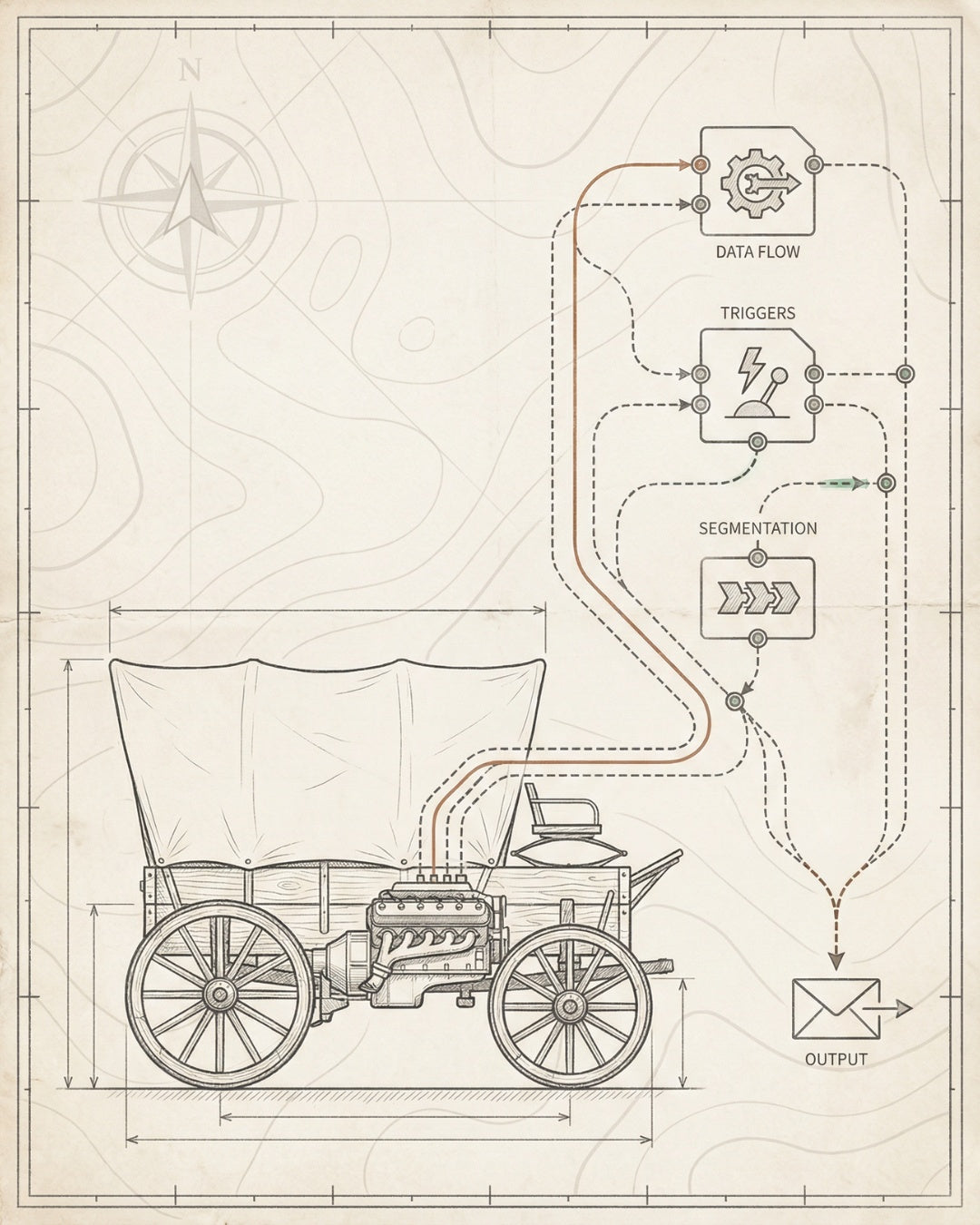
This is how Founding Engine approaches ecommerce SEO Sydney: we engineer the technical foundation, AI search signals, and content architecture that generates organic revenue long after we’re done building. No retainers. No fluff. 30-day focused cycles.
If you’re a Sydney ecommerce founder tired of agencies that bill hours instead of building systems, this is your blueprint.
Most Sydney ecommerce brands rent rankings through agencies. We install systems you own.
Technical foundation first: crawlability, indexability, rankability, convertibility.
AI search isn’t optional anymore. Your store needs entity signals and structured data.
30-day sprint cycles replace retainer bloat. Build once, scale forever.
$30M+ organic revenue generated. 250% average traffic increase. Infrastructure that holds.
Table of Contents
- Why Most Ecommerce SEO Sydney Agencies Build on Sand
- The 4-Layer SEO Foundation Every Sydney Store Needs
- Technical SEO Infrastructure: What Actually Moves Rankings
- AI Search Optimization for Ecommerce
- Content Architecture vs. Content Volume
- The Sprint Model: 30-Day Cycles That Replace Retainers
- How to Evaluate an Ecommerce SEO Partner
- Implementation: How to Install SEO Infrastructure
- Frequently Asked Questions
Why Most Ecommerce SEO Sydney Agencies Build on Sand
The traditional agency model is broken for ecommerce brands. You sign a 6-month contract. They audit your site. Send you a 47-page PDF. Then… crickets. Or worse: they start publishing blog posts about “10 Tips for Better Product Photography” while your site architecture is bleeding crawl budget.
Here’s what actually happens:
- They skip the foundation. Most agencies jump straight to content or link building because it’s easier to invoice. But if your site has indexation issues, duplicate content, or broken internal linking, that content goes nowhere.
- They bill hours, not outcomes. Retainers reward activity, not results. More meetings. More reports. More “strategy sessions.” Less infrastructure.
- They treat SEO like a service, not a system. When you stop paying, the work stops. Nothing compounds. Nothing scales. You’re renting, not owning.
Sydney ecommerce brands deserve better. You need SEO infrastructure that works whether or not you’re paying someone to “manage” it. That’s what we build at Founding Engine.
FRAMEWORK
The Compound Visibility Stack (CVS)
Our approach to ecommerce SEO Sydney is built on four layers that multiply each other:
- Website: Technical foundation (speed, crawlability, Core Web Vitals)
- Content: Keyword-mapped architecture (not random blog posts)
- Technical: Schema markup, internal linking, indexation control
- Distribution: AI search signals, email capture, ranking velocity
When these layers work together, visibility compounds. Traffic feeds rankings. Rankings feed revenue.
The 4-Layer SEO Foundation Every Sydney Store Needs
Before you touch content. Before you think about backlinks. Before you hire anyone. You need to fix the foundation. This is the 4-Layer SEO Foundation we install for every ecommerce client:
Layer 1: Crawlability
Can Google’s bots actually access your pages? Sounds basic, but most Sydney ecommerce stores have crawl budget leaks:
- Broken robots.txt files blocking critical pages
- Redirect chains eating crawl budget (product page → category → homepage)
- Orphaned pages with zero internal links
- Sitemap bloat (10,000 URLs when you only have 500 products)
Fix crawlability first. If Google can’t see it, nothing else matters. This is covered in depth in our guide to technical SEO for ecommerce.
Layer 2: Indexability
Google can crawl your pages. Great. But are they indexing them correctly?
- Canonical tags: Are you consolidating duplicate content or creating indexation conflicts?
- Meta robots: Check for accidental noindex tags on product pages
- Pagination: How are you handling category pages with 500+ products?
- Faceted navigation: Are filter URLs creating infinite crawl loops?
Most ecommerce platforms (Shopify, WooCommerce, BigCommerce) have default settings that create indexation chaos. We fix this in week one.

Layer 3: Rankability
Now your pages are crawlable and indexable. Can they actually rank?
- On-page optimization: Title tags, meta descriptions, header structure (on-page SEO for ecommerce breakdown)
- Internal linking architecture: How is PageRank flowing through your site? Are high-value product pages buried 5 clicks deep?
- Schema markup: Product schema, review schema, breadcrumb schema. Make your listings rich.
- Content depth: Thin product descriptions don’t rank. Add specs, use cases, comparison tables.
Rankability is where most Sydney ecommerce stores plateau. They have the technical foundation, but the content and structure aren’t competitive.
Layer 4: Convertibility
Rankings without revenue are vanity metrics. The final layer is conversion infrastructure:
- Core Web Vitals: LCP under 2.5s, FID under 100ms, CLS under 0.1
- Mobile experience: 70%+ of ecommerce traffic is mobile. Is your checkout mobile-optimized?
- Trust signals: Reviews, security badges, return policies visible above the fold
- Email capture: Exit intent, scroll triggers, post-purchase flows
We track conversion rate by traffic source. Organic traffic should convert at 2-4% minimum for ecommerce. If it’s lower, your site has a trust or UX problem.
Technical SEO Infrastructure: What Actually Moves Rankings
Let’s get specific. Here’s what technical SEO infrastructure looks like for a Sydney ecommerce store:
Site Architecture That Scales
Your site structure determines how PageRank flows and how users navigate. Most ecommerce stores default to:
Homepage → Category → Subcategory → Product
That’s fine for 50 products. At 500+ products, it breaks. Users get lost. Google wastes crawl budget on low-value pages.
Better architecture:
- Hub pages: Create topical hubs (e.g., “Running Shoes”) that link to subcategories and top products
- Flat structure: Keep critical product pages 2-3 clicks from homepage
- Related products: Horizontal internal linking between similar products (not just “you may also like”)
This is covered in our ecommerce SEO checklist.
Schema Markup That Wins Rich Snippets
Schema markup tells Google what your content means, not just what it says. For ecommerce, you need:
- Product schema: Name, image, price, availability, SKU, brand
- Review schema: Aggregate ratings, individual reviews
- Breadcrumb schema: Site hierarchy for rich snippets
- Organization schema: Brand identity, logo, social profiles
Rich snippets increase CTR by 20-30%. That’s free traffic just from better markup.
Core Web Vitals Optimization
Google confirmed Core Web Vitals as a ranking factor. Most Sydney ecommerce stores fail on:
- LCP (Largest Contentful Paint): Slow product images, unoptimized hero banners
- CLS (Cumulative Layout Shift): Elements jumping as the page loads (usually ads or dynamic content)
- INP (Interaction to Next Paint): Slow JavaScript execution blocking user interaction
We optimize for sub-2.5s LCP and sub-0.1 CLS. That’s not just for rankings—it’s for conversions. Every 100ms delay costs you 1% in sales.

AI Search Optimization for Ecommerce (Perplexity, ChatGPT, Google AI Overviews)
Traditional SEO optimizes for the Google SERP. AI search optimization prepares your store for ChatGPT, Perplexity, and Google AI Overviews.
Here’s the problem: AI models don’t click through to your site. They synthesize answers from multiple sources. If your product data isn’t structured for AI, you’re invisible.
Entity Optimization
AI models think in entities, not keywords. An entity is a distinct concept (e.g., “Nike Air Max 90” is an entity, not just a keyword).
To optimize for entities:
- Use consistent naming: Don’t call the same product three different things across your site
- Link to authority sources: Wikipedia, brand websites, industry databases
- Add structured attributes: Color, size, material, weight, dimensions
This signals to AI models that your product data is authoritative and citation-worthy.
Structured Data for LLMs
Large language models (LLMs) prefer structured data over unstructured content. That means:
- Schema markup (Product, Offer, Review, AggregateRating)
- JSON-LD format (machine-readable, not just HTML)
- Semantic HTML (proper heading hierarchy, lists, tables)
Our AI search optimization service installs the infrastructure that makes your store visible to AI models.
Citation-Worthy Content
AI models cite sources they trust. To become citation-worthy:
- Add specs and data: Measurements, materials, technical details
- Include comparisons: “vs.” content that helps AI models answer comparison queries
- Publish buying guides: Educational content that positions you as an authority
This isn’t traditional SEO content. It’s structured, data-rich, and designed for AI consumption.
Content Architecture vs. Content Volume
Most ecommerce SEO Sydney agencies push content volume: “Publish 4 blog posts per month.” That’s not strategy. That’s a content mill.
Content architecture is different. It’s about building a keyword map, then creating the minimum viable content to cover that map.
Keyword Mapping for Ecommerce
Start with your product catalog. For each product category, map:
- Category keywords: “running shoes Sydney” → category page
- Product keywords: “Nike Air Max 90 white” → product page
- Informational keywords: “best running shoes for flat feet” → buying guide
- Comparison keywords: “Nike vs Adidas running shoes” → comparison page
Each keyword gets one URL. No keyword cannibalization. No duplicate content.
The Hub-and-Spoke Model
Structure your content like a hub-and-spoke system:
- Hub page: Comprehensive category page (e.g., “Running Shoes”)
- Spoke pages: Subcategories, product pages, buying guides that link back to the hub
This creates topical authority. Google sees you as the expert on “running shoes,” not just one product.
This is detailed in our guide to ecommerce SEO strategy.
The Sprint Model: 30-Day Cycles That Replace Retainers
We don’t do retainers. We do 30-day sprint cycles.
Here’s why: retainers reward activity. Sprints reward outcomes. Each sprint has a specific goal, a defined scope, and a measurable result.
Sprint 1: Foundation (Days 1-30)
- Technical SEO audit (crawlability, indexability)
- Fix critical blockers (robots.txt, canonicals, redirects)
- Install schema markup (Product, Review, Breadcrumb)
- Optimize Core Web Vitals (LCP, CLS, INP)
Outcome: Site is crawlable, indexable, and technically sound. Ready for content.
Sprint 2: Content Architecture (Days 31-60)
- Keyword research and mapping
- Create hub pages (category pages optimized for topical authority)
- Optimize product pages (titles, descriptions, schema)
- Build internal linking architecture
Outcome: Content structure in place. Keyword map executed. Internal linking flows PageRank to high-value pages.
Sprint 3: AI Search + Distribution (Days 61-90)
- Install AI search signals (entity markup, structured data for LLMs)
- Set up Google Search Console monitoring
- Configure email capture flows
- Track ranking velocity and organic revenue
Outcome: Store is visible to AI models. Distribution systems installed. Metrics tracked.
After 90 days, you own the infrastructure. It compounds without ongoing retainer fees. That’s the difference between renting and building.
How to Evaluate an Ecommerce SEO Partner (Decision Framework)
If you’re evaluating ecommerce SEO Sydney agencies, here’s the framework we’d use (even if you’re not evaluating us):
Evaluation Criteria Red Flag Green Flag
Pricing Model Monthly retainer with no defined end date Sprint-based or project-based with clear deliverables
Technical Depth Can’t explain crawl budget, schema markup, or Core Web Vitals Talks about site architecture, indexation, and structured data first
Content Approach “We’ll publish 4 blog posts per month” “We’ll build a keyword map and content architecture”
AI Search Doesn’t mention AI search optimization Has a plan for Perplexity, ChatGPT, and Google AI Overviews
Reporting Vanity metrics (impressions, clicks) without revenue attribution Tracks organic revenue, conversion rate by source, ranking velocity
Ownership “We manage your SEO” (dependency model) “We install the infrastructure” (ownership model)
The best ecommerce SEO partners don’t create dependency. They build systems you own.
For more on pricing and what to expect, see our breakdown of ecommerce SEO pricing.
Implementation: How to Install SEO Infrastructure for Your Sydney Ecommerce Store
Here’s the step-by-step process for installing ecommerce SEO infrastructure. This is the same process we use for clients at Founding Engine.
Step 1: Audit Your Current State
Before you build, you need to know what’s broken. Run a technical SEO audit:
- Crawl your site: Use Screaming Frog or Sitebulb to identify crawl errors, broken links, redirect chains
- Check indexation: site:yourdomain.com in Google. How many pages are indexed? Should be close to your actual page count.
- Test Core Web Vitals: Use PageSpeed Insights or WebPageTest. Identify LCP and CLS issues.
- Review schema markup: Use Google’s Rich Results Test to validate existing markup
Document everything. This is your baseline. Our ecommerce SEO audit guide covers this in depth.
Step 2: Fix the Foundation
Address technical blockers before touching content:
- Robots.txt: Ensure it’s not blocking critical pages. Common issue: blocking /cart or /checkout accidentally blocks product pages.
- XML sitemap: Clean, organized, only includes indexable pages. Submit to Google Search Console.
- Canonical tags: Every page needs a canonical. Consolidate duplicate content (e.g., product pages with color variants).
- Redirects: Fix redirect chains. Implement 301s for old URLs.
This is the unglamorous work that most agencies skip. It’s also the work that makes everything else possible.
Step 3: Build Content Infrastructure
Now that the foundation is solid, build your content architecture:
- Keyword research: Use Ahrefs, SEMrush, or Google Keyword Planner. Map keywords to pages (one keyword per page).
- Optimize category pages: These are your hub pages. Add 500-800 words of unique content, schema markup, internal links to subcategories and top products.
- Optimize product pages: Unique descriptions (not manufacturer copy), specs, use cases, schema markup (Product, Review, Offer).
- Create buying guides: Target informational keywords (“best running shoes for flat feet”). Link back to relevant products.
For product page optimization, see our guide to SEO for ecommerce product pages.
Step 4: Install AI Search Signals
Make your store visible to AI models:
- Entity markup: Use consistent product names, link to authority sources (Wikipedia, brand sites)
- Structured data: JSON-LD schema for Product, Review, AggregateRating, Organization
- Semantic HTML: Proper heading hierarchy (H1 → H2 → H3), lists, tables
This isn’t traditional SEO. It’s preparing for the AI search era. Our AI search optimization service handles this layer.
Step 5: Configure Distribution and Monitoring
The final layer is distribution and tracking:
- Google Search Console: Verify ownership, submit sitemap, monitor indexation and performance
- Email capture: Exit intent popups, scroll triggers, post-purchase flows
- Analytics: Track organic traffic, conversion rate by source, revenue attribution
- Ranking monitoring: Track keyword positions weekly. Identify ranking velocity (how fast you’re climbing).
This is where infrastructure becomes a system. You’re no longer guessing. You’re measuring, iterating, and compounding.

IMPLEMENTATION TIMELINE
What to Expect in the First 90 Days
- Days 1-30: Technical foundation installed. Site is crawlable, indexable, and technically sound.
- Days 31-60: Content architecture built. Keyword map executed. Internal linking flows PageRank.
- Days 61-90: AI search signals installed. Distribution systems configured. Metrics tracked.
- Day 90+: Infrastructure compounds. Traffic builds on traffic. Rankings feed rankings. Revenue stacks.
Frequently Asked Questions: Ecommerce SEO Sydney
How much does ecommerce SEO cost for a Sydney online store? ▼
Ecommerce SEO Sydney pricing varies by scope, but expect $3,000-$8,000 for a technical foundation sprint (30 days), $5,000-$12,000 for content architecture (60 days), and $8,000-$15,000 for a full 90-day build. Retainer models run $2,000-$5,000/month but create dependency. Sprint-based models install infrastructure you own. For detailed pricing breakdowns, see our ecommerce SEO pricing guide.
How long does it take to see results from ecommerce SEO? ▼
Technical fixes (Core Web Vitals, indexation) show results in 2-4 weeks. Content and keyword optimization takes 8-12 weeks to rank. Full infrastructure builds (technical + content + AI search) compound after 90 days. Most Sydney ecommerce stores see 20-30% traffic increases in the first 90 days, 100-150% increases by month 6. The key is building systems that compound, not one-time boosts.
What’s the difference between ecommerce SEO and regular SEO? ▼
Ecommerce SEO focuses on product pages, category architecture, and conversion optimization. Regular SEO (service/blog SEO) focuses on informational content and lead generation. Ecommerce SEO requires Product schema, review markup, faceted navigation optimization, and inventory management. It’s more technical and more directly tied to revenue. Learn more in our guide to best ecommerce SEO practices.
Do I need an SEO agency or can I do ecommerce SEO myself? ▼
You can handle basic optimization yourself (meta tags, product descriptions, image alt text). But technical infrastructure (site architecture, schema markup, Core Web Vitals, AI search signals) requires expertise. Most Sydney ecommerce founders hit a plateau around $500K-$1M revenue because they’ve maxed out DIY SEO. That’s when infrastructure becomes critical. Our ecommerce SEO checklist helps you evaluate what you can handle vs. what needs expert execution.
What’s AI search optimization and why does it matter for ecommerce? ▼
AI search optimization prepares your store for ChatGPT, Perplexity, and Google AI Overviews. Traditional SEO optimizes for the Google SERP. AI search optimization makes your product data citation-worthy for AI models. This includes entity markup, structured data for LLMs, and semantic HTML. As AI search grows, stores without this infrastructure become invisible. Our AI search optimization service installs the signals that make you discoverable.
What should I look for in an ecommerce SEO agency in Sydney? ▼
Look for technical depth (can they explain crawl budget, schema markup, Core Web Vitals?), ownership model (do they install infrastructure or create dependency?), AI search expertise (do they optimize for ChatGPT and Perplexity?), and transparent pricing (sprint-based or project-based, not open-ended retainers). Red flags: vague deliverables, vanity metrics (impressions without revenue), and content mills (“we’ll publish 4 blog posts per month”). See our ecommerce SEO services comparison.
How do I optimize product pages for SEO? ▼
Product page SEO requires: unique descriptions (not manufacturer copy), keyword-optimized titles (brand + product + modifier), schema markup (Product, Review, Offer), high-quality images with descriptive alt text, specs and technical details, internal links to related products, and user reviews. Most Sydney ecommerce stores fail on content depth—thin descriptions don’t rank. Add 300-500 words of unique content per product. Our guide to SEO for ecommerce product pages covers this in detail.
What’s the ROI of ecommerce SEO for a Sydney online store? ▼
Ecommerce SEO typically delivers 3-5x ROI within 12 months for stores with solid product-market fit. A $10,000 investment in infrastructure can generate $30,000-$50,000 in additional organic revenue annually. The key is compound growth: traffic builds on traffic, rankings feed rankings. Unlike paid ads (which stop when you stop paying), SEO infrastructure compounds over time. Our ecommerce SEO case studies show real ROI data from Sydney and national brands.
READY TO BUILD?
Install SEO Infrastructure That Compounds
Most ecommerce SEO Sydney agencies rent you rankings. We install the technical foundation, AI search signals, and content architecture that generates organic revenue long after we’re done building.
No retainers. No fluff. 30-day focused cycles.
$30M+ organic revenue generated. 250% average traffic increase. Infrastructure that holds.
SEO Infrastructure AI Search Optimization Get Started
About Founding Engine: We engineer the SEO infrastructure that holds. Based in Denver, Colorado, we serve ecommerce brands nationally with technical SEO architecture, AI search optimization, and performance-first website builds. Founded by Matt Hyder (Forbes 30 Under 30, INC 5000 founder). Learn more at foundingengine.com or explore our results and case studies.
Matt Hyder
SEO infrastructure and AI search optimization at Founding Engine.
Want SEO that actually holds?
Get a free infrastructure audit from the Founding Engine team.
Get Your Free Audit