SEO Ecommerce Website: Build Infrastructure That Compounds
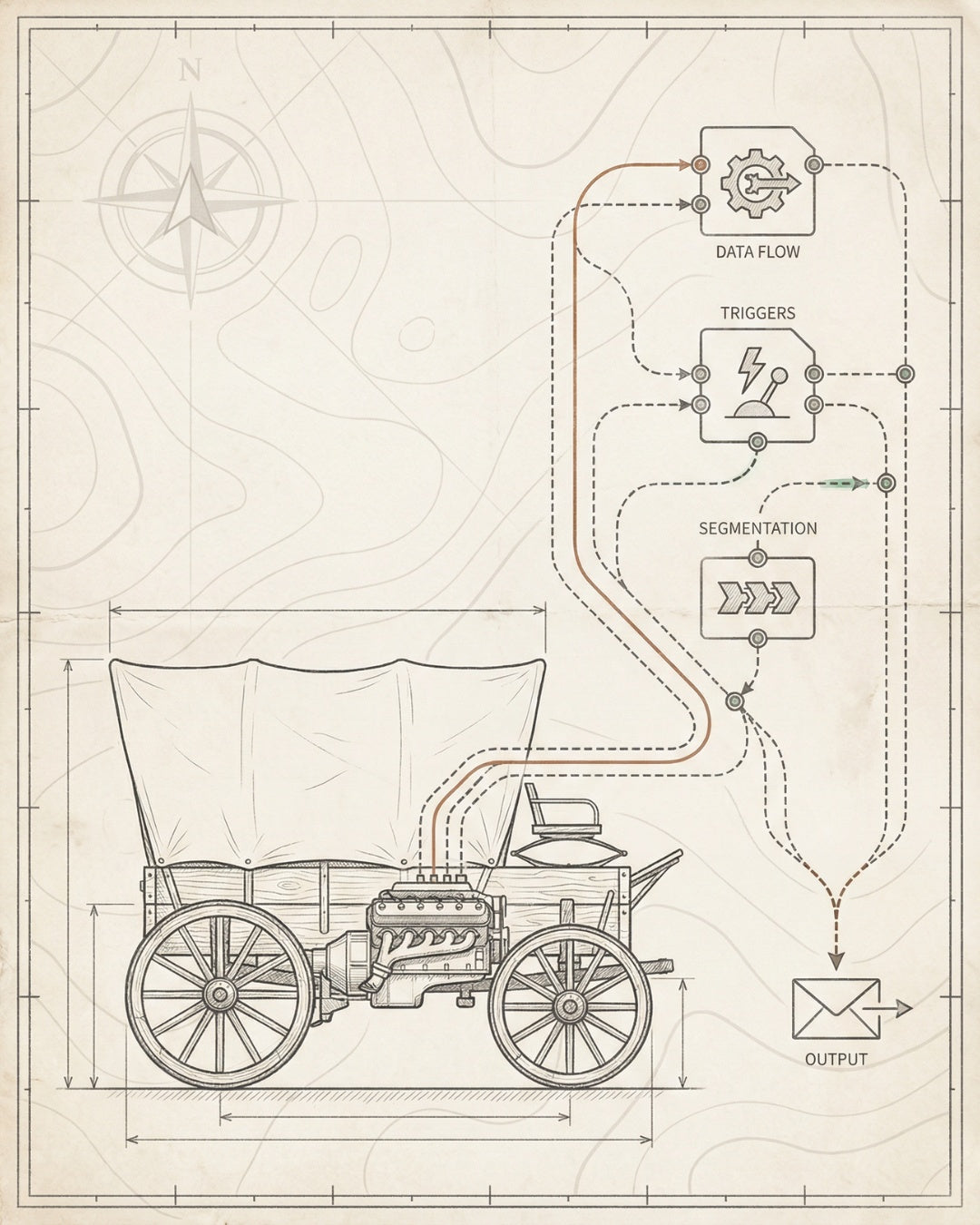
Most ecommerce stores chase rankings. Smart founders build SEO systems. Here's the infrastructure blueprint for an SEO ecommerce website that scales.
**

TL;DR — 5 Slides
The SEO Ecommerce Website Blueprint
1. Foundation First
Your SEO ecommerce website needs technical infrastructure before content. Crawlability, indexability, and site architecture determine whether Google can even see your products.
2. Product Pages Are Systems
Each product page needs schema markup, internal linking architecture, and AI-readable structured data. Not pages. Systems that compound across your entire catalog.
3. Category Pages Multiply Authority
Category pages distribute link equity and capture high-intent keywords. Build them with proper hierarchy, keyword mapping, and CollectionPage schema for maximum impact.
4. AI Search Is the New Frontier
AI Overviews, Perplexity, and ChatGPT citations are becoming primary discovery channels. Your ecommerce site needs entity markup and knowledge graph signals to show up.
5. Build in 30-Day Sprints
Skip the retainer model. Install SEO infrastructure in focused 30-day cycles: audit, fix foundation, build systems, connect distribution. Traction, then throttle.
Problem Diagnosis
The Architecture Problem Most Ecommerce Stores Ignore
You’ve got product-market fit. Revenue is growing. But your organic traffic is flat, and you’re bleeding margin to paid ads. The problem isn’t your products. It’s your SEO architecture.
Most ecommerce founders treat SEO like a content problem. They hire writers, publish blog posts, and wonder why nothing moves. The reality: your SEO ecommerce website is an infrastructure problem**, not a content problem.
Here’s what breaks at scale:
- Crawl budget waste — Google discovers 10,000 URLs but only 300 are actual product pages. The rest? Duplicate filters, pagination parameters, and session IDs eating your crawl budget.
- Indexation chaos — Half your products aren’t indexed because of canonical tag conflicts, thin content flags, or robots.txt misconfiguration you inherited from your dev team.
- Zero internal linking logic — Products exist in isolation. No category hierarchy. No related product architecture. No way for authority to flow through your catalog.
- Schema markup gaps — Your product pages have zero structured data. Google can’t extract price, availability, or reviews. AI search tools can’t cite you because there’s nothing machine-readable.
You’re not competing with other stores on content quality. You’re competing on infrastructure quality. The store with better technical SEO architecture wins, even if their product descriptions are mediocre.
The Founding Engine Perspective: We’ve generated $30M+ in organic revenue for ecommerce brands. The common pattern? None of them had an SEO problem. They had an architecture problem. Once we installed the right infrastructure, rankings became inevitable.
This is why technical SEO for ecommerce isn’t a one-time audit. It’s the foundation everything else sits on. Get this wrong, and your content strategy is building on sand.
Foundation Framework
The 4-Layer SEO Foundation for Ecommerce
Every SEO ecommerce website needs four layers, installed in sequence. Skip one, and the entire stack collapses.
Layer 1: Crawlability
Can Google’s bot discover and access every product page you want ranked?
This layer handles:
- Robots.txt configuration — Block admin pages, filter URLs, and search parameters. Allow product and category pages.
- XML sitemap structure — Separate sitemaps for products, categories, and blog content. Update daily. Submit to Search Console.
- Internal linking architecture — Every product should be 3 clicks from the homepage. Use breadcrumbs, related products, and cross-category links.
- URL parameter handling — Canonicalize or noindex filter combinations, sort parameters, and session IDs.
If Google can’t crawl it, nothing else matters. This is the gate that determines whether your products even enter the ranking game.
Layer 2: Indexability
Once Google crawls your pages, will it index them?
Indexability blockers we see constantly:
- Canonical tag conflicts — Self-referencing canonicals pointing to filtered URLs or HTTP versions instead of HTTPS.
- Thin content flags — Product pages with only manufacturer descriptions and no unique value.
- Duplicate content across variants — Color and size variants creating near-duplicate pages without proper canonicalization.
- Noindex tags left in production — Staging environment tags that never got removed when you launched.
Check your site: operator in Google. If your indexed page count is half your product count, you’ve got an indexability problem.

Layer 3: Rankability
Now that Google can crawl and index your pages, can they rank?
Rankability is where most ecommerce SEO strategy finally kicks in:
- On-page optimization — Title tags with target keywords, meta descriptions that drive CTR, H1 tags that match search intent.
- Schema markup — Product, Offer, AggregateRating, and Breadcrumb schema on every relevant page.
- Content depth — Product pages with buying guides, use cases, specs, and FAQs that match user intent.
- Core Web Vitals — LCP under 2.5s, FID under 100ms, CLS under 0.1. Speed is a ranking factor.
This is where on-page SEO for ecommerce separates winners from losers. You’re competing for keywords with established brands. Your on-page signals need to be flawless.
Layer 4: Convertibility
Rankings don’t matter if visitors bounce. The final layer turns traffic into revenue.
Conversion infrastructure includes:
- Trust signals — Reviews, trust badges, clear return policies, and security indicators.
- Product page UX — High-quality images, size guides, inventory indicators, and one-click add-to-cart.
- Speed optimization — Fast product image loading, minimal JavaScript blocking, optimized checkout flow.
- Mobile experience — 70%+ of ecommerce traffic is mobile. Your mobile product pages need to convert.
This four-layer foundation is how we approach every ecommerce SEO audit. Fix Layer 1 before touching Layer 2. Fix Layer 2 before optimizing Layer 3. Sequential, not simultaneous.
Product Architecture
Product Page Infrastructure That Ranks
Product pages are the revenue engine of your SEO ecommerce website. But most stores treat them like static pages instead of dynamic systems.
Here’s the infrastructure every product page needs:
Schema Markup That Google (and AI) Can Read
Product schema is non-negotiable. It tells Google your price, availability, ratings, and SKU. It also feeds AI search tools like Perplexity and ChatGPT.
Minimum schema requirements:
- Product schema — Name, image, description, SKU, brand
- Offer schema — Price, currency, availability, URL
- AggregateRating schema — Rating value, review count, best/worst rating
- Breadcrumb schema — Category hierarchy from homepage to product
Install this on every product page. Use JSON-LD format. Validate with Google’s Rich Results Test. This is table stakes for SEO for ecommerce product pages.
Internal Linking Architecture
Product pages shouldn’t exist in isolation. They need to be connected to:
- Parent category pages — Breadcrumb links that pass authority
- Related products — “Customers also viewed” links that keep users on-site
- Cross-category recommendations — “Complete the look” or “Frequently bought together” links
- Content pages — Buying guides, how-to articles, and comparison pages that link back to products
Every internal link passes authority. A well-architected internal linking system can double your product page rankings without a single backlink.
Content That Matches Search Intent
Product descriptions alone won’t rank. You need content that answers the questions users ask before buying:
- Use cases — Who is this product for? What problems does it solve?
- Specifications — Dimensions, materials, compatibility, technical details
- Buying guides — How to choose between variants, size guides, care instructions
- FAQ sections — Common questions that match “People Also Ask” queries
This is how you compete with Amazon and big-box retailers. They have brand authority. You have content depth and specificity.
Product Page Infrastructure Checklist
- Product, Offer, and AggregateRating schema installed and validated
- Unique title tag with target keyword and brand
- Meta description optimized for CTR (140-155 characters)
- H1 tag matches primary keyword and user intent
- High-quality product images with descriptive alt text
- Breadcrumb navigation with schema markup
- Internal links to related products and categories
- FAQ section targeting “People Also Ask” queries
- Trust signals: reviews, ratings, return policy
- Mobile-optimized with Core Web Vitals passing
This checklist is the minimum bar for every product page on your SEO ecommerce website. Install it as a template, not a one-off fix.
Category Architecture
Category Page Systems: The Multiplier Effect
Category pages are the most underutilized asset in ecommerce SEO. Done right, they capture high-intent keywords, distribute authority across your catalog, and create a scalable ranking system.
Most stores treat category pages like navigation. Smart stores treat them like landing pages.
Keyword Mapping: One Category, One Intent Cluster
Each category page should target a specific keyword cluster:
- Primary keyword — The main search term (e.g., “men’s running shoes”)
- Secondary keywords — Related terms (e.g., “best running shoes for men,” “running shoes sale”)
- Long-tail variations — Specific queries (e.g., “men’s running shoes for flat feet”)
Map keywords to categories before you build. Use tools like Ahrefs or Semrush to find keyword clusters with commercial intent. Then architect your category structure around those clusters.
CollectionPage Schema + Breadcrumb Hierarchy
Category pages need their own schema markup:
- CollectionPage schema — Tells Google this is a product collection, not a single product
- Breadcrumb schema — Shows the hierarchy from homepage to category
- ItemList schema — Lists the products within the category for rich results
This structured data helps Google understand your site architecture and can earn you rich snippet visibility in search results.
Content That Ranks (Not Just Product Grids)
A grid of products won’t rank. You need content that answers user intent:
- Category overview — 200-300 words explaining what’s in this category and why it matters
- Buying guide section — How to choose products in this category, what to look for, common mistakes
- FAQ section — Questions users ask before buying in this category
- Filter and sort options — Let users refine by price, rating, features without creating duplicate URLs
This content should live above or below the product grid. It’s not for users (they’ll scroll past it). It’s for Google.
Internal Linking That Distributes Authority
Category pages are authority hubs. They should link to:
- All products in the category — Obviously, but make sure links are crawlable (not JavaScript-rendered)
- Subcategories — If you have “Running Shoes” → “Trail Running Shoes” and “Road Running Shoes”
- Related categories — “Shop Running Apparel” or “Shop Running Accessories”
- Content pages — Link to buying guides, comparison articles, or blog posts about this category
Every link passes authority. A well-structured category page can lift rankings for dozens of product pages simultaneously.

Weak Category Page Strong Category Page
Just a product grid Product grid + buying guide + FAQ
Generic title tag (“Category | Store Name”) Keyword-optimized title (“Best Running Shoes for Men | Store Name”)
No schema markup CollectionPage + Breadcrumb + ItemList schema
Filter URLs create duplicates Filters use canonicals or noindex to avoid duplication
No internal linking beyond products Links to subcategories, related categories, and content
Category pages are force multipliers. Fix one category page, and you can lift rankings for every product in that category. This is the leverage point most ecommerce SEO services miss.
AI Search Layer
AI Search Optimization for Ecommerce
Google’s AI Overviews, Perplexity, and ChatGPT are becoming primary discovery channels. If your SEO ecommerce website isn’t optimized for AI search, you’re invisible to the next generation of search behavior.
AI search optimization isn’t about gaming algorithms. It’s about making your content machine-readable and citation-worthy.
Entity Markup: Teach AI Who You Are
AI search tools need to understand your brand as an entity, not just a website. This requires:
- Organization schema — Your brand name, logo, social profiles, and contact information
- Brand schema on product pages — Consistent brand entity across your entire catalog
- Knowledge graph signals — Wikipedia mentions, Crunchbase profiles, and authoritative citations
- Consistent NAP data — Name, address, phone number matching across all platforms
This is how AI tools determine whether you’re a legitimate brand or a dropshipping site. Entity strength correlates with citation frequency.
Structured Data for LLMs
Large language models parse structured data differently than traditional search engines. Optimize for both:
- FAQ schema — Explicit question-answer pairs that AI can extract and cite
- HowTo schema — Step-by-step instructions for using your products
- Review schema — User-generated content that AI tools trust more than marketing copy
- Video schema — Product demos and tutorials that increase engagement signals
The more structured data you provide, the easier it is for AI to cite you as a source. This is the foundation of AI search optimization.
Content Formatting for AI Citations
AI tools prefer content that’s easy to parse and attribute. Format your content with:
- Clear section headings — H2 and H3 tags that match common questions
- Bullet points and lists — Easier for AI to extract than paragraph text
- Data and statistics — Cited sources that AI can verify and reference
- Definitions and explanations — Direct answers to “what is” and “how to” queries
Think of your content as an API for AI search tools. The clearer your data structure, the more likely you are to get cited.
Perplexity and ChatGPT Visibility
These tools crawl the web differently than Google. To show up in their results:
- High domain authority — Build backlinks from authoritative sources in your niche
- Recent content — AI tools prefer fresh, up-to-date information
- Expert authorship — Author bios with credentials and expertise signals
- Clear sourcing — Cite your own data, studies, and research
AI search is the new frontier. Brands that optimize for it now will dominate discovery in 2-3 years. This is why we built BloggedAI — to help ecommerce brands get cited in AI search results.
Systems Framework
The Compound Visibility Stack for Stores
SEO isn’t a channel. It’s a stack. The Compound Visibility Stack (CVS) is how we architect SEO ecommerce websites that generate rankings and revenue that compound over time.
Four layers, installed sequentially:
Layer 1: Website (Foundation)
Your website is the infrastructure everything else sits on. If this layer is broken, nothing compounds.
- Technical SEO architecture (crawlability, indexability, site speed)
- Schema markup across all page types
- Internal linking systems that distribute authority
- Core Web Vitals optimization (LCP, FID, CLS)
This is what we install first in every engagement. It’s the foundation of SEO infrastructure.
Layer 2: Content (Fuel)
Content is the fuel that feeds your SEO engine. But it only works if Layer 1 is solid.
- Keyword-mapped product and category pages
- Buying guides and comparison content
- Blog content targeting top-of-funnel queries
- FAQ sections on every key page
Content without infrastructure is wasted effort. Infrastructure without content is unused capacity. Both layers need to work together.
Layer 3: Technical (Optimization)
Once you have foundation and fuel, you optimize for efficiency.
- Conversion rate optimization on product pages
- A/B testing title tags and meta descriptions
- Image optimization and lazy loading
- JavaScript optimization for faster page loads
This layer is where ecommerce SEO optimization turns rankings into revenue.
Layer 4: Distribution (Amplification)
The final layer amplifies everything you’ve built.
- Email capture and nurture sequences
- Social proof and user-generated content
- Backlink acquisition from relevant sources
- AI search visibility (Perplexity, ChatGPT, AI Overviews)
Distribution turns your SEO ecommerce website into a growth engine. Rankings bring traffic. Distribution converts that traffic into customers and advocates.

Why This Stack Compounds: Each layer builds on the previous one. Technical SEO makes content rankable. Content creates ranking opportunities. Optimization converts traffic. Distribution amplifies results. After 6-12 months, the system runs itself. That’s compound growth.
This is the framework we use for every client. It’s also the framework behind our $30M+ in organic revenue generated and 250% average traffic increases.
Build Sequence
How to Build This: The 30-Day Implementation Sprint
You don’t need a 12-month retainer to install SEO infrastructure. You need a focused 30-day sprint. Here’s the build sequence we use with every ecommerce client.
Week 1: Audit Current State
You can’t build what you can’t measure. Week 1 is pure diagnosis.
- Technical audit — Run Screaming Frog, check robots.txt, validate sitemaps, identify crawl errors
- Indexation audit — Use site: operator, check Search Console coverage report, find indexation blockers
- Schema audit — Validate existing schema, identify missing markup, check Rich Results Test
- Core Web Vitals baseline — Run PageSpeed Insights on key pages, document current performance
- Keyword mapping — Map target keywords to existing pages, identify gaps
By end of Week 1, you should have a prioritized list of technical issues and a keyword map for your entire catalog. This is the foundation of any ecommerce SEO checklist.
Week 2: Fix Technical Foundation
Week 2 is all execution. Fix the blockers identified in Week 1.
- Crawlability fixes — Update robots.txt, fix broken internal links, implement breadcrumbs
- Indexability fixes — Resolve canonical conflicts, remove noindex tags, fix duplicate content
- Schema implementation — Install Product, Offer, AggregateRating, and Breadcrumb schema on templates
- Speed optimization — Compress images, defer JavaScript, enable caching
This is where most advanced ecommerce SEO work happens. You’re not optimizing for rankings yet. You’re removing the blockers that prevent rankings.
Week 3: Build Content Infrastructure
Now that the technical foundation is solid, you can layer in content.
- Product page optimization — Update title tags, meta descriptions, H1 tags based on keyword map
- Category page content — Add buying guide sections, FAQ content, and keyword-optimized descriptions
- Internal linking — Build related product links, cross-category recommendations, and content-to-product links
- FAQ sections — Add FAQ schema and content targeting “People Also Ask” queries
By end of Week 3, every key page on your SEO ecommerce website should have proper on-page optimization and schema markup.
Week 4: Connect Distribution and Monitor
The final week connects your SEO infrastructure to distribution channels and sets up monitoring.
- Google Search Console setup — Verify property, submit sitemaps, monitor coverage and performance
- AI search optimization — Add entity markup, structured data for LLMs, and citation-worthy content
- Conversion tracking — Set up GA4 goals, track organic revenue, monitor product page conversions
- Performance dashboards — Build dashboards to track rankings, traffic, and revenue by keyword cluster
By end of Week 4, you have a complete SEO system. Not a to-do list. A system that generates rankings and compounds over time.
Why 30 Days Works: Retainer SEO stretches work to fill time. Sprint SEO compresses it into focused cycles. You get infrastructure installed fast, see traction within 60-90 days, then decide whether to throttle or maintain. This is the model we use at Founding Engine.
This sprint sequence is how we deliver best-in-class ecommerce SEO without the bloat of traditional agencies. Audit, fix, build, connect. Traction, then throttle.
Common Questions
Frequently Asked Questions
What is an SEO ecommerce website?
An SEO ecommerce website is an online store built with search engine optimization infrastructure from the ground up. It includes technical SEO architecture (crawlability, indexability, site speed), schema markup on product and category pages, internal linking systems, and AI-readable structured data. Unlike regular ecommerce sites that treat SEO as an afterthought, an SEO ecommerce website has ranking capability baked into its foundation.
How long does it take to see results from ecommerce SEO?
You’ll see initial traction in 60-90 days after implementing proper SEO infrastructure. Rankings start moving within 6-8 weeks for low-competition keywords. High-competition keywords can take 4-6 months. The key is building the right foundation first — technical SEO, schema markup, and internal linking — before expecting rankings. Most stores see 100-150% traffic increases within 6 months and 200-300% increases by month 12 when infrastructure is installed correctly.
What’s the difference between ecommerce SEO and regular SEO?
Ecommerce SEO requires managing thousands of product pages, category hierarchies, and inventory changes. You need Product and Offer schema, not just Article schema. You’re optimizing for commercial intent keywords, not informational queries. Internal linking architecture is more complex because you’re distributing authority across a catalog, not just blog posts. And conversion optimization matters more because organic traffic needs to generate revenue, not just engagement. The technical complexity and scale are significantly higher than standard content SEO.
Do I need an SEO agency or can I do ecommerce SEO myself?
You can DIY basic on-page optimization, but technical SEO infrastructure requires specialized expertise. Most founders lack the time to audit crawlability, implement schema markup correctly, optimize Core Web Vitals, and build internal linking systems while running their business. The middle ground: hire an agency for the infrastructure build (30-day sprint), then maintain it internally. You need expert execution for the foundation, but you can handle ongoing optimization once systems are installed.
What is the most important ranking factor for ecommerce websites?
Technical foundation. If Google can’t crawl and index your product pages, nothing else matters. The most important ranking factors are: (1) crawlability and indexability, (2) schema markup for rich results, (3) internal linking architecture, (4) Core Web Vitals and page speed, and (5) on-page optimization. Content quality matters, but only after the technical foundation is solid. Most ecommerce stores fail at #1 and #2, which is why their content strategy never works.
How much does ecommerce SEO cost?
Traditional agencies charge $3,000-$10,000/month on retainers. Sprint-based SEO (like Founding Engine’s model) runs $8,000-$15,000 for a 30-day infrastructure build, with optional maintenance afterward. DIY tools and freelancers cost less ($500-$2,000/month) but often lack the technical expertise for proper implementation. The real cost isn’t the agency fee — it’s the opportunity cost of waiting 6-12 months on a retainer when you could install infrastructure in 30 days. For detailed pricing breakdowns, see our guide on ecommerce SEO pricing.
What is schema markup and why does my ecommerce site need it?
Schema markup is structured data that tells search engines what your content means, not just what it says. For ecommerce, Product schema shows Google your price, availability, and ratings. Offer schema displays pricing in search results. AggregateRating schema shows star ratings. This markup enables rich results (the enhanced listings with stars, prices, and stock status) that increase click-through rates by 20-30%. It also feeds AI search tools like Perplexity and ChatGPT, making your products citation-worthy. Without schema, you’re invisible to both Google’s rich results and AI search.
How do I optimize my ecommerce site for AI search tools like ChatGPT and Perplexity?
AI search optimization requires three things: (1) entity markup that establishes your brand as a legitimate source, (2) structured data that AI tools can parse and cite (FAQ, HowTo, Product schema), and (3) content formatted for easy extraction (clear headings, bullet points, cited data). AI tools prefer authoritative sources with recent content, expert authorship, and verifiable information. The more machine-readable your content, the more likely you are to get cited in AI Overviews, Perplexity answers, and ChatGPT responses. This is the next frontier of ecommerce SEO.
Ready to Build?
Install SEO Infrastructure That Compounds
We’ve generated $30M+ in organic revenue for ecommerce brands. No retainers. No fluff. Just 30-day sprints that install the infrastructure your store needs to rank, convert, and scale.
Matt Hyder
SEO infrastructure and AI search optimization at Founding Engine.
Want SEO that actually holds?
Get a free infrastructure audit from the Founding Engine team.
Get Your Free Audit