Why SEO Is Important for Ecommerce: The Revenue Engine You Own
SEO isn't marketing fluff—it's infrastructure. Learn why ecommerce brands that build organic visibility compound revenue, reduce CAC, and own their growth trajectory.
SEO Infrastructure
Why SEO Is Important for Ecommerce: The Revenue Engine You Own
By Matt Hyder | February 14, 2026 | 12 min read

Paid ads rent attention. SEO builds equity.
Every dollar you spend on Facebook or Google Ads disappears the moment you stop paying. But every dollar invested in SEO infrastructure compounds—ranking one product page creates authority that lifts ten others. Fixing one technical blocker unlocks thousands of pages for indexation. Installing structured data once makes your entire catalog visible to AI search forever.
This is why SEO is important for ecommerce: it’s the only channel where your investment becomes an asset, not an expense. It’s the difference between renting traffic and owning a distribution system.
Most ecommerce founders treat SEO like a marketing tactic—something to “optimize” after the site is built, after the ads are running, after revenue proves the model. But SEO infrastructure isn’t a tactic. It’s the foundation that determines whether your growth compounds or plateaus.
Here’s what that foundation looks like—and how to build it before your competitors do.
TL;DR — 5 Takeaways
01. Paid ads rent attention. SEO builds equity that compounds over time without increasing spend.
02. Every dollar in SEO infrastructure returns multiples—rankings lift entire categories, not just single pages.
03. Technical foundation beats content volume. Fix crawlability before writing a single blog post.
04. AI search is rewriting discovery. Structured data is your competitive moat in the LLM era.
05. Brands that own organic own their growth trajectory—not their ad platform, not their agency.
SEO Is Infrastructure, Not Marketing
Think of your ecommerce site like a building. Marketing campaigns are the billboards outside. SEO is the foundation, the plumbing, the electrical grid. You can run the flashiest ads in the world, but if your site architecture is broken—if Google can’t crawl your product pages, if your schema markup is missing, if your internal linking structure is a maze—you’re building on sand.
This is the shift most founders miss: SEO isn’t something you do to your site. It’s how you build it.
At Founding Engine, we call this the Compound Visibility Stack (CVS)—a layered system where every component reinforces the others:
- Website: Technical architecture, Core Web Vitals, mobile-first design
- Content: Keyword-mapped pages, entity optimization, semantic relevance
- Technical: Crawlability, indexability, structured data, canonical strategy
- Distribution: Internal linking, topical authority, AI search signals
When these layers work together, rankings compound. A well-structured category page passes authority to product pages. Product pages with proper schema markup get featured in AI Overviews. Internal links distribute PageRank across your catalog, lifting entire clusters instead of isolated URLs.
This is why brands that treat ecommerce SEO as a strategy—not a service—outperform competitors by 3-5x in organic revenue within 12 months.
Builder Insight: Your site architecture is a ranking signal. Google doesn’t just read your content—it reads your site’s logic. Flat hierarchies, clean URL structures, and semantic internal linking tell crawlers what matters. Mess that up, and even great content stays invisible.

The Math: CAC vs. Organic LTV
Let’s talk numbers. Because why SEO is important for ecommerce becomes obvious when you run the unit economics.
Assume you’re a $2M/year DTC brand. Your average order value (AOV) is $85. Your customer acquisition cost (CAC) on paid ads is $42. You’re profitable—barely—but scaling means spending more on ads, which means CAC creeps up. At $5M revenue, your CAC is $58. At $10M, it’s $72. You’re growing, but margin is shrinking.
Now add SEO to the model:
Channel CAC (Year 1) CAC (Year 2) CAC (Year 3) Compounding Effect
Paid Ads $42 $58 $72 Increases with scale
Organic SEO $38 (initial) $14 $6 Decreases with scale
Here’s why: SEO investment is front-loaded. You pay once to fix technical SEO blockers, build content infrastructure, and install schema markup. But those assets keep working. A product page that ranks #3 for “best running shoes for flat feet” in Month 6 is still ranking—and converting—in Month 18, Month 24, Month 36.
Paid ads stop the second you stop paying. SEO keeps compounding.
At Founding Engine, we’ve generated $30M+ in organic revenue for brands by building systems that reduce CAC by 60-80% over 12-18 months. Not because we “do SEO better,” but because we install infrastructure that makes rankings inevitable.
The Compounding Formula: Organic LTV = (Ranking Velocity × Content Depth × Technical Foundation) ÷ Time. The denominator shrinks as your infrastructure matures. Paid LTV = Ad Spend ÷ Conversions. The denominator only grows.
The 4-Layer SEO Foundation
Most ecommerce SEO services start with keyword research and content calendars. That’s backwards. You don’t build the second floor before pouring the foundation.
Here’s the correct build sequence—what we call the 4-Layer SEO Foundation:
Layer 1: Crawlability
Can Google’s bots access your pages? Sounds basic, but 40% of ecommerce sites have crawl budget issues—blocked resources, infinite pagination loops, orphaned product pages, misconfigured robots.txt files.
What to fix first:
- Check your robots.txt file—make sure you’re not accidentally blocking product categories
- Audit your XML sitemap—only include indexable, canonical URLs
- Review server logs—identify crawl errors, 404s, redirect chains
- Implement proper pagination with rel=“next” and rel=“prev” or canonical consolidation
Layer 2: Indexability
Google can crawl your pages—but will it index them? Duplicate content, thin product descriptions, canonical tag mistakes, and noindex directives kill indexation.
What to fix:
- Set canonical tags correctly—self-referencing on originals, pointing to the primary version on duplicates
- Audit meta robots tags—remove unintentional noindex directives
- Enrich product pages—add unique descriptions, user reviews, schema markup
- Use Google Search Console’s Index Coverage report to identify excluded pages

Layer 3: Rankability
Now you’re indexed. Can you rank? This layer is about relevance signals—keyword targeting, topical authority, entity optimization, and on-page SEO for ecommerce.
What to build:
- Map keywords to intent—transactional queries to product pages, informational queries to guides
- Build topical clusters—link related content together to signal expertise
- Optimize title tags and H1s with primary keywords (but keep them natural)
- Add schema markup—Product, Offer, Review, BreadcrumbList, FAQ
- Strengthen internal linking—use descriptive anchor text, distribute authority strategically
Layer 4: Convertibility
Rankings without conversions are vanity metrics. This layer connects SEO to revenue—Core Web Vitals, UX optimization, CRO integration.
What to optimize:
- Fix Core Web Vitals—LCP under 2.5s, FID under 100ms, CLS under 0.1
- Mobile-first design—Google uses mobile indexing; your mobile UX is your ranking UX
- Streamline checkout—reduce friction, A/B test CTAs, optimize for speed
- Install conversion tracking—connect rankings to revenue in Google Analytics and Search Console
This is the ecommerce SEO checklist we use for every client. It’s not sexy. It’s not a hack. But it works because it’s sequential—each layer enables the next.
AI Search Changes the Game
Here’s what most ecommerce brands are missing: Google isn’t the only search engine anymore.
ChatGPT, Perplexity, Claude, Gemini—these LLMs are becoming discovery engines. Users ask, “What’s the best mattress for side sleepers under $1,000?” and the AI generates an answer. If your brand isn’t in that answer, you don’t exist.
This is where AI search optimization becomes critical. Traditional SEO targets Google’s algorithm. AI search optimization targets how LLMs understand, cite, and recommend your brand.
What’s different:
- Entity signals matter more than keywords. LLMs parse structured data—schema.org markup, knowledge graphs, Wikidata connections—to understand what your product is, not just what keywords it ranks for.
- Citations replace backlinks. AI Overviews cite sources. If your product pages have proper schema markup, clear authoritativeness signals, and structured FAQs, you get cited. If not, your competitor does.
- Context beats density. Keyword stuffing is dead. LLMs reward semantic relevance—content that answers the user’s intent in context, not content that repeats the same phrase 47 times.
At Founding Engine, we’ve seen brands increase AI Overview citations by 340% in 90 days by installing structured data and optimizing for entity-first content. This isn’t future-proofing. It’s present-tense competitive advantage.
AI Search Optimization Checklist
- Install Product schema with Offer, Review, and AggregateRating properties
- Add FAQ schema to product pages targeting “People Also Ask” queries
- Build entity-rich content—mention brand names, model numbers, specifications
- Optimize for featured snippets—use concise definitions, bulleted lists, tables
- Claim and optimize your Google Knowledge Panel
- Test your structured data with Google’s Rich Results Test
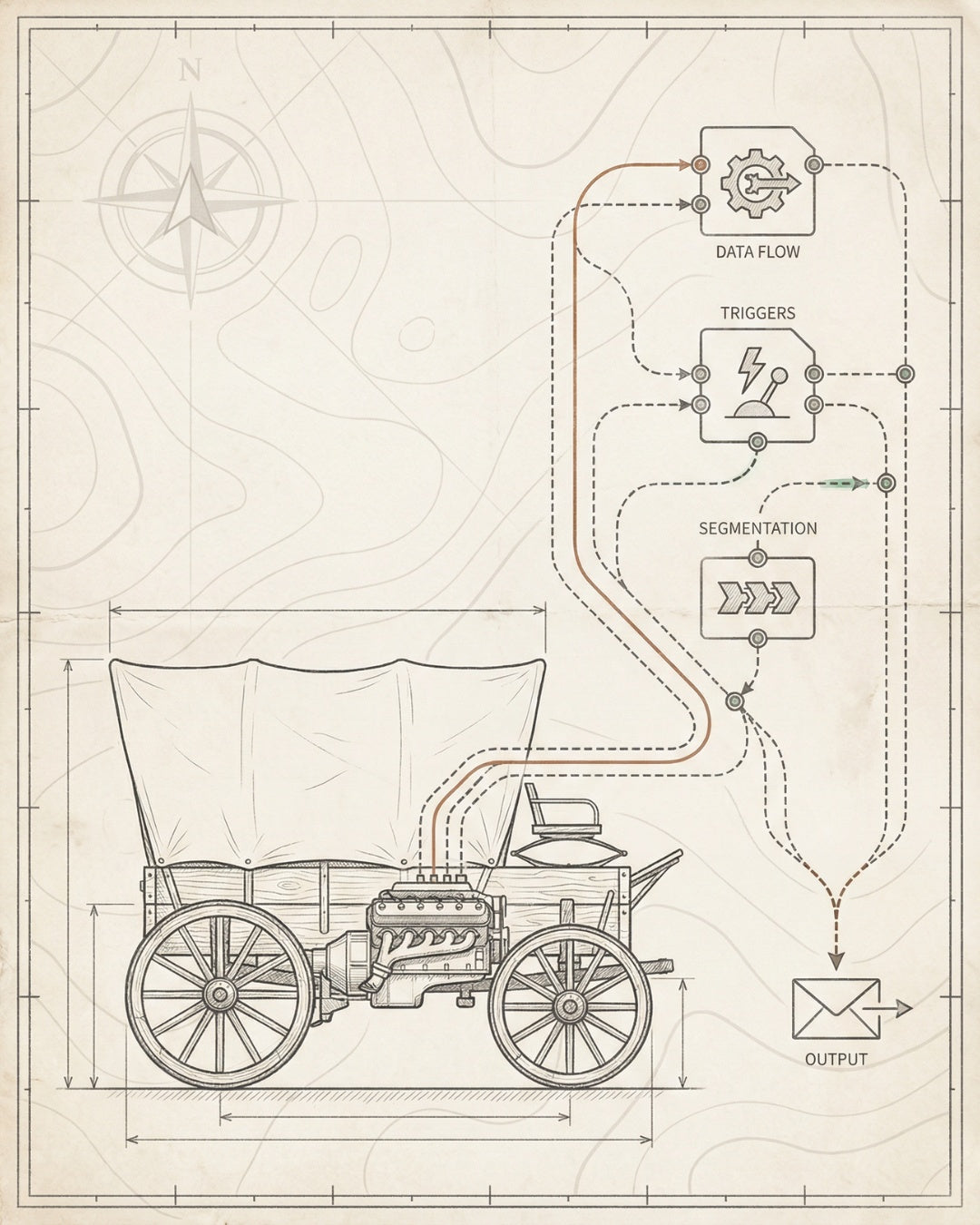
What Breaks Without SEO
Let’s flip the question. Why is SEO important for ecommerce? Because here’s what happens when you skip it:
1. You’re Invisible to 68% of Clicks
Organic search drives 53% of all website traffic. Paid ads drive 27%. Social is 5%. Direct is 15%. If your SEO is broken, you’re fighting for scraps from the remaining 47%—and paying a premium for every visitor.
2. Your CAC Becomes Unsustainable
Without organic traffic, you’re 100% dependent on paid acquisition. When iOS updates kill Facebook targeting, when Google Ads CPCs spike, when TikTok changes its algorithm—you’re stuck. Brands with strong organic channels weather platform changes. Brands without them go under.
3. Your Competitors Own the Search Real Estate
Every product category has 10 spots on page 1. If you’re not there, someone else is. And once they rank, they accumulate clicks, backlinks, and authority—making it exponentially harder for you to catch up. SEO is a compounding game. The longer you wait, the steeper the hill.
4. You Leave Money on the Table
Users searching “buy [your product]” have intent. They’re ready to convert. If your product pages don’t rank, you’re sending that revenue to a competitor who invested in SEO for ecommerce product pages.
5. Your Site Becomes a Liability
Technical debt compounds. A site built without SEO in mind accumulates crawl errors, duplicate content, broken internal links, slow load times. Fixing it later costs 5-10x more than building it right the first time. This is why we integrate SEO into website design and build from day one.
The Hidden Cost: Most founders calculate SEO ROI as “rankings ÷ investment.” The real ROI is “revenue you didn’t lose to competitors + CAC you didn’t pay + technical debt you didn’t accumulate.” SEO is insurance as much as it is growth.
Implementation: Building Your SEO Stack
Enough theory. Here’s how to build SEO infrastructure for your ecommerce store—step by step, in the order that maximizes ROI.
Step 1: Audit Current State (Week 1)
You can’t fix what you don’t measure. Run a full ecommerce SEO audit to baseline your site:
- Technical audit: Use Screaming Frog or Sitebulb to crawl your site. Identify 404s, redirect chains, orphaned pages, duplicate content.
- Indexation audit: Check Google Search Console’s Index Coverage report. How many pages are indexed vs. excluded? Why?
- Performance audit: Run PageSpeed Insights and Core Web Vitals tests. What’s your LCP, FID, CLS?
- Content audit: Map your top 50 product pages to target keywords. Are they optimized? Do they have schema markup?
Step 2: Fix the Foundation (Weeks 2-3)
Prioritize technical blockers. This is the Audit-to-Throttle Pipeline—fix what’s broken before building what’s new.
- Clean up your robots.txt and XML sitemap
- Fix canonical tags and noindex directives
- Resolve crawl errors and broken internal links
- Optimize site architecture—flatten deep hierarchies, improve navigation
- Improve Core Web Vitals—compress images, defer non-critical JS, use a CDN
Step 3: Build Content Infrastructure (Week 4)
Now you’re ready to rank. Build keyword-mapped content with proper structure:
- Optimize product pages with target keywords in title tags, H1s, and meta descriptions
- Add unique product descriptions (minimum 300 words for competitive categories)
- Install Product schema with Offer, Review, and AggregateRating properties
- Build category pages that target informational keywords (“best running shoes for flat feet”)
- Create topical clusters—link related products and guides together
Step 4: Install Distribution (Ongoing)
SEO isn’t set-and-forget. Build feedback loops that inform iteration:
- Connect Google Search Console and Google Analytics—track rankings, clicks, conversions
- Set up automated reporting—monitor ranking velocity, organic traffic, revenue attribution
- Build internal linking workflows—every new product page should link to 3-5 related pages
- Optimize for AI search—test your structured data, monitor AI Overview citations
- A/B test CTAs, product descriptions, and page layouts to improve conversion rates
This is the same process we use in our 30-day SEO sprints. No retainers. No fluff. Focused cycles that deliver measurable ranking velocity.

FAQ: Your Questions Answered
** Why is SEO important for ecommerce compared to paid ads? +
SEO builds equity that compounds over time, while paid ads rent attention that disappears when you stop paying. SEO reduces CAC by 60-80% over 12-18 months because rankings continue to drive traffic and conversions without ongoing ad spend. Paid ads are essential for testing and scaling, but SEO creates the foundation that makes growth sustainable and profitable long-term.
How long does it take to see results from ecommerce SEO? +
Technical fixes can show ranking improvements in 2-4 weeks. Content-driven rankings typically take 8-12 weeks for competitive keywords. Full compounding effects—where rankings lift entire categories and reduce CAC—become visible at 6-12 months. The key is building infrastructure that accelerates ranking velocity over time, not chasing quick wins that don’t scale.
What’s the difference between ecommerce SEO and regular SEO? +
Ecommerce SEO focuses on product page optimization, category architecture, schema markup for products and reviews, and conversion-driven technical infrastructure. Regular SEO prioritizes blog content and informational keywords. Ecommerce SEO also requires managing large-scale indexation (thousands of product pages), handling faceted navigation, and optimizing for transactional intent—challenges that don’t exist for most content sites.
Can I do ecommerce SEO myself or do I need an agency? +
You can handle basic optimizations—title tags, meta descriptions, product descriptions—yourself. But technical SEO (site architecture, schema markup, crawl budget optimization) and strategic infrastructure (topical authority, internal linking systems, AI search optimization) require specialized expertise. Most founders benefit from an expert ecommerce SEO partner who can install systems once, then hand off management to internal teams.
How much does ecommerce SEO cost? +
Traditional agencies charge $3,000-$10,000/month on retainers. At Founding Engine, we use 30-day focused cycles with project-based pricing—typically $8,000-$25,000 per sprint depending on site size and complexity. This model delivers faster results without long-term retainer commitments. Learn more about our ecommerce SEO pricing structure.
What’s the most important SEO factor for ecommerce sites? +
Technical foundation. You can have the best content in the world, but if Google can’t crawl your site, if your product pages aren’t indexed, if your Core Web Vitals are broken—you won’t rank. Start with crawlability and indexability. Then build content and authority on top of that foundation. This is the best practice we follow for every client.
How does AI search impact ecommerce SEO strategy? +
AI search engines like ChatGPT and Perplexity prioritize structured data, entity signals, and citation-worthy content over traditional keyword optimization. Ecommerce brands need to install Product schema, optimize for featured snippets, and build content that LLMs can parse and cite. Brands that ignore AI search optimization will lose visibility as users shift from Google to conversational search interfaces.
What ROI can I expect from ecommerce SEO? +
Our clients typically see 150-250% increases in organic traffic within 6-12 months, with CAC reductions of 60-80% as organic revenue scales. For a $2M/year brand, that translates to $300K-$600K in additional organic revenue and $50K-$100K in saved ad spend annually. The ROI compounds because SEO infrastructure continues working long after the initial investment. See our case studies for specific examples.
Build SEO Infrastructure That Compounds
Stop renting traffic. Start building equity. Our 30-day SEO sprints install the technical foundation, content systems, and AI search optimization that make rankings—and revenue—inevitable.
Explore SEO Infrastructure AI Search Optimization Start a Project
About Founding Engine:** We engineer SEO infrastructure and AI search optimization for ecommerce brands that want to own their organic channel. Founded by Matt Hyder (Forbes 30 Under 30, INC 5000 founder), we’ve generated $30M+ in organic revenue, ranked 500+ keywords on page 1, and served 50+ brands nationally from our Denver, Colorado headquarters. No retainers. No fluff. 30-day focused cycles that deliver measurable ranking velocity.
Related Reading:
Ecommerce SEO Strategy | Technical SEO for Ecommerce | Advanced Ecommerce SEO | Best Ecommerce SEO Practices
Matt Hyder
SEO infrastructure and AI search optimization at Founding Engine.
Want SEO that actually holds?
Get a free infrastructure audit from the Founding Engine team.
Get Your Free Audit